

Not Gardenias: The Flowering Plant You Should Grow For Its Fragrant Smell
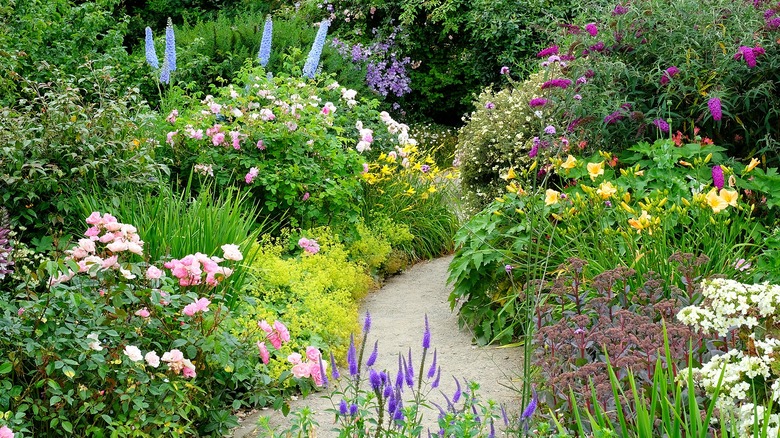
There's nothing quite like stepping into your garden and finding that it smells twice as good as it looks. If your goal is to create a fragrant garden that activates senses beyond sight alone, then your first instinct may be to choose gardenias. Gardenias can make a showy addition to any fragrance-oriented garden, but they're not the only option available to you. Instead, you could also try a flowering plant that's showstopping for more than just one reason: the fragrant tea olive plant.
Also known as sweet olive and sweet osmanthus, the fragrant tea olive (Osmanthus fragrans) is a visually appealing evergreen shrub with a sweet scent that's comparable to apricots (or even cotton candy, per the NC Extension Gardener). It begins blooming with dainty, eye-catching white flowers in the fall, and depending on where you live, you may be able to enjoy those fragrant flowers for the rest of the year.
And because tea olive is an evergreen, it adds year-round appeal to your garden, meaning it's not taking up space even out of bloom. What's more? If you like the sound of fragrant tea olive but need a plant that's good for beginner gardeners, you're in luck. Sweet olive is easy to grow and it isn't high maintenance, which makes it perfect for testing your green thumb.
Before learning how to grow sweet osmanthus, it's important to keep in mind that there are many varieties and cultivars of this tea olive species. These can vary in terms of appearance, specifically flowers, and some may require different care that you'll want to brush up on in advance.
How to grow fragrant tea olive
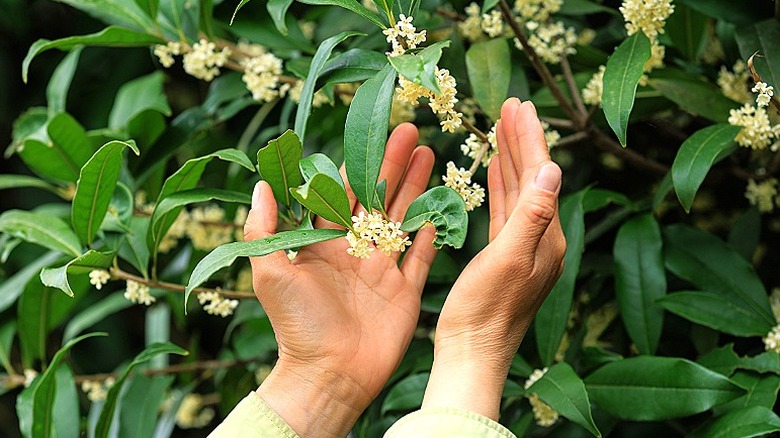
When growing any type of plant, there are three main factors to know about its requirements: location, medium, and care. Fortunately, fragrant tea olives aren't too picky when it comes to many of these aspects of growth.
First, as an evergreen shrub, you'll want to check if you're located in one of its hardiness zones. (Here's a primer on what is a USDA growing zone, and how to know which one you are in.) Fragrant tea olive is hardy in zones 8 to 11. If you don't live in one of those zones, you might not get to enjoy a bulk of its fragrant blooms, which again can extend into the winter months.
When picking the right location, you'll also want to consider sunlight. Sweet olive does well with direct landscaping and containers, which gives you more flexibility when experimenting with the right spot for producing the most flowers possible. However, overall, you'll want to aim for partial shade or full sun for this shrub.
Location aside, the next step is providing the right growing conditions for sweet osmanthus — specifically, its soil. Fragrant tea olive requires clay-textured, well-drained soil. It does better when given regular moisture; although, it can handle the occasional dry spell thanks to its drought tolerance.
As far as its care goes, this is where that medium maintenance comes in handy. One reason these shrubs can be a good choice for beginners is that they don't require heavy pruning. Pruning sweet olive each year using the "three D" rule of pruning can help you maintain its shape, while also keeping it in good health. A fragrant tea olive shrub can grow between 10 and 20 feet, with a spread of 10 feet.