

You Don't Need Lavender: The Flowering Shrub That'll Help Keep Snails Away
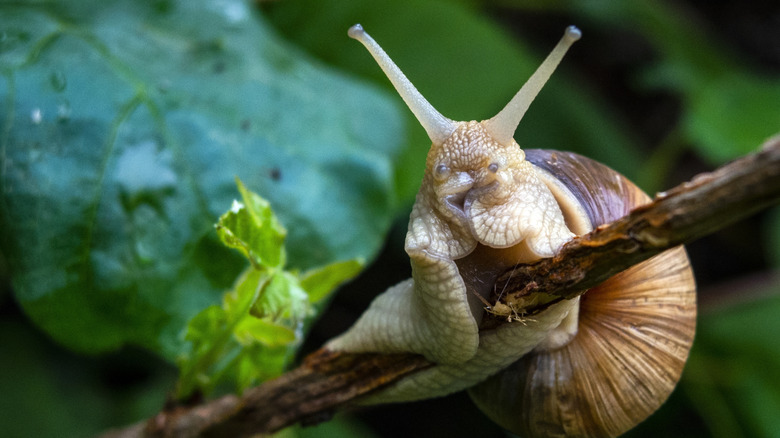
If you've been battling with snails in your garden for some time now, chances are you've come across the suggestion to add some aromatic plants to your property such as lavender in order to keep these pests away. However, strong-smelling herbs aren't actually your only option when it comes to filling your garden with plants that are less than appetizing to snails, slugs, and other pests. For example, spurge — known by its scientific name Euphorbia — is a blanket term for about 2,000 different flowering plant species, all of which contain a thick, white liquid that can cause severe skin irritation which discourages browsing from animals. Biting into the stems and leaves is an unpleasant and even dangerous experience for slugs and snails. So, if you're looking to add greenery to certain parts of your garden without attracting more snails, then planting Euphorbia could be the right move for you.
As an added bonus, because these plants can cause irritation to any creature that chews on them, they're is also typically left alone by other animals which could be bothering your garden such as rabbits and deer. However, humans are also prone to develop concerning symptoms if they come into contact with the inner liquid of this plant — such as eye and skin inflammation, throwing up, and sometimes even difficulty breathing. So, while this plant can be charming and effective for keeping snails at bay, think twice before planting euphorbia if you have young children or pets. it is important to learn how to properly care for it so that it thrives in your garden without endangering yourself or your family members.
How to safely grow Euphorbia plants
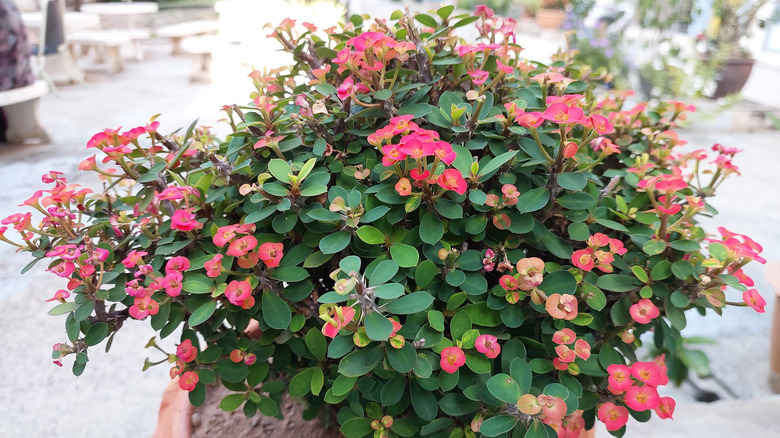
In addition to being unappealing to pests like snails, Euphorbia plants can be a great addition to your garden because they are relatively hardy in drought conditions and come in a variety of different colors, shapes, and sizes. In general, Euphorbia species do well in USDA Hardiness Zones 9 to 11, though some shrubs may be able to withstand up to Zone 5, particularly with the proper shelter. The majority of Euphorbia plants prefer some direct sunlight and some shade relief, so look for a place in your garden that gets around 4 hours of sunlight each day. To keep yourself and your family members safe, make sure to plant it in a location that will be out of reach of children and pets to prevent them from chewing on the stems and leaves.
If you want to brighten up your yard throughout the entire year, make sure to opt for an evergreen variety of Euphorbia such as 'Miner's Merlot', which comes in a deep reddish-purple color and can grow in Hardiness Zones 6 to 9. Another evergreen option is 'Ascot Rainbow', which prefers Zones 5 to 9 and displays charming yellow and red foliage. Whatever variety you want to grow, first identify if it's an invasive plant in your area, such as Leafy Spurge (Euphorbia esula). Certain Euphorbia can grow pretty high, so you can trim off the flowers after they have bloomed in order to keep them in a shape that you like. Just remember when doing any cutting or bending of a spurge plant to wear goggles, long sleeves, gloves, and perhaps even a mask to avoid any adverse reactions as a result of the plant's sap.