

The Fragrant, Old-Fashioned Flower Gardeners Should Bring Back For Its Sweet Smell

In 1883, poet Jane Taylor — most famous for penning the lyrics to "Twinkle, Twinkle, Little Star" — wrote a poem about a radiant, yet humble, violet. One stanza described how the flower "diffused a sweet perfume, Within the silent shade." Though there are around 500 to 600 species of violets (Viola), Taylor was likely writing about the sweet violet or common violet (Viola odorata). Beloved and cultivated for its light, powdery fragrance (uncommon among violets), gardeners who plant this evergreen perennial will reap rewards with their eyes and their noses.
If you couldn't already guess, the flower's epithet hints at what makes this violet so distinct. The word "odorata" translates to "fragrant or sweet-smelling," cluing gardeners in to the sweet violet being a fragrant perennial flower that will make your garden smell amazing. The blooms are typically blue or purple — or a blend of both — though some varieties will produce pink or white flowers. The blooms, appearing between late winter and early spring, complement dark green, heart-shaped leaves.
Maxing out at 12-18 inches wide and 6-10 inches tall, this plant is versatile in a container, border, or as an evergreen ground cover that provides stunning year-round color. Violets thrive in USDA Hardiness Zones 4 to 9 and are low-maintenance, preferring well-drained soil. They are flexible with soil structure and pH. Plant the flower in a spot with part shade or filtered sunlight, but avoid areas that get full sun.
Enjoying the benefits of the sweet violet
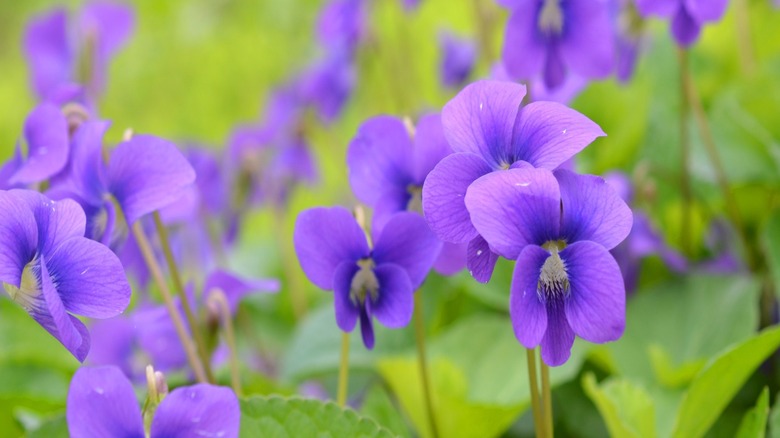
In addition to captivating gardeners with its aroma, sweet violets have long been used to make perfumes, candles, and liqueurs. The blooms are also used to adorn dishes, whether candied or raw. However, if you grow sweet violets with the intention to eat, make sure you follow these tips to ensure that the flowers are safe to eat.
Beyond perfumes and garnishes, sweet violets have been used in traditional Persian medicine to relieve symptoms related to respiratory infections and to have antibacterial, anti-inflammatory, and pain-killing benefits. Sweet violet syrup was used to treat COVID-19 patients in a trial published in the Journal of Ethnopharmacology. It was found to be effective against symptoms like coughing, muscle pain, headaches, and diarrhea. This plant truly seems to do it all — all while looking pretty.
One caveat about sweet violets is that while they're not officially invasive, they can spread quickly. Of course, this is perfect if you need to rapidly fill a bare spot in your yard, particularly one that other plants struggle to thrive in. To shape and maintain the plants, prune runners and trim leggy stems in the late fall. The plants will likely also benefit from being deadheaded, not just to tidy them up but also to keep the violets from going to seed. Use this time to also look for signs of pests or disease, since sweet violets can be susceptible to slugs, snails, spider mites, and powdery mildew, among others.