

The 1930s Style Of Decor Collectors Should Be Thrilled To Find Secondhand

We may receive a commission on purchases made from links.
Thrifting home decor secondhand definitely has its perks. There's something oddly satisfying about rummaging around thrift stores for hours, not knowing whether or not you'll stumble across your dream vintage item. Eventually, when you do, there's no feeling quite like it, especially when you take it away and display it in your own home with a sense of pride and achievement. Finding some items feels more like a win than others. One particular item you should be thrilled to find is a piece of Barbola decor, which dates back to the early 20th century and was big in the 1930s.
Barbola is a type of decoration that was made from gesso paste and applied to fire screens, trinket boxes, and mirrors. Back in the 1930s, using this paste to mold flowers was a cheaper option than hand carving wood. The flowers made from paste dried hard and were then hand painted in bright pastel colors, which suited the era perfectly.
Why you should be thrilled to find Barbola decor secondhand
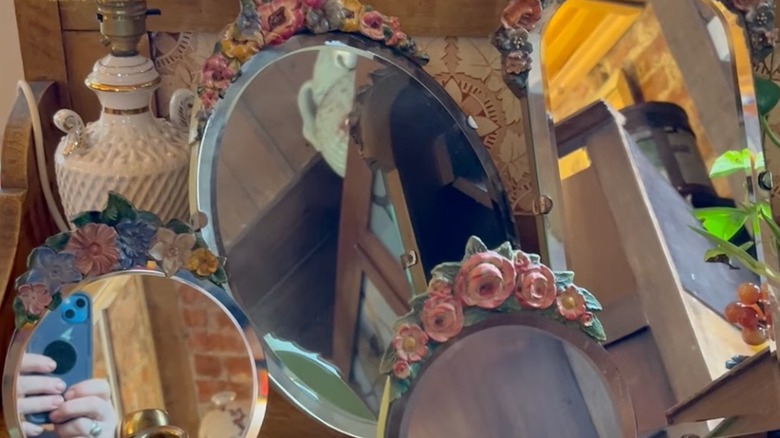
Chances are, when searching for Barbola homeware, it's a decorative mirror that you are most likely to find. If you do end up coming across one and you like the look of it, then it's definitely worth picking it up. Barbola mirrors are actually quite rare to find in thrift stores, as they are considered collectible. For this reason, they can be priced anywhere from $100 and upward, depending on the size and how intricate the design is.
Another reason why Barbola is hard to find in thrift stores is that the decorative fruit and flowers are often cracked and damaged. However, if you fancy getting crafty, then there is a way you can repair a Barbola mirror yourself and give your broken mirror a new life. You'll need a clay that hardens when baked, like this Sculpey White Polymer Clay, and some epoxy putty. Use the clay to create a mold similar to the bit of the mirror you're attempting to repair by pressing the clay on top of your chosen area. Once you've got the mold, bake it in the oven until it goes hard. Next, apply the epoxy putty to the damaged area, pop your mold on top of it, and add pressure. Remove the mold and leave the putty to cure for 24 hours, and you'll be left with a repaired mirror that's ready to be painted!