

Is There A Better Color Than Gray For Gravel Driveways?
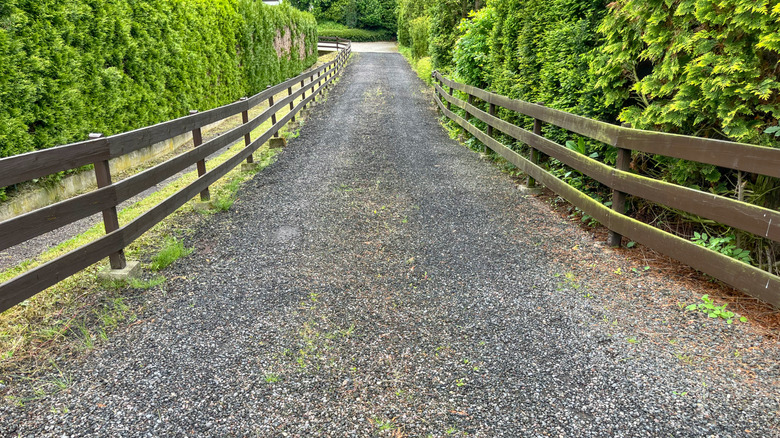
When someone mentions "gravel driveway," the mental image you conjure probably includes gray gravel. Gray is so ubiquitous for driveway gravel that it's often referred to as "traditional gray gravel," but you can find this product in a host of colors — from neutrals like white, cream, beige, and brown, to crayon-box colors like red, green, and blue. While we hesitate to make the blanket statement that there's a single better color than gray for all gravel driveways, there's a good chance that gray isn't the best color for you.
In a sea of gray gravel driveways, colored gravel gives you the opportunity to boost curb appeal by coordinating with surroundings and expressing welcoming vibes. To help visualize what different colors will look like on your driveway, consider taking a photo of your current driveway and asking an AI tool to show you what it will look like with other shades. Confirm your choice by looking at a sample outside in natural light. If you're wondering how to even begin finding the right color gravel for your driveway, we have you covered below.
How to choose the best color gravel for your driveway
One approach to choosing the right color gravel is to match it to your home. However, an exception to this strategy is if you have a white home, as white gravel does not provide enough contrast for either the home or driveway to pop. Additionally, a white driveway from a material like marble chip gravel is a striking choice, but will also show stains, like oil and tire marks, more easily, as will other light colors. Don't want to be matchy-matchy with your home and driveway? Choose a gravel color that complements your home exterior rather than mimicking it, such as a neutral paired with a warm-toned exterior. Some homeowners prefer to match or complement environmental colors, like flowers in the garden or the natural color of local soil.
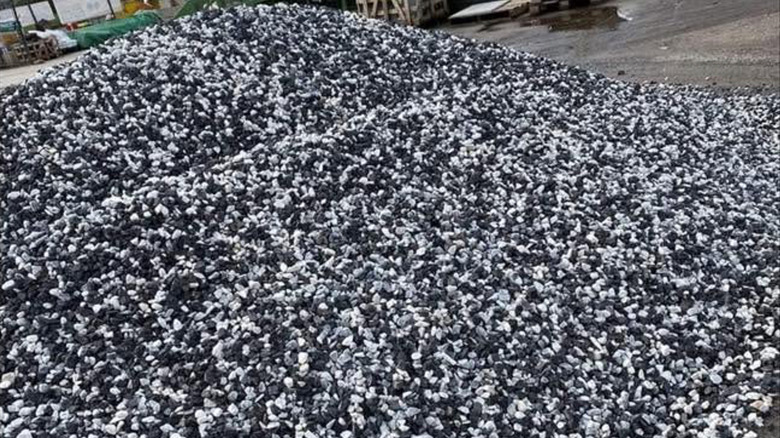
Once you decide to move beyond gray gravel, you can get creative by mixing gravel colors. Mix similar neutrals together or create contrast by pairing light gravel with dark. Purchasing a pre-mixed product with different colors — like Jersey Shore gravel – streamlines coordination.
How light and heat affect driveway gravel color choice
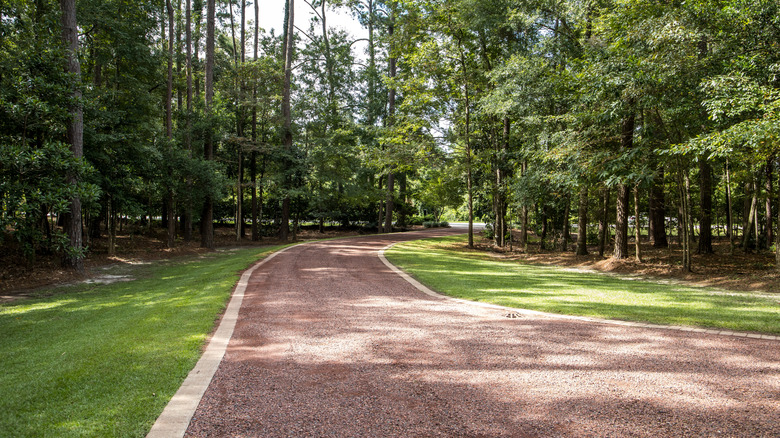
Consider light and heat effects on gravel color before making a purchase. Pale-colored gravel reflects light, with color determining the degree of reflection, measured in LRV (Light Reflectance Value). Citadel Stone recommends an LRV between 35 and 55 for aesthetic warmth and heat minimization. On the flip side, dark colors absorb heat. Black gravel makes a stunning statement, but be wary of its heat retention, especially in hot climates. A heat-absorbing black gravel driveway can make surrounding areas uncomfortable and would not be fun to step on in bare feet.
Stone shape also affects light and color perception. The best gravel to choose for your driveway, angular stone, has facets that reflect light, helping it appear lighter than the same materials in other shapes. Lastly, know that gravel gets its color either naturally or from dyes or coatings, so keep in mind that dyed gravel can eventually fade, while natural colors won't.