

Ditch Landscape Fabric: Use These Shells As A More Natural Alternative
We may receive a commission on purchases made from links.
What if there was a weed barrier alternative to landscaping fabric that doubled as natural mulch, replenished the soil with nutrients and aeration, and deterred common garden pests? Peanut hulls and hazelnut shells are here to do the heavy-lifting for your garden beds. Standard landscaping fabric does its job by suppressing weeds, but in doing so, it also compacts the ground underneath and prevents it from aerating. Not to mention how annoying it is to have to cut a hole in it every time you want to plant something. Then there's the fact that it's made of a synthetic material that does absolutely nothing to benefit your soil health. With this logic, many gardeners may be willing to pay more for nut shells, even if it means passing on the budget-friendly $3 landscaping cloth from retailers like the Home Depot. The upfront costs are worth it for what you get in terms of soil health and pest control compared to a plastic weed guard.
Hazelnut shells are your best bet if you value long-term weed suppression because they decompose slowly. Both hazelnut and peanut shells work as natural pest-control methods when cut into loose pieces, since their sharp edges are unappealing to everything from slugs to outdoor cats. Peanut hulls are best if your goal is to improve your soil's overall nutrient content since they're full of nitrogen among other beneficial elements. When used in combination, peanut and hazelnut shells may help tackle weed suppression, pest control, and soil improvement at the same time — offering way more value than your average landscape fabric. Just beware that the shells may interest deer, squirrels, or rabbits, and they aren't suitable for people with peanut or tree nut allergies.
Nut shells are a versatile and eco-friendly alternative to landscape fabric
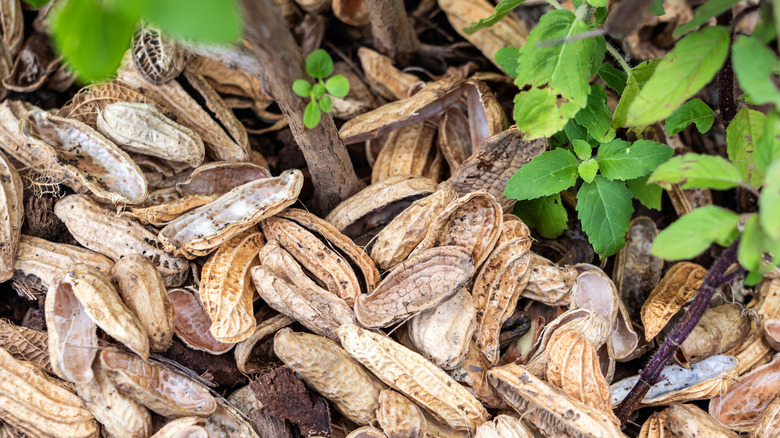
Landscape fabric can hold up for about 10 years, but that's a decade that you could have been nourishing your soil instead of harming it. Research suggests that using landscape fabric as a weed suppressant could leach microplastics and harmful chemicals into the ground over time. Aside from the potential environmental damage, the thought of having to dig up and replace landscape fabric could prove to be as much of a headache as it was to install it in the first place — and that's not even including transferring and replacing mulch to hide the plastic lining from view. Although nut shells don't last as long, (peanut shells last up to 2 years and hazelnut shells last up to 7 years), you don't have to cover them with additional materials. They do the work of landscape fabric and mulch all in one by limiting weeds and keeping the soil from drying out. They also ensure it won't get so hot that your plants' roots are damaged.
In fact, peanut hulls contribute nutrients to the soil and surrounding plants as they decay. The only potential caveat is that since they're also high in nitrogen, they could potentially fuel nitrogen-loving weeds (like chickweed) growing below the surface. That's why it's so important to apply a thick layer to garden beds and pathways (aim for 3 inches deep). This depth ensures weeds don't get exposed to the sunlight necessary for germination and growth. While hazelnut shells don't offer a lot in terms of soil improvement, they take much longer to decompose than peanut hulls (so you don't have to replace it as often) and won't run the risk of leaching microplastics into the soil like landscape fabric.
Tips and considerations for using nut shells like landscaping fabric
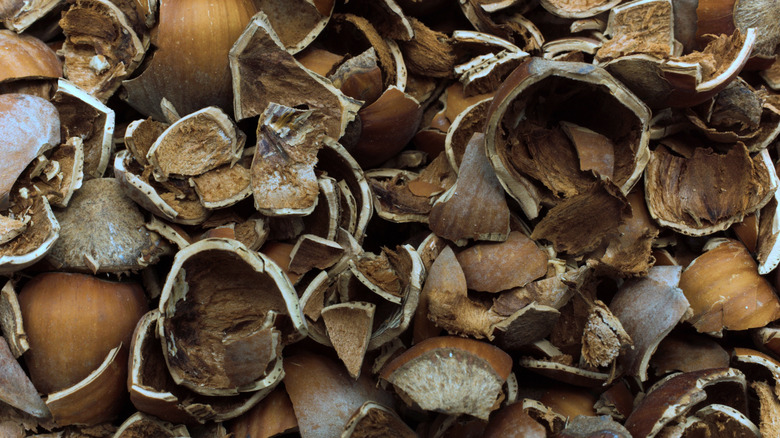
The cost of nut shells for garden use varies depending on the seller and quantity as well as how much you need to cover a planting surface. Hazelnut shells are more expensive than peanut hulls; a 6-pound bag of KP's Harvest Time Hazelnut Shell Mulch is about $19.99. However, their slow decomposition rate means you may not have to top-up layers as often. Hazelnut shells may be more aesthetically appealing compared to peanut hulls, since they have a rich reddish-brown hue instead of a sand-like color. They're also more readily available compared to peanut hulls.
Although finding peanut shells proves more challenging, they're worth it since they provide beneficial nutrients to the soil in addition to functioning as a landscape barrier. You could buy whole peanuts and collect the shells over time. There are also companies like Golden Peanut that sell whole or crushed hulls in bulk for animal feed and soil amendments — you just have to inquire about pricing. Apart from determining the amount of mulch you need to cover a garden bed, you need to consider how you want to use them both for strategic and decorative purposes.
There's no need to choose one or the other. Using peanut shells as the bottom layer could help you give back to your soil. Reserving hazelnut shells for only the top-most layer saves money. Designate hazelnut shells for covering around the base of plants to prevent a nutrient overload. Alternatively, you could mix up peanut and hazelnut shells and spread them evenly over the soil to get a broader dispersion of nutrients and weed suppression. Save hazelnut shells for small garden beds or flower pots for a budget-friendly compromise.