

What To Do Immediately If There's A Squirrel Stuck In Your Bird Feeder
We may receive a commission on purchases made from links.
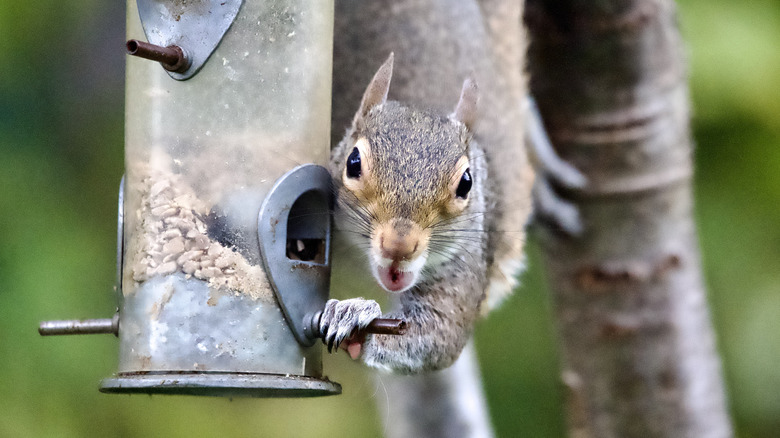
Picture this: You glance out the window at your bird feeder, expecting to see sparrows, cardinals, and other feathered visitors. Instead you see that there's a gray squirrel wedged halfway inside, struggling to wiggle its way out of the tiny feeder hole. While this likely isn't the type of backyard action you envisioned when exploring the benefits of having a feeder in your yard, it's a situation that can happen, and one that should be handled quickly and carefully to avoid hurting the squirrel and yourself.
Like all wild animals, squirrels are often on the hunt for food wherever it's available. These furry grubbers are small and limber enough to make their way up a tree or pole and into your feeder, which can attract squirrels to your garden. Unfortunately, this flexibility can work against them if they've wedged themselves into a space too narrow to back out of. When faced with this bird feeder scenario, first decide if you'd rather let animal control professionals come to remove the squirrel, or if you feel confident you can safely remove it yourself. If you want to try for a quick removal, it's important to gear up first.
Start with a thick pair of gloves, such as the Handlady Utility Garden Gloves, since a frightened squirrel won't hesitate to bite or scratch if it feels cornered — not to mention that they can carry parasites and diseases that can be transmitted to humans. In addition to gloves, it's also best to wear thick, long-sleeved clothing to protect your limbs. For extra protection, consider a face mask as well, or at a minimum, a pair of safety glasses in case the startled squirrel lashes out, aiming for your face. The ANDX 10 Pack Safety Clear Face Shield would work well.
What to wear and what to do when freeing a trapped squirrel
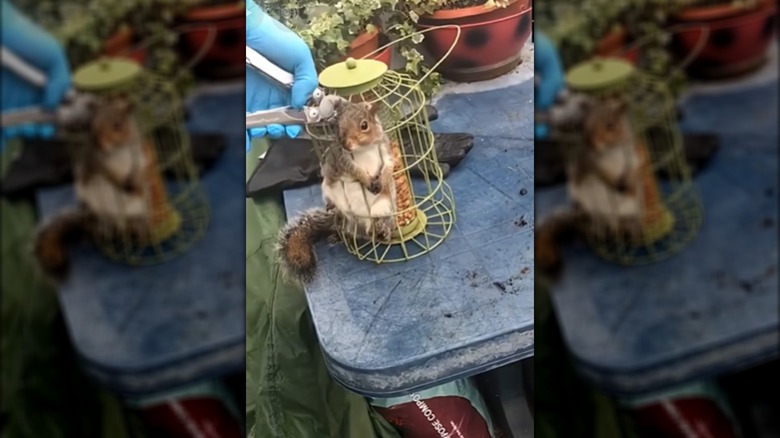
Whether or not you call a professional may depend on the squirrel's condition; squirrels that are visibly distressed, injured, or aggressive are better off with professional care. But if you decide to free the squirrel yourself, the next step after putting on your gloves and glasses is grabbing a pair of pliers, as you may need to cut away metal or other materials from the feeder.
Head over to the feeder and unhook it if it's hanging. Then, if needed, use your pliers to snip any bent metal or material that might be pinning the squirrel in place. Next, set the feeder on the ground and remove the top or any partition that may be blocking it from escaping. If it's able, the squirrel will run away as soon as the physical hindrance is removed — which is the best-case scenario. If you find that the squirrel is injured, or that you're unable to free the squirrel from the feeder, it's actually best to call your local animal control agency, wildlife rehabilitator, or state conservation department.
Also, your local wildlife rescue hotline can advise you on further steps to take, which may include wrapping the squirrel in a blanket and taking it to the local wildlife rehabilitation center. If the squirrel is critically injured, they may even advise you to bring it in for euthanasia. Procedures for this will vary by your location, according to state and local regulations. And if squirrels have become a regular nuisance around your feeders, it might be worth exploring a few ways to get rid of squirrels around your home, including adding a baffle, hanging your feeder higher, or using anti-squirrel feeders.