

Everyone Owned It In The '20s — Now It's The Vintage Cast Iron Piece We Want As Table Decor
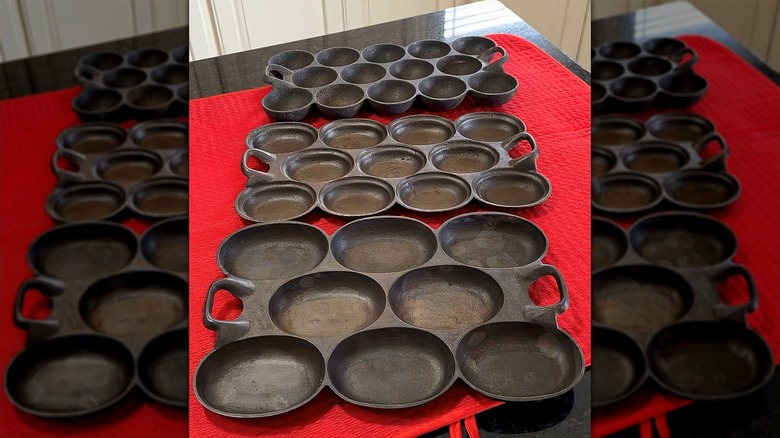
Once a common sight in American kitchens, cast-iron gem pans have become a thing of the past, though not for those who are into vintage bakeware and retro style kitchens. These multi-cup baking pans, also known as gem irons, were designed for and used in making small cakes called gems — mainly made of whole-wheat graham flour. The pans came in various shapes, with individual molds that are rectangular, oval, rounded, or Turk's head knot. The fancier ones featured the alphabet and more intricate patterns and shapes. Unlike modern muffin tins, gem pan cups were shallower and highly stylized, giving each baked gem a distinctive shape.
Nathaniel Waterman of Boston, Massachusetts, patented the original gem muffin pan design in 1859, although he called his invention an "egg pan." The pan had individual cups with empty spaces between them, allowing heat to spread evenly around each mold while the cast iron held heat throughout. Manufacturers continued to produce gem pans in numerous patterns in the decades that followed. For instance, Griswold made a wide variety from the late 19th century through the 1950s. Today, gem pans are prized less for their original purpose and more for their history, craftsmanship, and novelty, making them among the most valuable cast-iron kitchen-tool finds at thrift stores. These unique cake molds have also found a new purpose as home decor.
How to style a vintage gem pan as table decor
Repurposing kitchen items to give them a second life has become common nowadays, and vintage gem pans are particularly well suited for decorative purposes. Their individual molds provide plenty of opportunities for creative styling. For instance, the cups can be treated as tiny compartments for seasonal decor. You can tuck dried flowers, pinecones, trinkets, and decorative stones into the individual molds to create a show-stopping centerpiece for coffee, side, or console tables. For a larger vintage-inspired tablescape, place a gem pan alongside old cookbooks, antique kitchen utensils, wooden serving pieces, or ceramic vases. This emphasizes the pan's connection to historic kitchens without making the table appear as a plain museum display.
If you prefer a more low-key styling, however, simply place an empty gem pan on a runner or a wooden tabletop. This setup works especially well for naturally aged cast-iron gem pans as the imperfections, worn surfaces, and aged patina provide enough visual interest on their own. Vintage gem pans work best with certain interiors, including farmhouse, cottage, rustic, and retro-inspired homes. If you're ready to procure your very own gem pan table decor, head to your local thrift store or check online marketplaces. Many pre-owned gem pans sell for around $30 to $40, although pricing may vary depending on age, condition, design, and rarity of the unit.