

How To Shade Your Outside AC Unit Without Affecting Performance
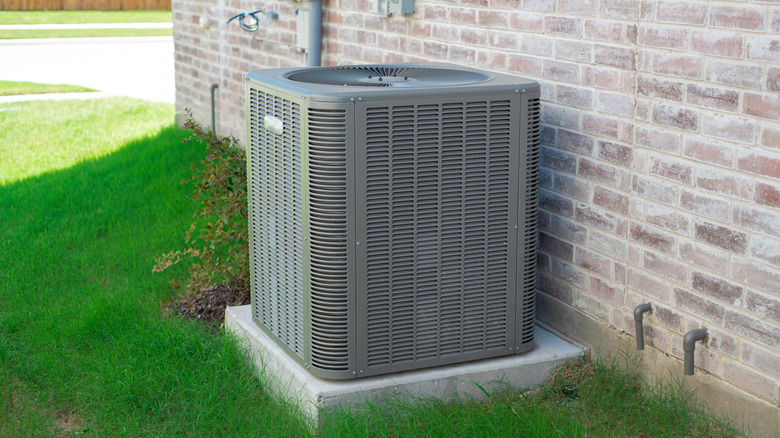
Owning a house entails equal parts pleasure and weariness. Maintaining curb appeal is important and often difficult, with myriad factors playing spoilsport — think dead grass, topped trees, or pesky weeds. While you may find solutions for these yard issues, masking eye sores like your aircon's condenser taking up space on the side can be challenging. While concealing it is essential to preserve visual aesthetics, you don't want to compromise its performance. After all, a poorly installed shade structure can prevent the condenser from efficiently rejecting heat into the atmosphere, impairing its effectiveness and reducing cooling. In extreme cases, the unit may fry, requiring immediate replacement. Imagine having to deal with that during a heat wave!
Luckily, there are a few creative ways to conceal an air conditioning unit outside without affecting performance, such as establishing tree canopies and placing purpose-built shade covers over the units. Naturally, you must follow the ideal clearance rules so that airflow remains unimpeded and there's sufficient space to enter and handle regular maintenance and repairs.
Using tree canopies to disguise AC units
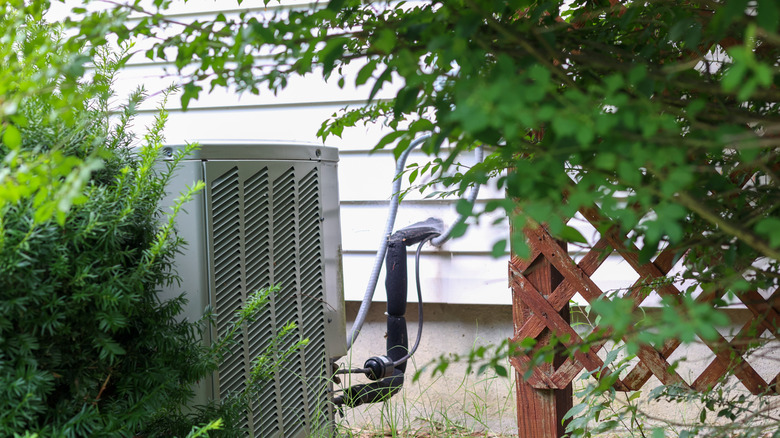
As children, we all have memories of sprinting around trees, eventually retiring to their shade for respite. So, it's no surprise that their presence overlooking AC units would be equally welcome. Ideally, when seeking common shade trees that can help lower your AC bill, look for those that will create minimal mess or droppings that would otherwise clog the unit. This means trees like ash or maples that drop helicopter seeds are a no-go. Similarly, avoid trees that are insect magnets. While bees have their utility in the ecosystem, you don't want them gathering around your condensers and stinging maintenance people. Trees with thorns, asymmetrical growth habits, or severe pruning requirements also make poor contenders.
Typically, it's best to select deciduous trees. While it's inconvenient to pick up the leafy detritus in fall, the bare trees will allow the sunlight to passively heat your home's exterior during the winter. For year-round interest, opt for evergreen trees like Arizona cypress, wax myrtle, live oaks, or Italian cypress. That being said, avoid making the mistake of planting trees too close when landscaping around your HVAC. Maintain a distance of at least four feet and ensure they're hardy to your zone, can adapt to the site's conditions, and are preferably heat-tolerant. Additionally, you can cover the ground around the unit's base with ornamental grasses like mondo grass, but be sure to trim them shorter than 6 inches.
Don't expect massive energy gains
Some sources maintain that shading outside AC units with tree canopies may lead to significant efficiency gains. But this isn't necessarily true. When the Florida Solar Energy Center put this hypothesis to the test back in 1996, it discovered that localized shading over condenser units located on the west side at most generated efficiency gains of 1% during peak summer afternoons. Another 2010 study found similar results, where simulated models came up with maximum efficiency improvements of 1%. As such, these numbers aren't meaningful enough to splurge on new trees merely for utility savings.
With that said, researchers don't discount having several trees around the house. The combined effect of shading and evapotranspiration may bring down the cooling load of homes, leading to improved aircon performance. Another study conducted by Donovan and Butry found having trees on the south and west sides of the home that receive the worst heat is best.
Other than having trees or while waiting for them to grow (since mature specimens can be expensive), you can also cover your outdoor unit with shade covers built specifically for ACs or pass-through (not solid) lattices. They sit on top — preferably 5 feet away — while leaving ventilation ducts clear. However, they may be unsuited to units that discharge hot air from the top, though those dispensing air side-to-side may work. If you're unsure about your condenser's mechanics, best leave it out in the open rather than risk costly replacements.