

Say Goodbye To Armyworms With The Help Of A Garden Store Staple
We may receive a commission on purchases made from links.
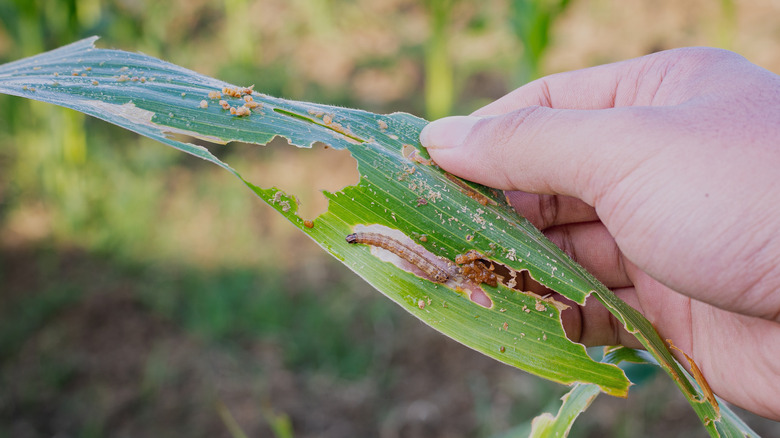
Have you noticed a large number of smooth, 1 1/2 inch long caterpillars feeding on your lawn grass or the corn plants in your garden? Armyworms could be to blame. These critters aren't actually worms, but are the caterpillar form of the fall armyworm moth (Mythimna unipuncta). Sometimes they even feed on bean plants, beets, cabbage, tomatoes, and sweet potatoes, and they can do extensive damage in a short period of time. TikTok has a hack for getting rid of destructive lawn armyworms using soapy water, but since soap can damage your plants, using beneficial nematodes may be preferable.
If you're a seasoned gardener, you may already be familiar with the not-so-beneficial type of nematode. These microscopic worms that feed on plant roots are highly damaging. But there are many types of these very tiny worms, and some of them prey on insect pests while leaving plant roots alone. You can get rid of armyworms without harming your leafy friends if you use this garden store staple, a valuable tool when gardening organically.
Using beneficial nematodes to fight armyworms
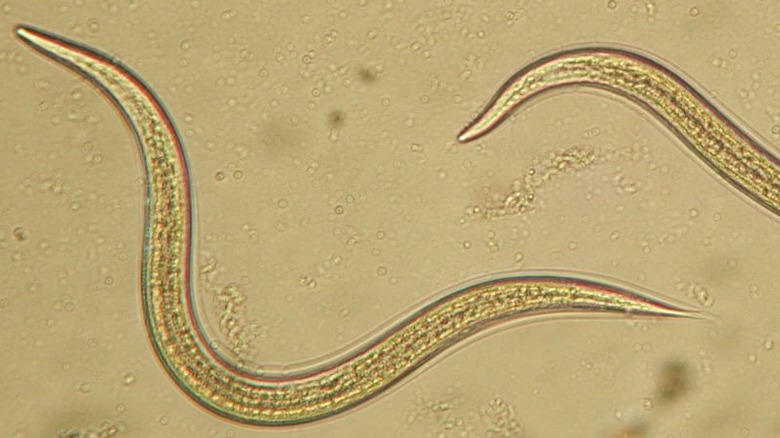
The first step in this strategy involves making sure you purchase the right type of beneficial nematodes from your garden store. There are different species of these microscopic worms, and different types attack different caterpillars or grubs. To get rid of the armyworms plaguing your lawn or garden, you'll need Steinernema carpocapsae nematodes. Sometimes these are packaged in a mix that controls other pests as well, like Natures Good Guys Live Beneficial Nematodes Triple Blend Mix. Once they've made their home in the soil, nematodes will wait until an unlucky armyworm comes along, then attack as soon it's close. After burrowing into the armyworm, they'll also infect it with bacteria. From a combination of the nematodes and the bacterial infection, the armyworm will die within a few days, releasing more nematodes so that the cycle repeats.
Beneficial nematodes can be a gardener's secret weapon when used correctly. Wait until the soil warms up to above 60 degrees Fahrenheit — also, it's best to apply them in the evening. When you're ready, mix the product with water and spray it on wet soil, then keep the soil damp after applying it. However, be careful to target only the specific areas where you need to control armyworms. While beneficial nematodes are widely believed to be safe for pollinators among gardeners and farmers, there is scientific research showing that they actually can also kill beneficial insects that get too close, including bumble bees.