

Easier Than Hand Pulling Weeds: Add One Ingredient For A More Effective Herbicide
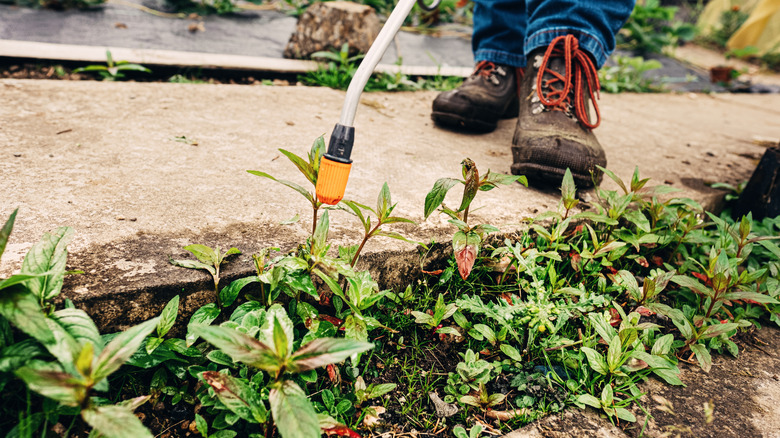
For homeowners, weed removal never actually ends. Sure, there are several approaches you can take to prevent and get rid of weeds in your garden — but it's an ongoing job that comes with maintaining outdoor spaces. Everything from pulling weeds out by hand to laying mulch and installing landscape fabric can keep them at bay for a time. But for serious weed encroachment, many homeowners rely on herbicides to get the job done.
If you are finding your glyphosate-based herbicide mix less than effective, it's worth testing your water. Hard water can limit the absorption of the glyphosate into plants. Luckily, there's an ingredient you can add to the mix which may make it worth the money and reduce your overall herbicide usage: ammonium sulfate (also known as AMS).
Ammonium sulfate isn't an herbicide itself, but it's a common nitrogen-based fertilizing ingredient that you can add to glyphosate to increase the herbicide's effectiveness. Glyphosate is the active ingredient in many common herbicides, such as Roundup and Glypro. It's also sold separately, and when combined with water, and sometimes other additives, it works well at eliminating common garden weeds. The Michigan State University Extension recommends adding ammonium sulfate to glyphosate-based herbicides if your mix includes hard water, noting it's the "standard of performance" in terms of water conditioners. However, it's imperative to use the proper mixing order and ensure you are completely aware that your mix is safe for AMS. (If unsure, reach out to your local extension service for guidance.)
Always exercise caution when mixing additives to your herbicide
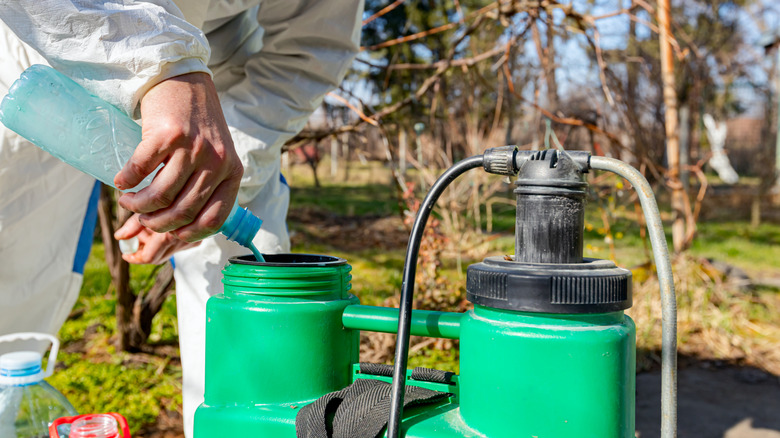
As with combining additives to any herbicide, it's imperative to follow labeled instructions. It's also important to remember that ammonium sulfate will first need to be diluted in water before being added to the glyphosate mix, requiring constant agitation until dissolved. The Purdue University Extension offers a useful formula to help you determine how much AMS is required to reduce the impact of hard water on your glyphosate mix. For best results, conduct a water test to determine the mineral content of your water.
Before applying your DIY herbicide solution, cover surrounding plants or lawn areas that may accidentally be sprayed — this solution doesn't discriminate between weeds and the plants you want to keep. For this reason, it's also wise to spray the herbicide on a wind-free day. Once the herbicide works its magic and your problematic weeds are cleared out, it's the perfect time to prep your soil for a spring garden if you're planning to fill that space with new plant friends.
As a reminder, creating herbicide mixes is serious business, and AMS isn't a must-have for every gardener or homeowner — especially if you are not affected by hard water. As such, take every precaution possible if there are any ambiguities for your specific application, and reach out to your local extension service if you are unsure about the proper procedures or safety measures.