

Will Homeowners Insurance Cover A Failing Retaining Wall?

If you have a retaining wall on your property, you're probably all too aware that it's not there just for looks. Retaining walls make sloping yards usable, assist with drainage, and protect against flooding, erosion, and soil sliding. But what happens when a retaining wall starts to fail? Will your homeowners insurance cover repairing or replacing it?
Unfortunately, the answer isn't a clear-cut yes or no. Your retaining wall itself may be covered, but certain causes for failure aren't. Or your retaining wall may not be covered at all, in which case you would need to purchase additional coverage before failure occurs. Since a failing retaining wall could cause serious property damage to yourself or your neighbor, it's crucial to familiarize yourself with both your homeowners insurance policy and the signs of retaining wall failure. With this knowledge, you'll be able to purchase additional coverage if needed — and save your wall before disaster strikes.
When does homeowners insurance cover retaining walls?

Legally speaking, retaining walls are usually considered "detached structures," which means they may be covered by your home insurance policy but often aren't. This category also includes things like fences, swimming pools, and sheds. Some policies may require you to purchase additional "other structures coverage," sometimes called "Coverage B," to insure your retaining wall. According to Progressive, Coverage B typically covers 10% of your primary policy's limit, but it's possible to increase this amount by adding more coverage.
Even if the retaining wall itself is covered, some of the most common causes of retaining wall failure may still be excluded. Generally speaking, sudden accidents like a lightning strike or a vehicle collision are considered "covered perils." However, damages not covered by homeowners insurance include events like floods, earthquakes, and shifting or heaving soil. These are considered "excluded perils" and can fall under "special form" coverage, which requires separate policies. Standalone earthquake and flood insurance policies are available in all 50 states, and in some areas, they're even required. You may also consider difference in conditions (DIC) insurance, which supplements your existing policy with customizable protection against specific events like landslides. Coverage definitions and availability can vary between insurance companies and from state to state. Review your policy carefully and contact your insurance agent if you need advice on what coverage is necessary for your property.
How to protect your retaining wall
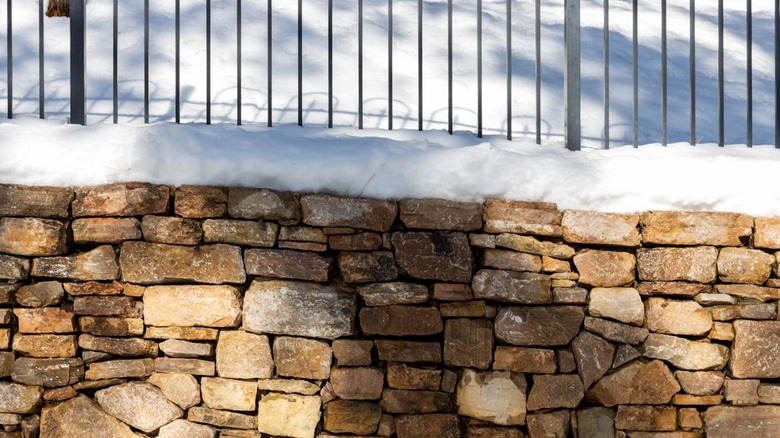
Crucially, neglect and normal wear and tear are generally not covered by insurance policies. Homeowners are expected to maintain their property and insurance companies won't pay for damage caused by improper maintenance. Fortunately, retaining wall failure is gradual. Monitor your retaining wall closely, both by visual inspection and by comparing photos. If you can catch the warning signs early, you'll be able to save the wall before it collapses.
There's one common reason why retaining walls fail: the foundation. Retaining walls withstand the pressure from tons of soil, and if the foundation is unstable, your wall's lifespan will be significantly shortened. If your retaining wall is bowing or leaning, or if you notice soil erosion behind it, it can indicate that the foundation is failing. In areas prone to heavy rain, earthquakes, or frequent freezing and thawing cycles, you may see other signs of retaining wall failure like cracks, sunken soil, or water pooling at the base.
If you have an older retaining wall, it's a good idea to have a qualified structural engineer or contractor provide regular inspections. Keep in contact with your insurance agent about the wall's health; they'll be able to provide coverage recommendations, and your insurance company will appreciate you being proactive.