

Creating An Irrigation System For Your Home And Garden? We Asked Specialists For Advice
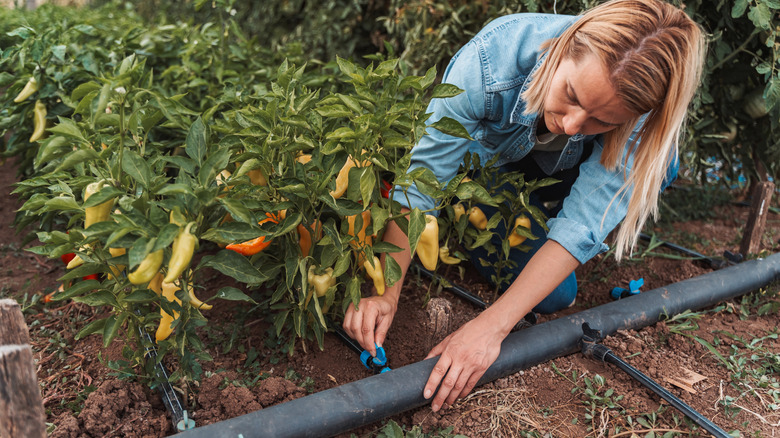
In a utopian world, you'd step into your yard and be formally greeted with perfect greenery and flowers. You wouldn't have to water them; nature would have taken care of it, showering water upon your plants as the need arose. However, depending on your climate region and the size and span of your garden, your reality is likely wildly different. To enhance your home's curb appeal, you must have a designed landscape, and to keep it beautiful, you must manually or mechanically irrigate it.
However, creating an irrigation system from scratch can seem daunting. From rotary sprinklers, garden hoses, drip lines, and soaker hoses to the plain old watering can, the world is teeming with options. On top of that, you must fine-tune the settings according to your plantings, water reservoir, and piping. So, to help demystify some of this process, we reached out to four specialists for advice.
Starting the discussion off while illuminating the guiding principle behind the choice of an irrigation system is Chrissie Handley, a lawn care specialist and gardening expert working for Online Turf, a turf, soil, and compost supplier. In her exclusive interview with House Digest, she notes, "I'd recommend designing your irrigation system around the idea of heavy and infrequent watering, rather than a system that waters little and often, to avoid it being too shallow." She feels that when you apply a heavy dose of water, it can penetrate deeply into the soil before evaporation occurs. While seeking out this moisture, plants develop a strong, stable root system that is better adept at handling future drought-like conditions. Next, we investigate the different mechanisms and methods for ensuring you can achieve this type of deep watering.
Drips perform better than sprinklers
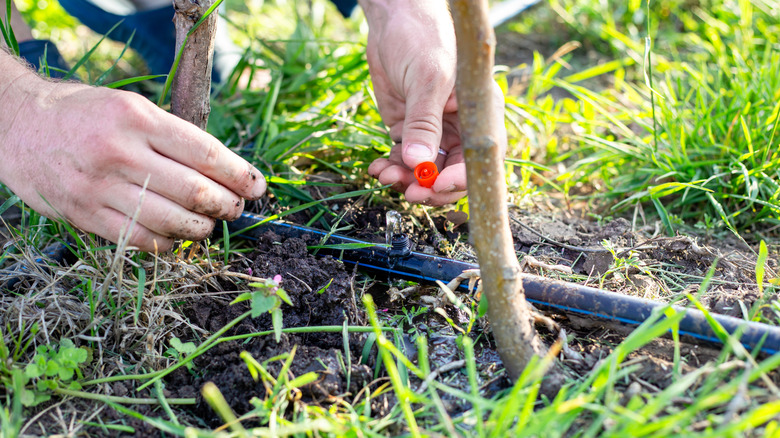
Of the many hands-off ways to water the plants in your garden, Elizabeth Waddington, a garden designer at First Tunnels, recommends drips or soaker hoses because they release water at the soil level, rather than overhead on the foliage. "Drip irrigation or soaker hoses are often a better choice than overhead sprinklers because they deliver water directly to the root zone with much less evaporation and runoff," she exclusively tells House Digest. "They can also help reduce the spread of fungal diseases by keeping foliage dry."
Handley agrees, "If your system is sprinkler-based and comes on for short bursts regularly, you'll find that this doesn't give it enough chance to soak through into the ground before being evaporated by the sun, so it doesn't give the lawn a chance to absorb it, like you never watered it at all." Indeed, compared to sprinklers, drip irrigation systems can reduce your water usage by approximately 30% to 50%. That's because most of the water makes it to the soil, making it extremely valuable in dry, hot areas or during times when watering restrictions are on.
However, nuancing this discussion, Waddington insists that you should consider improving the soil before setting up any irrigation system. "Adding organic matter increases the soil's ability to hold moisture while still draining well, meaning you'll need to water less often over time." Moreover, she's keen on mulch, as it minimizes evaporation, moderates soil temperatures, insulates the roots, and keeps weed pressure down. Choose eco-friendly mulch options, like pine straw and wood chips, that decompose and enrich the soil, over inorganic or plastic mulches that may turn water-repellent if left baking in the heat.
Prepare yourself for extensive planning
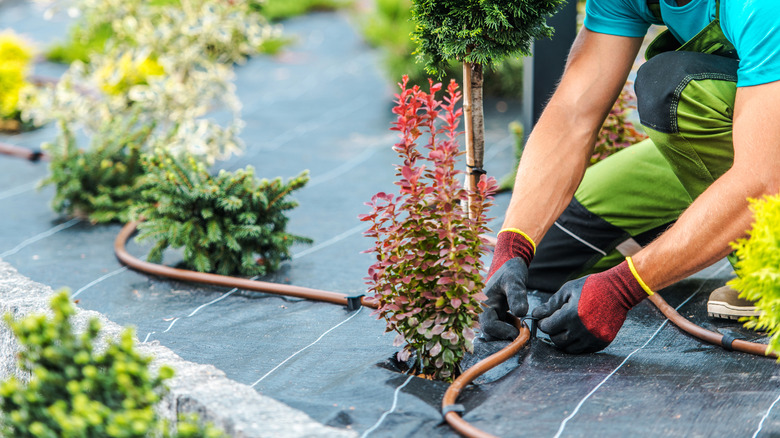
When House Digest exclusively interviewed Ryan Kilsby, the owner of Waterworks Irrigation, about home irrigation systems, he emphasized the need for rigorous planning. "You need to plan how you'll dissect your yard into zones, what your GPM (gallons per minute) or water pressure is, and know the legal requirements and water regulations for your municipality," Kilsby says, adding that after determining these measurements, you can ascertain the quantity of water emitters — be it sprinklers or drip — required in an area. Based on this, you may decide the total number of zones possible in your yard. For instance, in the case of drip tubing, a zone should not exceed 400 feet in length.
He also recommends delineating distinct zones for different plant groupings, as they usually involve differing irrigation schedules, run times, and PSI requirements. It's a sentiment that Gene Caballero, co-founder of GreenPal, also echoes in his exclusive interview with House Digest. Explaining why, he says, "All the plants like shrubs, flower beds, containers, and even the lawn, require different amounts of water, and if you put them in the same zone, that often leads to overwatering some plants and underwatering other plants." Planning separately for high- and low-water plants can improve overall efficiency and help conserve water. To help with that, he recommends installing high-tech smart gardening products like a smart irrigation controller that senses the soil's moisture content before releasing water or may make adjustments in accordance with the weather conditions and rainfall patterns. "It will actually help save water in the long run, reduce utility costs, and help prevent disease caused by too much irrigation," Caballero adds.
Learn how to handle updates and maintenance requirements
Creating an irrigation system isn't a once-and-done affair. If you ever tire of your garden scheme and are in a mood for a refresh or need to rejig the design to meet your updated needs (more hardscaping or self-sustaining vegetable beds, perhaps?), you'll need to make changes. "You should also plan for any upcoming changes to your yard, what parts and materials you'll use, and where to place sprinkler heads to ensure adequate water coverage," Kilsby advises.
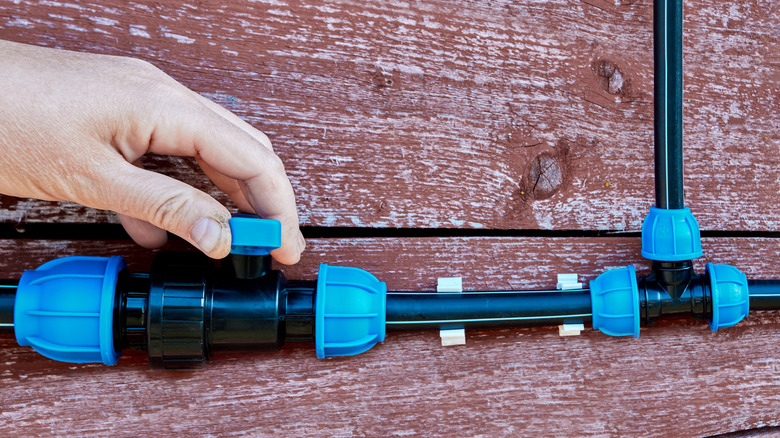
While setting up the system, be sure to choose quality parts. That's because Kilsby feels, "if repairs are needed, quality components that allow faster replacement will reduce your expenses (for example, using disassemblable manifold fittings on your valves allows for quicker replacement vs. going straight to PVC)." He also offers up sage advice when hiring professionals for this job. "Look for one with a good warranty, especially one that covers parts and labor." This way, they'll be incentivized to provide quality workmanship and materials, as they must foot the bill in the event of failure.
Other than that, he advises homeowners not to leave maintenance entirely in the hands of the irrigation company. "Learn the basics, such as how to shut off water to your irrigation system without shutting off the water to your entire house, and how to run and adjust your timer," he says. Also, keep an eye out for any leaks or breaks in the system that may cause the water to pool or flood the area. Finally, don't forget to winterize the system, especially if you reside in a cold region or one that experiences extreme winters.