

16 Rare Flowers Worth Hunting For
Flowers can add a sweet aroma to the home and color to the yard. They also make for an excellent gift, and it's all the better if you grew them yourself. For those looking to diversify their flower bed — and perhaps impress a friend or significant other with a lovely arrangement — why not look to grow some lesser-known varieties.
We all know the marquee flowers, as they're frequently referenced in poetry, novels, and films. There are roses, lilacs, chrysanthemums, orchids, and dahlias. Perhaps you've grown or given one or more of these types yourself. And maybe you're ready to mix it up a little with some rare cultivars. Some of the varieties in our list will require a controlled environment, while others should grow easily in North American gardens.
There are plenty of ways to find unique flowers besides walking the aisles of a garden center. For example, you can visit a local florist and inquire about flowers you don't know. Or, you might even come across rare flowers in old botany books you find an at estate sale or a thrift store. You also might prepare for when you see an unknown flower in your day-to-day by downloading an app, like iNaturalist or PlantNet, to identify plant species. Our list will give you an idea of what sort of flowers are out there, too.
Beesia
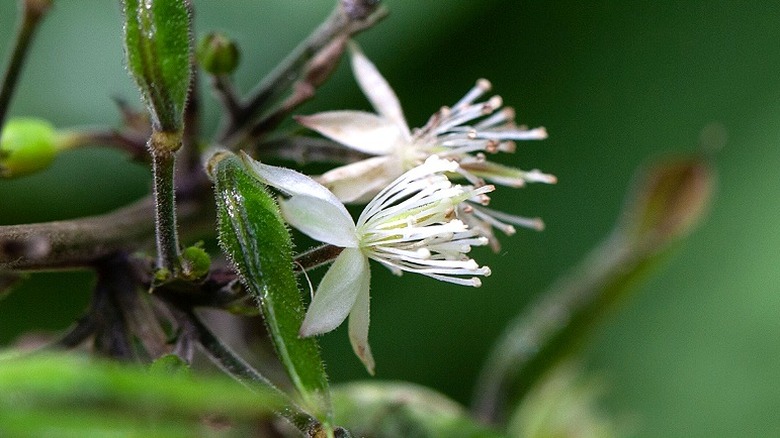
Beesia (Beesia deltophylla) is hardy to USDA zones 6 to 8, and grows large, evergreen leaves that cover the ground, almost like ivy. In the summertime, small, elegant flowers blossom from their long, delicate stems. These flowers are ideal for tree-covered spaces, because they don't require a lot of sunlight. You can prune these plants in late summer and early spring. Plus, beesia is resistant to deer.
Saxifrage
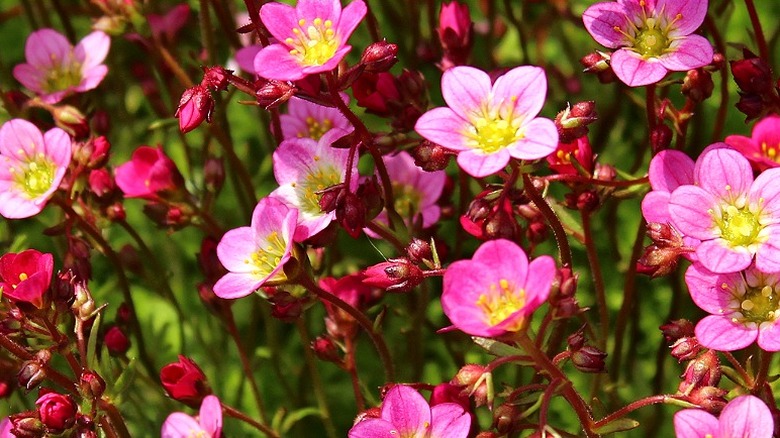
Saxifrage (Saxifraga) stays green almost throughout the year in mild climates, and blooms small, pink flowers in the late fall through the late winter. In the spring, you can divide the plant to spread it throughout your yard. It's perennial, so this may alleviate some of your spring yard work. It's hardy to USDA zones 6 to 9, and does particularly well in the middle part of the country.
Its latin name, Saxifraga, translates to "stone-breaker," as the ancients used it to treat kidney stones. As William Carlos Williams once wrote, "Saxifrage is my flower that splits rocks." The plant does grow well in crevices, though, so perhaps Williams wasn't referring to kidney stones.
Holboellia (Stauntonia) vine
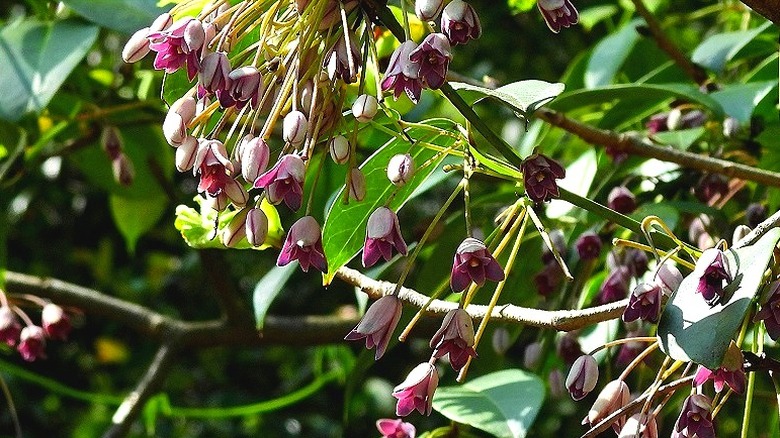
Holboellia vine (Holboellia coriacea, syn. Stauntonia coriacea) is an excellent plant for decorating the side of a house, as it can climb a trellis. It will also climb tree trunks and hang down from their branches. Its spear-shaped, waxy leaves stay green throughout the year and the white and purple, droopy flowers bloom in the spring.
Also know as China blue vine or sausage vine, the flowers are fragrant before they turn into an edible fruit. The pink fruit grows in clusters, and each fruit can reach the size of a potato. They have a bitter taste, but many people enjoy them. Holboellia vine succeeds in USDA zones 7 to 9.
Queen of the night
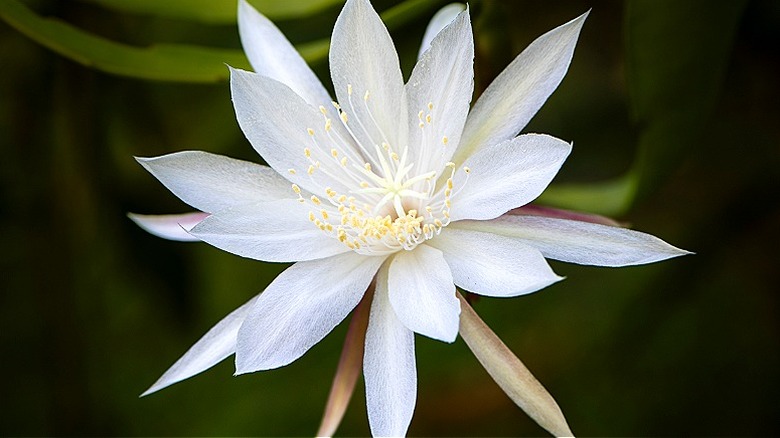
Queen of the night (Epiphyllum oxypetalum) features conical, white buds that grow erect upon nightfall and then droop in the morning. The plant is a species of cactus (another name for it is the Dutchman's pipe cactus), but it doesn't look like any cactus most people would imagine. Its long stems curve down under their own weight, and its narrow, pointed leaves arch upward and hang down. It's hardy to USDA zones 10 to 11, and requires indirect sunlight, not full sun.
Black bat flower
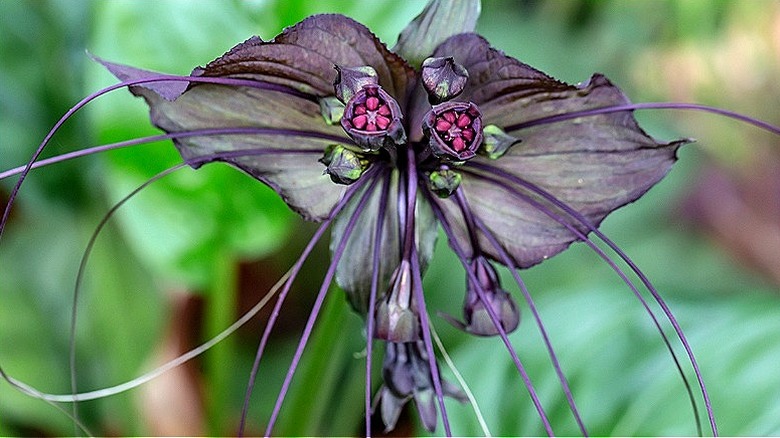
The herbaceous perennial black bat flower (Tacca chantrieri) is native to Southeast Asia, and it thrives in environments with 60% to 80% humidity. Note that its flowers will begin to wilt once you cut them. The striking plant is hardy to USDA zones 9 to 11 and requires temperatures above 55 degrees Fahrenheit, so it's best to grow black bat flowers in a greenhouse with a humidifier. Also, make sure to guard these flowers from slugs and snails, which may eat them.
Toad lily
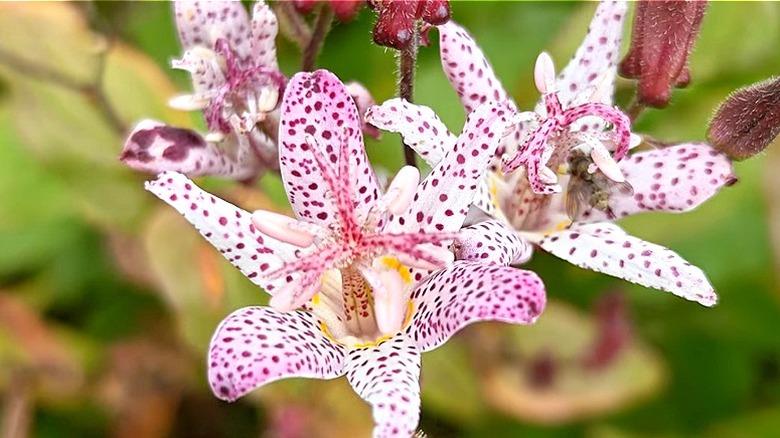
Toad lilies (Tricyrtis hirta) are hardy to USDA zones 4 to 9, and they do well in yards with dense tree cover that can provide them with shade. The toad lily won't only add color to your yard, but it'll also attract hummingbirds. Each of its flowers have six petals, which can be combinations of white, red, purple, or yellow. When you water a toad lily, do so at the plant's base. Its well-drained soil should be moist to the touch but not sopping. Keep in mind that lilies are toxic to cats.
Ghost orchid
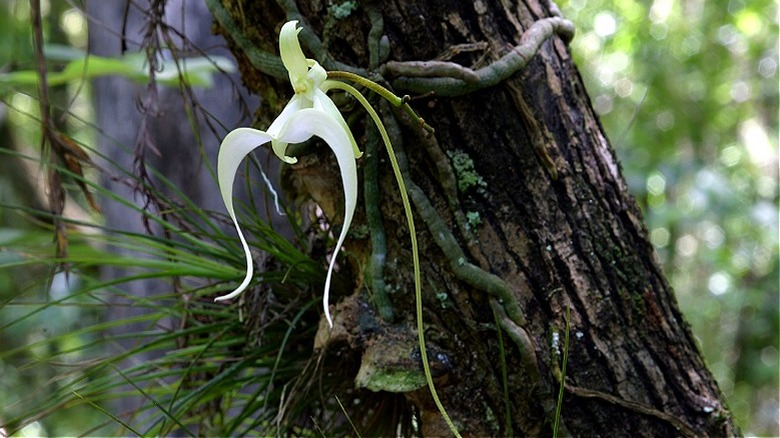
The ghost orchid (Dendrophylax lindenii) excites the imagination of even the most well-traveled botanist. Its white flower spreads like wings of a butterfly, while its stem attaches to a root system that grasps onto tree trunks, never penetrating the soil. The ghost orchid has no leaves.
In 2025, the U.S. Fish and Wildlife Service proposed to list the ghost orchid as endangered. It is illegal to remove ghost orchid from the wild, and the law requires gardeners to purchase this plant domestically from specialists. The ghost orchid is native to Florida and its marshes and Cuba.
Astelia 'Silver Spear'
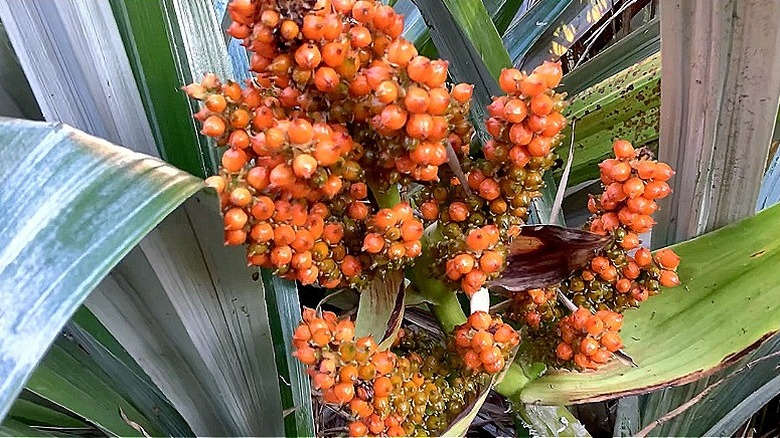
Astelia 'Silver Spear' has arching, spear-like leaves that grow in a dense clump. It does not often bloom flowers, but when it does, they're small and appear either cream-colored or pale green. In the fall, orange berries may appear (pictured). These plants will grow to a height of 3 feet, and they're good for covering ground. It's an evergreen perennial, and is hardy to USDA zones 8 to 10. Grow astelia around your garden if it's being overrun by deer, as they tend not to eat it. It is also highly resistant to diseases.
Iris haynei
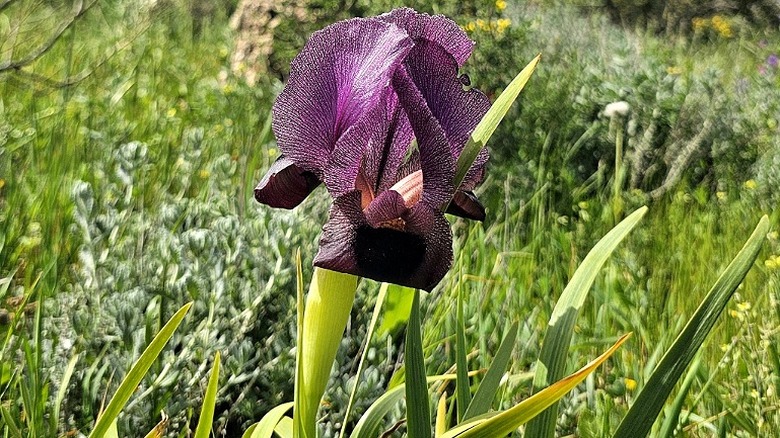
Iris haynei is only found in one area of the world. As described in the journal Plant Sociology, its "... distribution range is restricted to the northeast of the West Bank within a limited geographical range of the Faqqua-Jalbun area and the hillsides of Mount Gilboa." The plant blooms each spring, a single purple bud crowning every stem. It's known as both the Gilboa iris and Faqqua iris, as well as the royal iris.
Since 2016, Iris haynei has been the official national flower of Palestine. Also since 2016, it holds the status of vulnerable on the IUCN Red List of Endangered Species. Since the flower is almost never cultivated, there's a very low likelihood of ever coming across I. haynei outside of its native range, but you can always study the flower's singular beauty through images like above.
Ylang-ylang
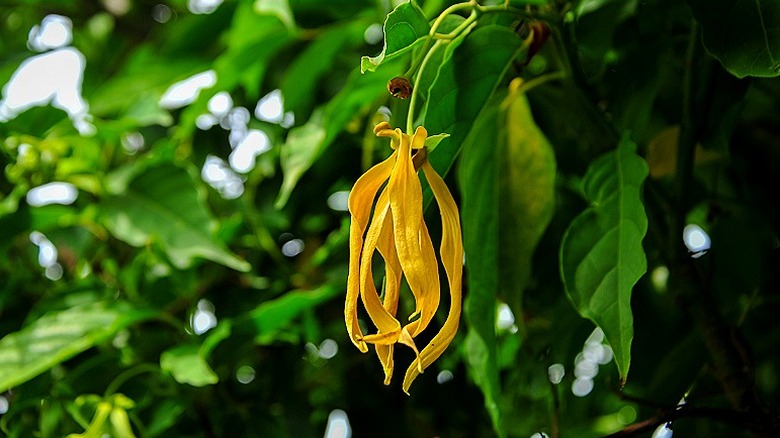
The ylang-ylang (Cananga odorata) is known around the world for its sweet smell even if you don't know its name or its yellow flowers that hang down like melting candle wax. Its scent is used in the popular perfume Chanel No. 5. This perennial grows in USDA zones 10 to 12, which means that it prefers warm, humid environments, similar to its native habitat of the Philippines. The tree requires six to eight hours of sunlight each day, and often grows best in a controlled environment with a humidifier, as it prefers a humidity above 50%. The flowers die soon after being cut.
Attenborough's pitcher plant
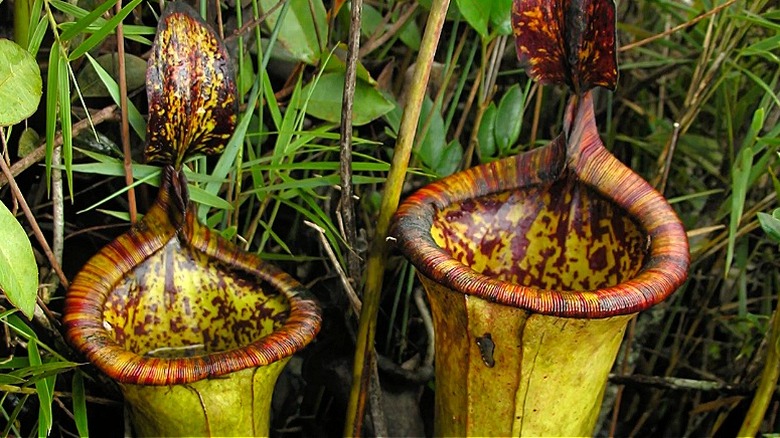
Attenborough's pitcher plant (Nepenthes attenboroughii) is another plant you won't find outside its native habitat of Mount Victoria in the Philippines, the only place it's known to exist. This plant is a carnivorous plant, also known as the "Venus rat trap," as it consumes insects, lizards, and small mammals.
It's named after naturalist and television presenter David Attenborough, perhaps the plant's most famous admirer. The pitcher plant is shaped like the bell of a saxophone, and it stands about a foot tall and 6 inches wide. It produces small flowers, which do not have petals.
Parrot's beak
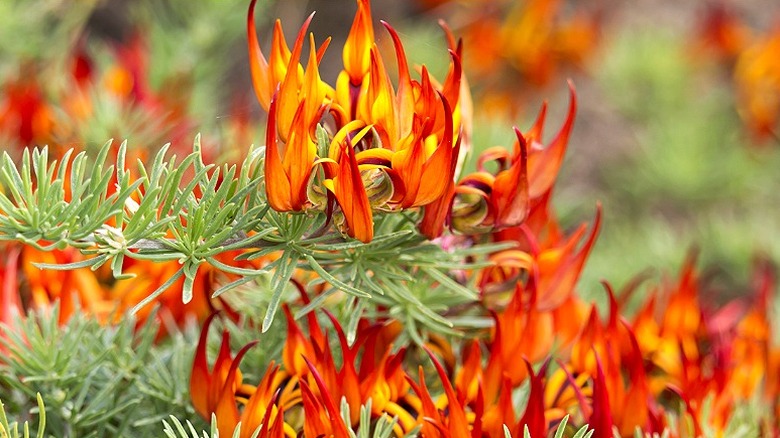
The parrot's beak (Lotus berthelotti) features clusters of pine needle-like leaves and tear drop-shaped red flowers that resemble flames or parrot beaks, hence its common name. The plant is hardy to USDA zones 10 to 12, and you might be able to find it in gardens in places like Florida, California, and Hawaii. To grow it in your garden or in a pot, you need to water the soil regularly and allow it to drain. The plant isn't as likely to bloom in high heat, so you'll usually see those red flowers in the late spring and early summer.
Catherine-wheel pincushion
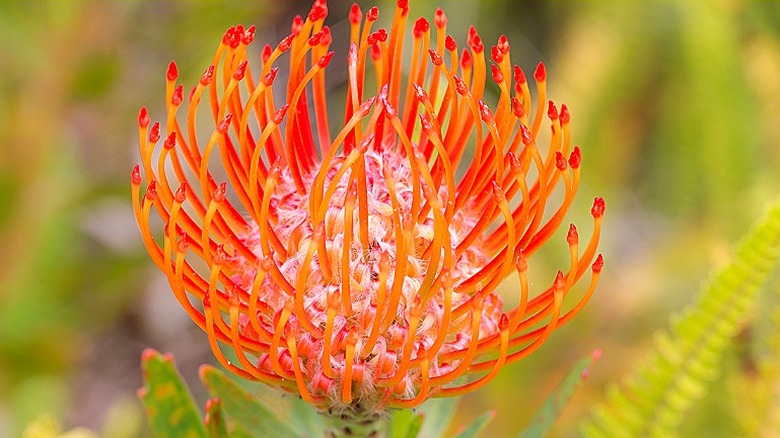
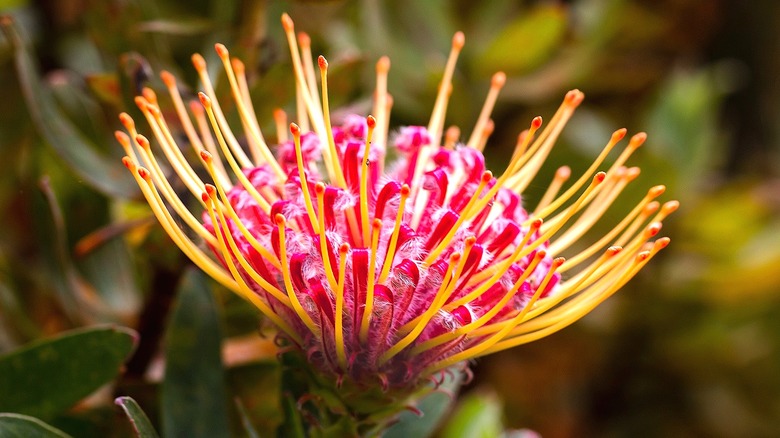
The Catherine-wheel pincushion (Leucospermum catherinae) is named for its distinctive head of needle-like, orange blossoms. The evergreen shrub can produce dozens of heads and can reach 6 feet high. Each head has about 100 filaments with individual flowers on each end. It grows well in one zone, 11, which includes Hawaii and parts of Florida.
The plant is native to the Western Cape of South Africa, and is classified as vulnerable on the IUCN Red List of Endangered Species. Catherine-wheel pincushion flowers do stay healthy for a while after being cut, so you can turn them into bouquets.
The corpse flower
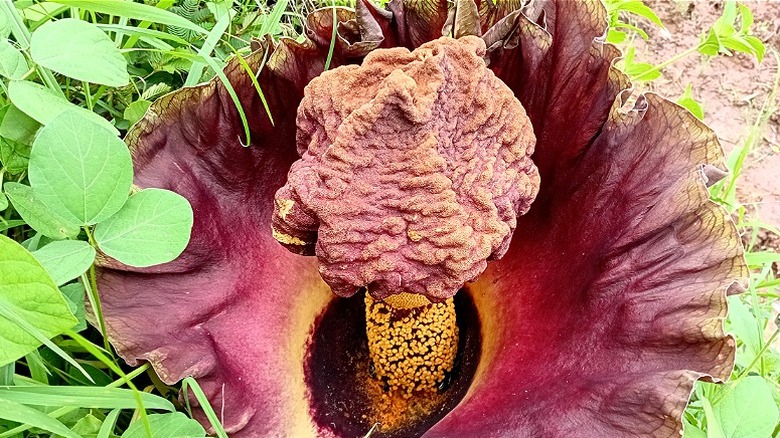
The corpse flower (Amorphophallus titanum), also known as the titan arum, has somewhat of a spooky vibe, not just because of its dark, reddish spathe. This plant when it blooms — every two to three years — will fill your greenhouse with the odor of rotten flesh. The purpose of this foul smell is to draw flies, not for the plant to eat but to circulate pollen. The corpse flower can grow up to 6 inches a day and can reach 8 feet tall or more. You can grow this plant in USDA zones 10 to 12, so long as you meet its very specific conditions: shade, frequent watering, and humidity around 80%.
Middlemist's red camellia
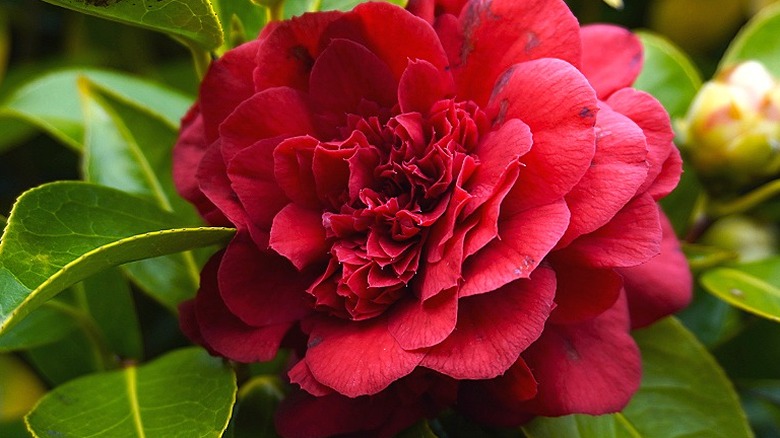
Middlemist's red camellia (Camellia japonica 'Middlemist's Red') is one of the rarest flowers on earth. You can only see its pinkish-red whorl of petals in two locations, one in London and one in New Zealand. Nurseryman John Middlemist brought the flower to England from China in 1804, but it disappeared until 1823, when it was rediscovered in the garden of the 6th Duke of Devonshire.
London's Chiswick House, the former duke's property, is now open to the public, along with its garden, where the red camellia grows. You can also visit the Middlemist's red at the Waitangi Treaty Grounds in New Zealand. There are plenty of far more common types of camellias you can grow; they're among the plants that will produce giant blooms.
Chocolate cosmos
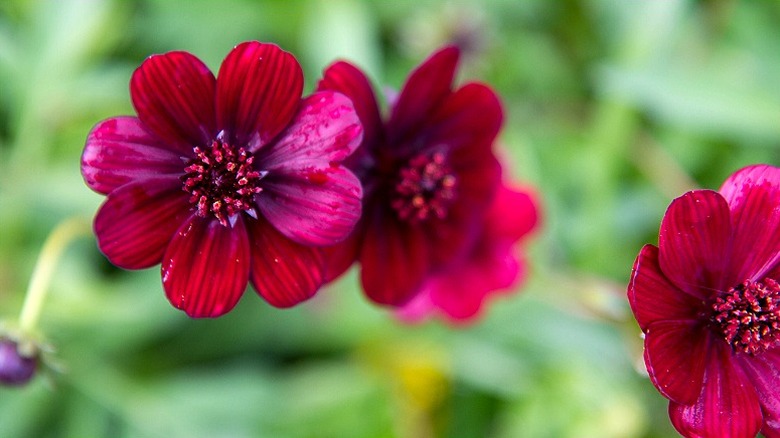
Native to Mexico, chocolate cosmos (Cosmos atrosanguineus) is incredibly rare in the wild and was once even thought to be extinct. And so, if you're ever walking around south of the border and come across a reddish-brown flower that smells like chocolate and vanilla, you should probably report it to the environmental ministry. This plant grows well in gardens, however, especially in USDA zones 9 to 11. Just make sure that it gets at least eight hours of sunlight a day and the temperature doesn't drop below 50 degrees Fahrenheit. Chocolate cosmos doesn't only smell like a dessert, this flower also attracts hummingbirds, too.