

Our Pro Gardener's Picks For The Best Spring Bulbs To Plant This Fall
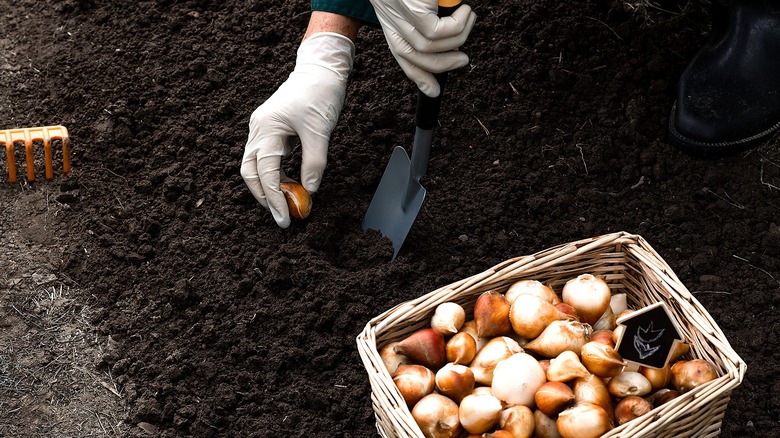
After almost two decades as a professional gardener, I've definitely acquired some experience planting spring-flowering bulbs. In fact one of the most pleasurable parts of my job is choosing, buying, and planting bulbs in the fall! Whether planning flower beds with a specific color palette, or a rainbow-hued cottage garden, fall-planted bulbs let me create a design for clients that will guarantee plenty of garden beauty once spring arrives. The ones I've listed here are my picks for the most reliable bulbs you can plant in the fall for gorgeous spring flowers.
Planting in fall does require proper timing. For example, it's best to plant daffodil bulbs by mid-September, so they can get established well before the first frost. I plant tulips as late as December, as long as the ground can still be worked. But for most other bulbs, I like to plant between late September and mid-October, to give them a good start. Don't add compost or fertilizer when planting bulbs, as it might damage them, but a bit of peat moss mixed into the soil is fine. Also don't water them after planting, to avoid potential bulb rot.
A note on growing zones: I live in upstate New York, which is USDA zone 6a (we were a 5b here about a decade ago). Even with a fairly temperate growing zone, we sometimes get periods of intense cold and ice in winter, so I choose bulbs that are hardy to zone 5 or even 4 if possible. All the bulbs suggested here are hardy for USDA zones 4 to 9, unless otherwise stated.
Crocuses
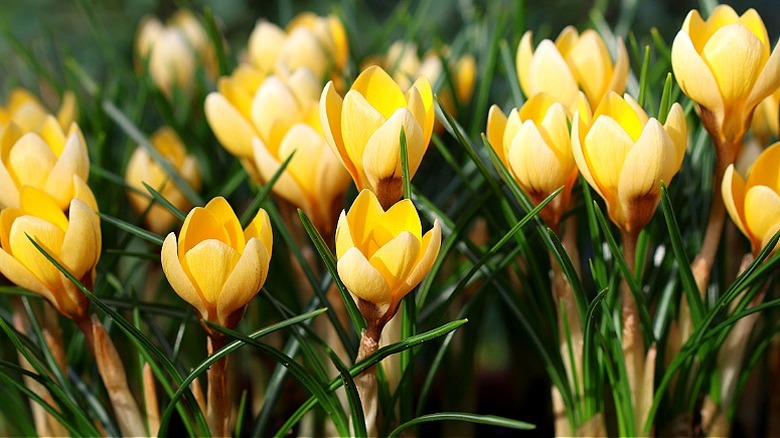
Who doesn't love these colorful beauties popping up in the lawn in early spring? Crocus are resilient, care-free bulbs that naturalize well. You can plant them in flower beds but many folks choose to plant them throughout their lawns for a dazzling springtime color show. Crocuses come in two sizes: the smaller species or botanical crocus, and the Dutch large flowering crocus. I'm fond of two old-fashioned species crocus, 'Blue Pearl' (pastel blue) and "Cream Beauty' (pale yellow), but I'm curious to try some new ones, including 'Hummingbird' (violet blue) and 'Orange Monarch' (orange with burgundy accents).
Glory of the Snow
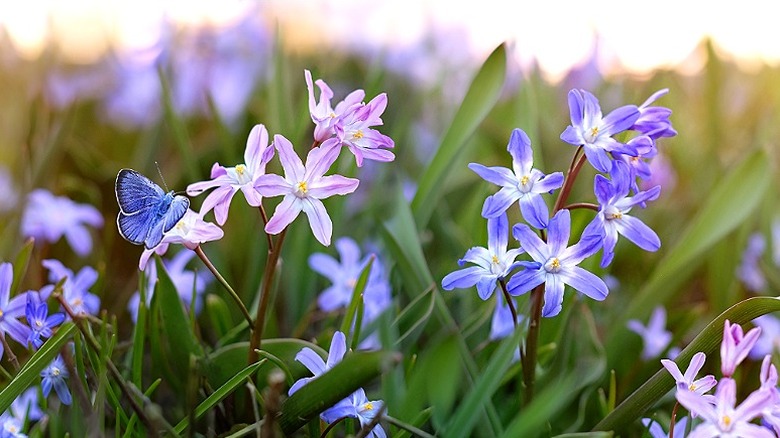
These cheery little flowers get their common name from their tendency to start blooming while there's still a good chance of snowfall. Glory of the Snow (Chionodoxa lucilliae) starts blooming in mid March and usually lasts until early April. The six-petaled daisy-like flowers come in shades of blue, lavender, pink, or white, and will bloom in partial shade. I like to plant these bulbs strategically for maximum early spring appeal. They work well planted in drifts in woodland gardens or along your walkways for a charming glimpse of color amongst your daffodils and tulips.
Daffodils
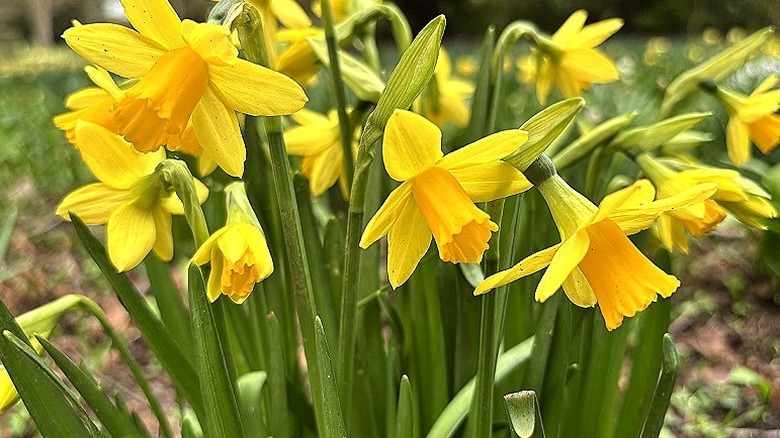
These classic spring bloomers light up the garden with sunny colors. There are many varieties of daffodil (Narcissus) in a range of sizes and shapes, and they bloom between March and May, depending on the cultivar. I try to plant them by mid-September, 7 to 8 inches deep, in well-drained soil where they'll get plenty of sun in late winter. The bulbs increase over time, so divide the clumps every four to five years. My personal faves: 'Jetfire' (yellow with orange cups), 'Decoy' (white with pink cups), and 'White Lion' (a fragrant white-and-yellow double).
Dutch hyacinths
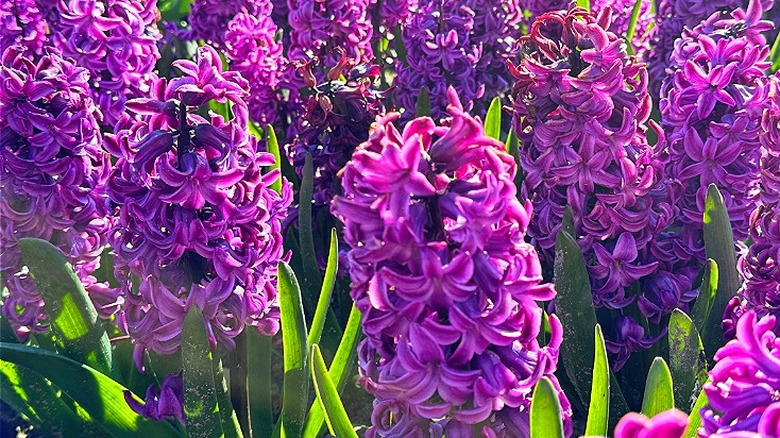
Dutch hyacinths (Hyacinthus orientalis), also called common hyacinths, pop up in mid spring and are a great accent to early and midseason daffodils. Their vivid colors and heady fragrance make them a sumptuous choice for the spring garden. The bigger the bulbs, the more likely you will get large stems full of blooms. I like the hyacinths and other bulbs from Van Engelen and Scheepers, and often order from their websites (they also have great planting tips). My go-to Dutch hyacinths are 'Delft Blue' (light periwinkle blue), 'Woodstock' (deep magenta), and 'Jan Bos' (hot pink).
Striped squill
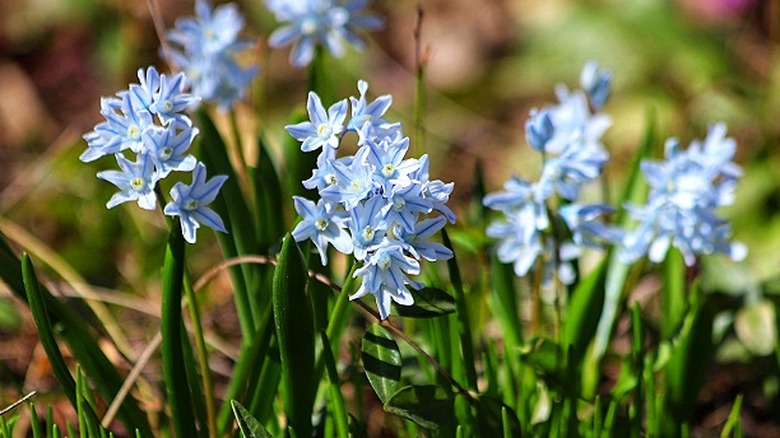
These small, delicate flowers are lovely planted in large drifts of pastel blue in early spring. Related to the solid blue Siberian squill, striped squill (Puschkinia libanotica) are slightly bigger and their white and blue-striped petals look pastel blue from a distance. They're hardy to USDA zone 3, deer resistant, and naturalize well in most spots, needing only well-drained soil to thrive. They are known to make an appearance as early as late February, and make a nice companion to bright yellow early daffodils or hellebores.
Species tulips
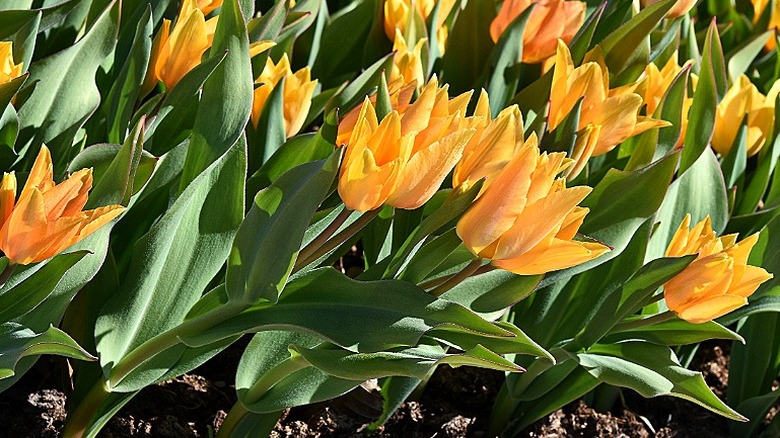
The first time I bought flower bulbs in the Netherlands, at a big outdoor market, I got pink species tulips. Also known as botanical tulips, or wildflower tulips, these diminutive early bloomers are long-lasting and vigorous. Their scientific names include Tulipa bakeri, Tulipa clusiana, and Tulipa praestans. They come in many colors and bicolors, and perform well in rock gardens or at the sunny edge of a woodland garden, planted in sprightly clumps. Try 'Lilac Wonder' (pale pink with yellow centers), 'Shogun' (peachy yellow), or 'Peppermint Stick' (striped red and white).
Grape hyacinths
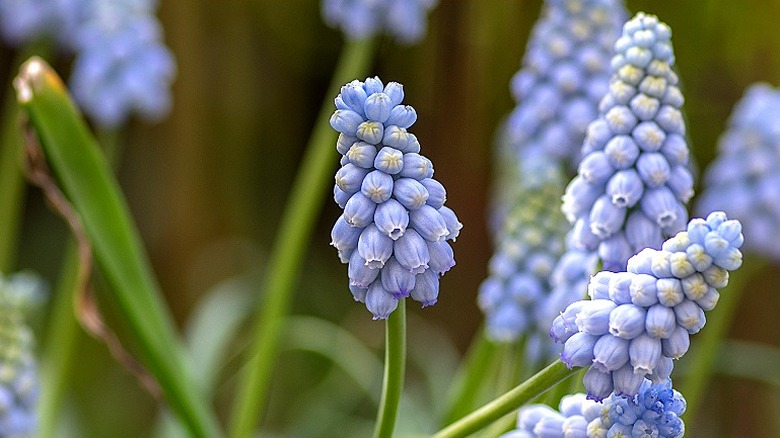
These delicate bloomers are tougher then they look! Grape hyacinths (Muscari) are robust bulbs that increase each year, giving you good-sized clumps to divide every two to three years. They come in a wide range of blues, as well as white, purple, and pink. They bloom best in partial to full sun, and the foliage will usually spring up again in late summer, minus the flowers. My favorites are 'Valerie Finnis' (pastel blue), 'Baby's Breath' (pale lavender blue), and 'Paradoxum' (a sightly taller variety with turquoise buds opening to navy blue).
Darwin hybrid tulips
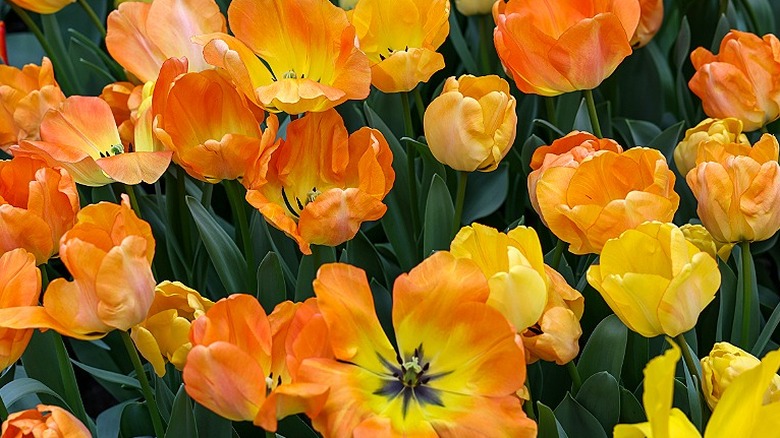
Many of my clients ask for perennial tulips, but it's hard to predict which tulips that are described as perennial will actually return year after year. Species tulips will return reliably, but they're not as showy as classic tulips. Darwin hybrids are large, vigorous tulips that, in my experience, will usually return for at least two or three years, and sometimes longer. My favorites include 'Daydream' (pictured; yellow-orange with shifting colors and sweet fragrance), 'Apricot Impression' (vivid apricot-pink), and 'Blushing Impression' (peachy yellow with pink streaked petals).
English bluebells
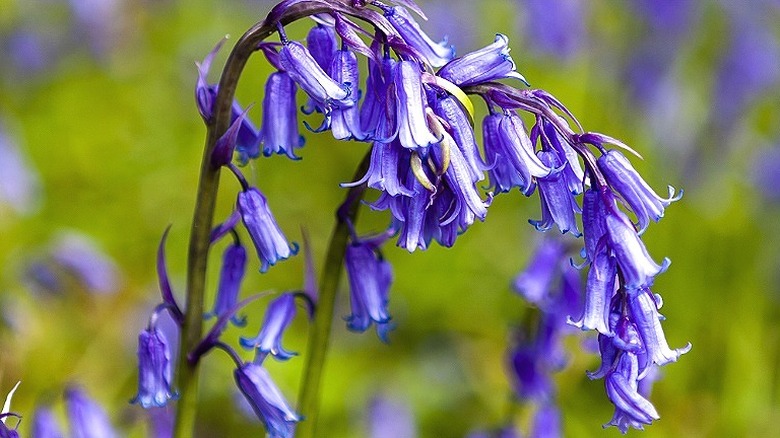
English bluebells (Hyacinthoides non-scripta) are associated with fairy-tale scenes in English forests and if you've ever seen them blooming there (I have), it really is a magical experience. Luckily these hardy bulbs also do well in other temperate climates and will thrive in USDA zones 5 to 9. They like a rich well-drained soil and partial or dappled sun, but don't need any special care. Be sure to get English bluebells and not Spanish bluebells, as the latter, though beautiful in bloom, can be very invasive in the garden.
Grecian windflowers
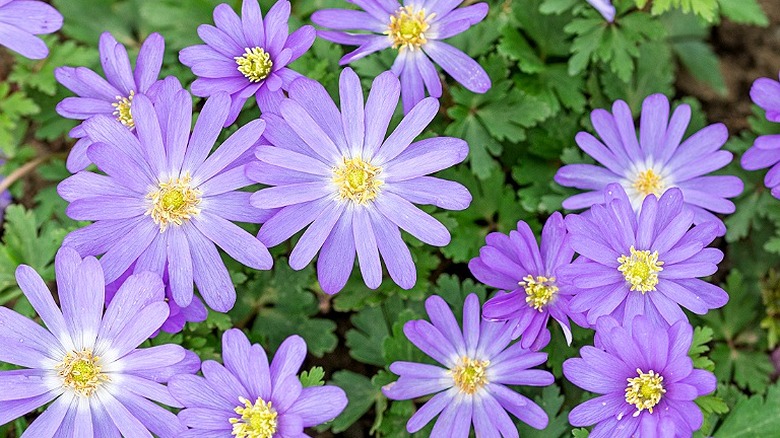
Windflowers are small daisy-like flowers that light up the edge of the border with their sunny yellow centers surrounded by blue, purple, or pink petals. The hard bulbs are actually corms, but are planted just like bulbs in fall, about 3 to 4 inches deep in well-drained soil where they will get partial to full sun. I find it takes a year or two for these to really get established, but after that they bloom for weeks every spring. The blues vary from pastel to deep navy, and the charming pale pink and variety known as 'Pink Star' looks lovely planted near May flowering tulips.
Dwarf reticulated iris
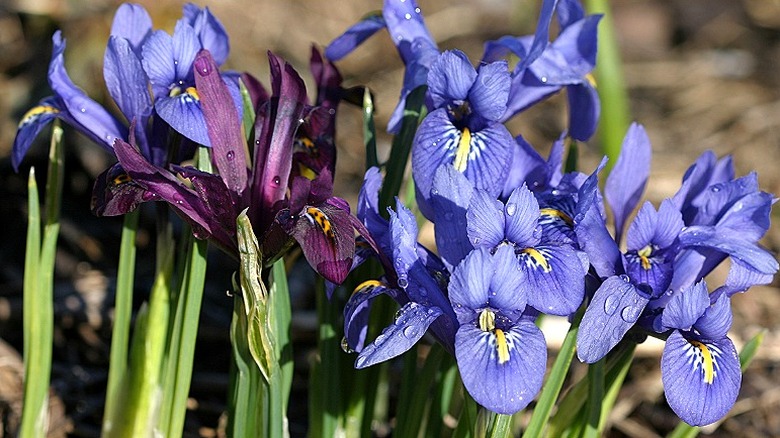
Dwarf irises (Iris reticulata or Iris histrioides) start blooming in early March and, unlike German or Siberian irises, grow from bulbs, not rhizomes. Dwarf irises lend plenty of impact to spring beds, despite their short stature, because they're the first irises to bloom. Plant them in groups for a showy splash of color in rock gardens or at the front of the border. Try 'Alida' (bright sky blue and yellow), 'Katherine Hodgkin' (pale blue, white, and yellow-striped), or 'Purple Hill' (plum with yellow).
Alliums
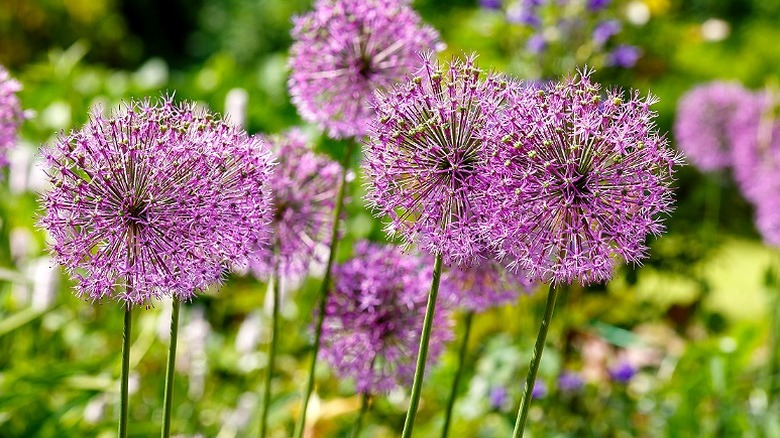
Alliums are a great bulb for the late spring garden, with delicate but dramatic spiky flowers that appear just as many other spring bloomers are starting to slow down. They come in a range of colors, heights, and sizes, and return every year reliably. The largest allium varieties have names like 'Globemaster' and 'Gladiator' and are often as much as 6 to 8 inches across. But smaller alliums make an impact, too, especially planted en masse. I love blue alliums (Allium caeruleum or Allium azureum), which look stunning planted in clumps in cottage-style gardens.
Emperor (Fosteriana) tulips
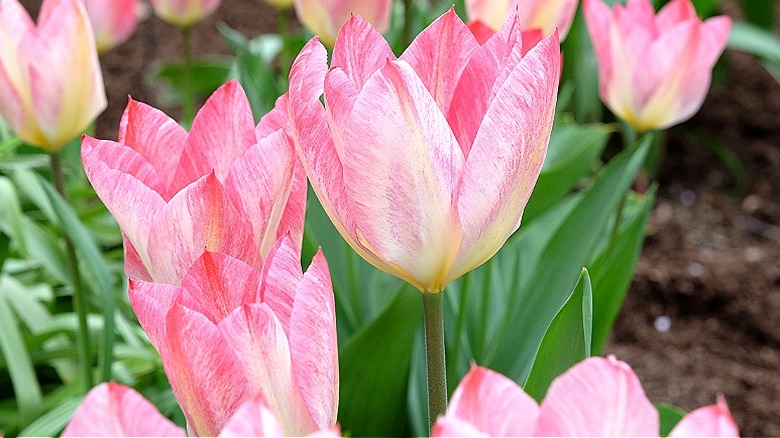
I love growing emperor tulips (Tulipa fosteriana), because not only are they early bloomers, they have a tendency to return for several years. These hardy tulips pop up in late March and start blooming by early April, lasting several weeks. In addition to yellow, red, and orange 'Emperor' cultivars, try 'Flaming Purissima' (pictured), Albert Heijn (pale pink), or 'Sweetheart' (white with lemon yellow flames).
Camassia
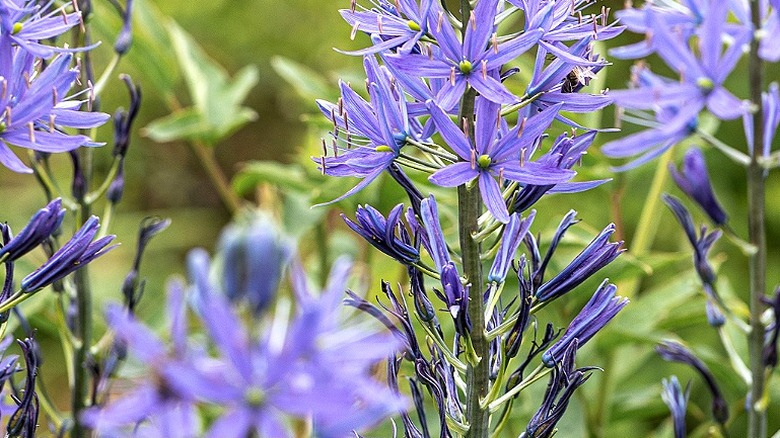
Camassia produces fluffy flower wands covered in star-shaped flowers add gorgeous texture to the late spring garden. They're tolerant of damp soil and the foliage dies back naturally after blooms are done in June. I had some that lasted for many years, blooming reliably in partial sun. Camassia quamash, a lovely periwinkle blue color, is the most common, but there are also other blue varieties, as well as lavender, pink, and white (like 'Sacajawea'). Try them planted among your May flowering tulips or early June peonies.