

September Is Stink Bug Season: The Most Likely Places They're Hiding
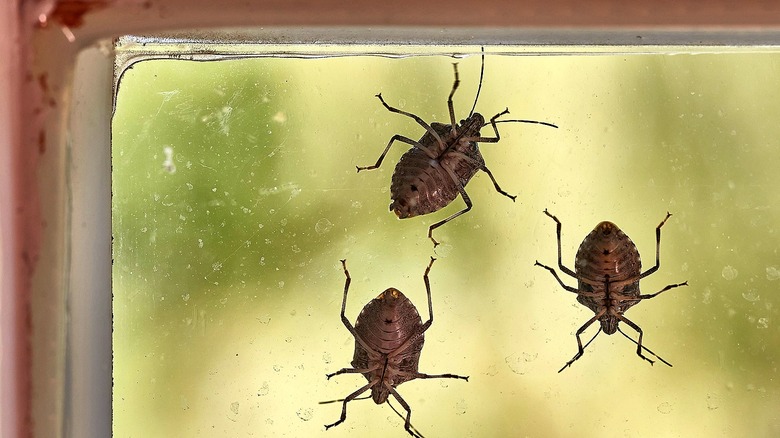
That feeling you get in the fall when you're looking to seal up cracks in your home's siding or fix the weatherstripping on your doors is the same seasonal impulse that drives all sorts of creatures to look for shelter, too. For homeowners, insects are one of the biggest intruders, and invasive species like stink bugs (brown marmorated stink bugs, or Halyomorpha halys) are one of the most annoying. After all the spring stinkbug activity, it's hard to believe they're already at it again, but autumn stink bug infestations are known for being the worst because these bugs are actively looking for a place to spend the winter.
Starting in September, you'll see stink bugs gathering on the outside of buildings during the day, before they prepare to move into your home and outbuildings. Any cracks and crevices in your siding, including near vents and behind fascia, are favorite spots as they work their way inside. Once they get in, you'll find them hiding everywhere, including in the cracks around doors and windows, in the attic, and behind trim.
Insects are pests for different reasons. With stink bugs, they're mostly a nuisance to homeowners because of the smell, which is activated when they're disturbed. They also damage crops, but other than the smell and some stains on curtains, window sills, and walls, stink bugs are pretty harmless and don't cause significant structural damage to your home. Also, the popular myth that squishing them attracts more isn't actually true.
What to do about stinkbugs in the fall
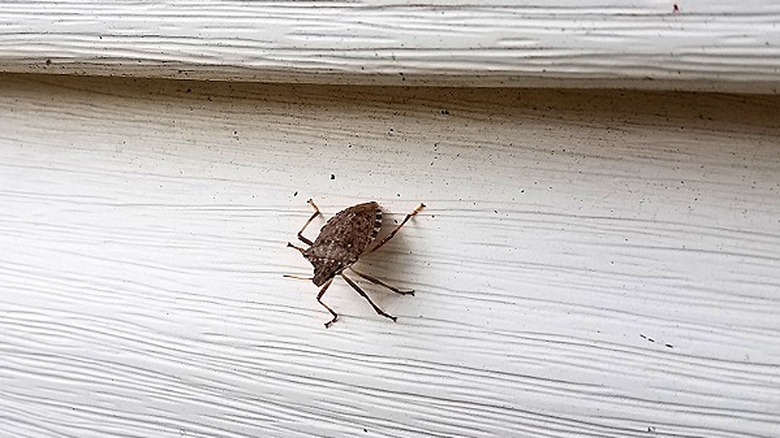
When you see stink bugs in the spring, they've just awakened from diapause, which is the insect equivalent of hibernation. Instead of trying to get in, they're ready to head out the door and start feeding and reproducing. But when they start congregating on the outside of buildings in September and October, it's not just for the fun of it. They're signaling to other stinkbugs using pheromone chemicals, letting them know they found a safe location.
With an infestation, your options are limited. Realistically, insecticides offer minimal relief against an invasion, so rather than getting rid of stinkbugs that way, homeowners focus on exclusion methods. Sealing up the house and garage is one of the best ways to keep them out, but since a stink bug can fit through a crack down to about one-sixteenths of an inch, it's hard to avoid them getting inside altogether.
Unfortunately, when you're dealing with invasive pests, there isn't always a good, single solution. However, if you do notice a stink bug problem beginning to form, one effective method is to simply vacuum the bugs off the sides of buildings before they make their way inside. You can use a wet vac with soapy water for this. Vacuuming will also work, of course, if you see the stink bugs already inside your home. Using soapy water is also a way to eradicate stink bugs without releasing their scent.
But if you use a dry vac, the bugs will release their signature smell once vacuumed up. To mitigate this, you could catch them before they can enter the vacuum's bag or tank. One method is to place a stocking inside the vacuum's tube to create a lining, then secure it with a rubber band or other tie. This lining will collect the bugs; you can then dispose of the stocking outside.