

Make Your Home Less Attractive To Ants With The Help Of A Common Household Appliance
We may receive a commission on purchases made from links.
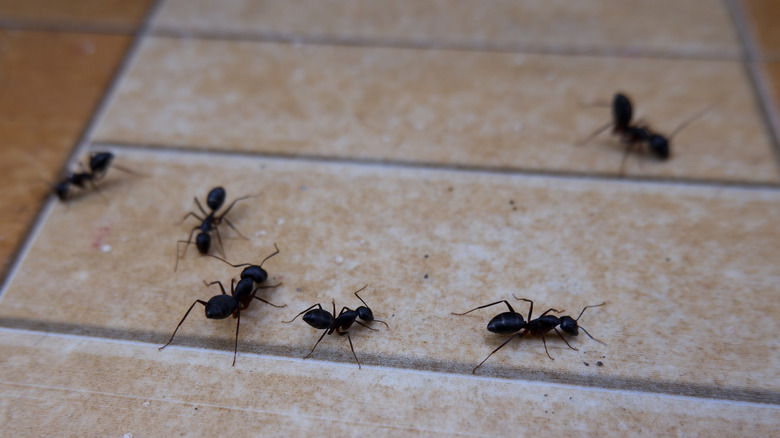
When most people see ants marching around their rooms, they'll probably first check for any nearby crumbs, opened packages of food, or other delicious treats. However, food is not the only reason why ants enter homes. Sometimes they'll invade houses looking for moisture, too. Don't worry, though! If moisture is the reason why these tiny creatures are inhabiting your space, you can easily make your home less attractive to them with the help of a common household appliance: the dehumidifier. This handy tool reduces the moisture indoors and makes your home less welcoming to ants.
So, why are ants attracted to humidity in the first place? Well, like all living creatures, ants need water. Furthermore, moisture creates living conditions in which ant colonies thrive, including damp wood and softened materials that are easier to dig through and inhabit without the risk of desiccation. This is why you may also see ants mostly hiding in your bathrooms and basements, as these places tend to have higher levels of humidity than other areas of the home.
To help prevent any potential ant invasion, you must maintain indoor humidity levels between 30% and 50%. Anything more than that will invite ants and other bugs. Also, keep in mind that, while a dehumidifier can help make your home less appealing to ants by reducing moisture, it alone will not be able to provide 100% protection against them. You must also learn about other things that attract ants in homes and other ways to get rid of ants. The aim is to make your home inhospitable to ants so that they stay outside, where they are actually very helpful to yards and gardens; as such, you should avoid killing the ants if possible.
Getting the most out of your dehumidifier to keep out ants
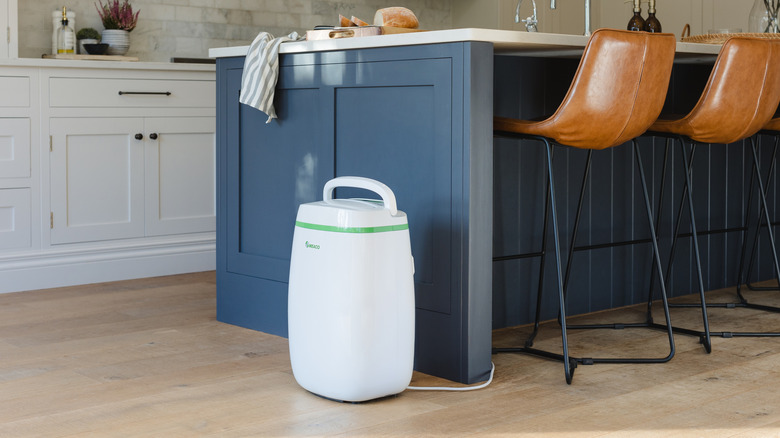
Before you start using a dehumidifier in an attempt to deter ants from your home, make sure that the humidity levels indoors are actually high. A humidity meter, or hygrometer, can make checking these levels very easy; the TempPro TP50 Digital Hygrometer should do the trick. However, if you don't have a hygrometer and don't want to get one, you can also check your house for the typical signs of indoor humidity – foggy windows, musty odors, sweating pipes, peeling paint, and mold. Nevertheless, once you confirm that the moisture levels are high, it's important to choose a dehumidifier that's the right size for your space.
The location of your dehumidifier is also crucial. Make sure that you place the appliance on a level surface and keep the area around its air intake and exhaust clear. Similarly, do not place the dehumidifier near windows or doors, and keep it out of direct sunlight as well, since these things can decrease the efficiency of the dehumidifier. It is also important to note that a dehumidifier will not be able to perform well if the moisture is accumulating faster than the unit can remove it.
The dehumidifier may reduce the humidity in your house, but you still need to make sure that you're not unknowingly increasing it. It's imperative that you fix any leaky pipes or ventilation issues, and remember that prolonged use of an air conditioning unit's fan and the air vents in your bathroom or kitchen can contribute to your humidity levels. Ants are also looking for easy entry points, so make sure you seal any cracks in your home. Finally, if ants get moisture from humidity, then they obviously get it from liquid water, too, so avoid any standing water in your sink, bathtub, and houseplant pots. Adhering to these guidelines, in conjunction with maintaining a clean, food-free environment, will make your home a safe haven and keep ants out for good.