

How Often Should You Mop Floors?
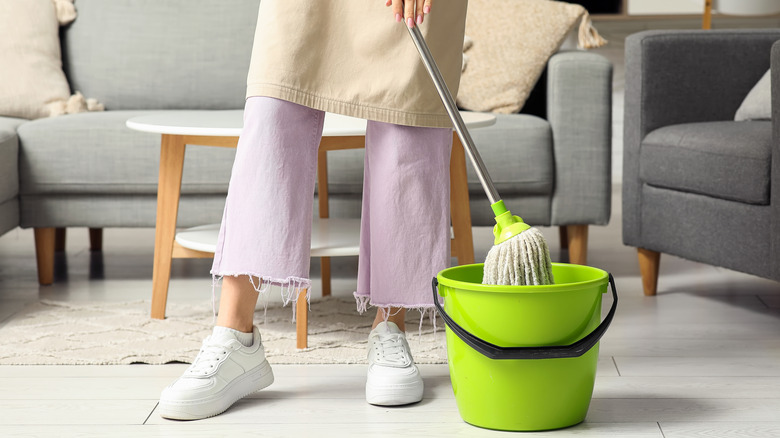
There's nothing quite like stepping back and seeing your floors shine after mopping. After sweeping and dusting and all the other chores that come first, it can feel like the successful end to your cleaning routine. However, you may be wondering just how often you should mop your floors. As it turns out, there is no single answer. Instead, like many parts of your cleaning routine, mopping frequency depends on your floor and household.
No two floors are the same. Even if you have the exact same material as someone else, your usage and lifestyle may be different. As a result, coming up with a single answer to how often you should mop your hardwood floors (or other types of flooring) may not account for all those little variations that make your home completely unique to you.
However, while factors like material, usage, and location can impact just how often you need to break out your mop and favorite cleaning products, many people may find that mopping once a week typically provides the balance between clean floors and excessive water that may do more harm than good. If you're looking into the best flooring options for your home, learning these differences can help in making that decision as well.
Factors that contribute to how often floors need to be mopped
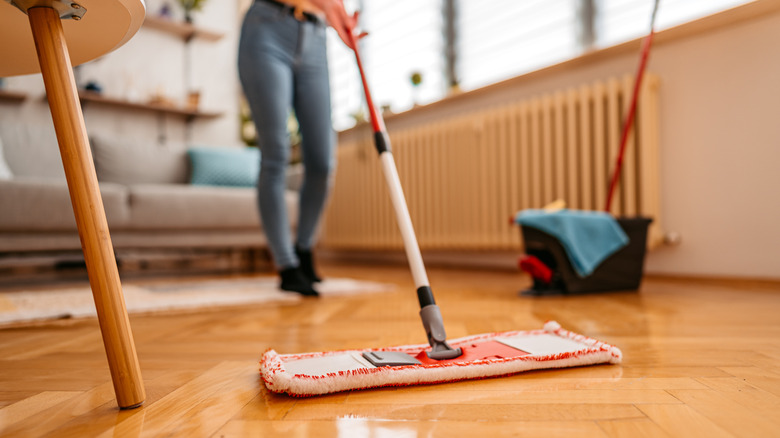
There are two main factors that contribute to how often you should mop your floors. First, there is the material your base is made of. Flooring comes in a variety of styles, from hardwood to tile, and different materials may require different care to keep them looking their best. Second, there is the amount of foot traffic your flooring needs. Areas that aren't used as often likely won't need to be mopped as much, which can save you time during your weekly chore routine.
Not all floors can readily handle routine water. Tile, for example, is water-resistant. This means that it can be mopped as often as needed without as much worry as other types of flooring may invoke. As a result, with average foot traffic, you may end up mopping your floor weekly. However, floor options like laminate, luxury vinyl, and hardwood don't hold up to water as well. While mopping can help them look their best, overdoing it introduces concerns with water damage. As a result, these are typically done biweekly with average foot traffic, and often cleaned with specialized products and dried immediately afterwards to help preserve their lifespan. This is especially true if you take the steps to help keep your floors clean for longer, requiring less mopping.
Foot traffic introduces another variable. If your floor is routinely seeing action, it may require more frequent cleanings than flooring in a guest room that doesn't frequently host guests. Since foot traffic can vary and change how often your floor needs to be mopped, it can be helpful to learn the signs for your specific floor, such as dirty grout, as well as general signs like footprints and spills.