

How To Get Wood Stain Out Of Clothes Before It Sets In
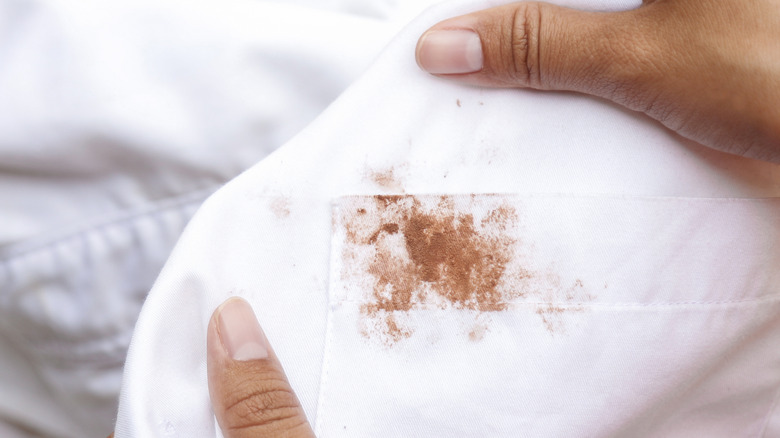
Even the most careful DIYers have accidents. If you notice you've gotten wood stain on your clothes during a project, it's important to act quickly before the stain dries — otherwise, it could be permanent. Be prepared for the possibility that larger or thoroughly-soaked stains may not be removable.
Regardless of the type of wood stain you're using, you'll need some paper towels or clean white rags that you don't mind trashing after use. Your first step is to lay out a thick layer of rags or paper towels for your work surface. Then, turn the stained garment inside-out and arrange it so the stain is face-down on this protective layer. Treating the stain from the back will prevent it from sinking deeper into the fabric while the layer of paper towels will help draw out the unwanted stain.
You'll also need a solvent to eliminate the wood stain. Different types of wood stain will require different solvents: either mineral spirits or acetone. You probably already have both of them in your house — for example, most nail polish remover is acetone — but there are important differences between the two. With all of your materials assembled and your garment laid out, it's time to get to work removing the stain.
How to remove wood stain with acetone or mineral oil
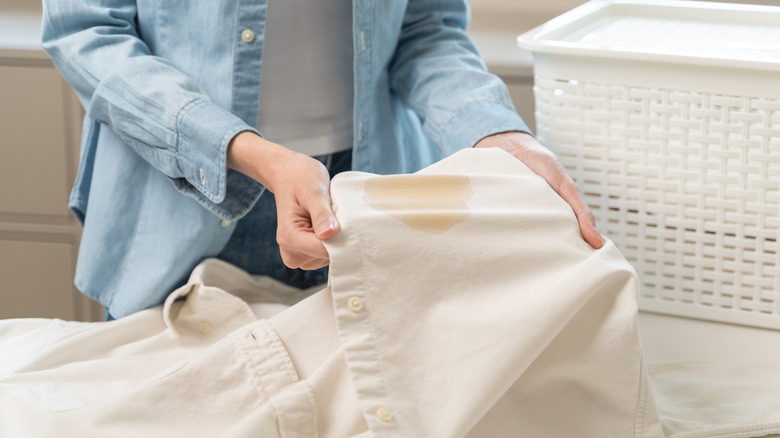
Water-based wood stain should be treated with acetone. Pour a capful over the stain, then carefully blot (don't rub) the stain with a rag or paper towel that's been moistened with additional acetone. Work from the edges towards the center of the stain. Frequently reposition the stained item and use clean sections of the rag or paper towels to ensure you aren't staining clean areas of your clothing.
Follow the same steps to tackle oil-based wood stain, but use mineral spirits instead of acetone. Mineral spirits are good to have on hand when trying out a messy DIY project for easier clean-up of oil-based paints or stains. Test an inconspicuous area of the item first because mineral spirits can discolor or even melt certain fabrics. Next, dip a clean rag or paper towel in the mineral spirits and blot the stain, again working from the outside in. Reposition the absorbent layer and your blotting rag so you're working with clean sections.
Once the stain has been removed, rinse thoroughly and launder in the washing machine as usual. Then, let it air-dry and repeat the process if the stain is still visible. Don't put the item in your dryer until you're certain there's no stain left. Not only will the dryer's heat set the stain permanently, but it's also a fire risk to tumble-dry items that have been in contact with flammable substances. Wait until the item is fully dry to confirm the stain is gone before washing and tumble-drying as normal. If you still can't get the stain out and decide to retire your garment, don't worry — there are plenty of creative ways to repurpose old clothing around the house.