

10 Vegetables You Should Avoid Planting In Raised Garden Beds
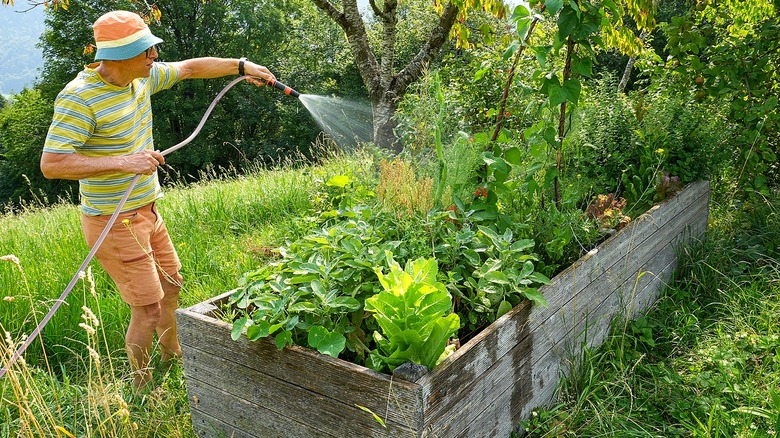
As such, raised garden beds seem like a Godsend. For one, they fill in the gaps when ground soil is deemed too poor to grow nice veggies. They also enable people to garden who otherwise couldn't for fear of breaking their back or hurting their knees. They're also highly valuable to apartment dwellers or renters who can screw up raised beds to their balconies and relish the fruit of their labor.
But the best part, perhaps, is that since you're starting from scratch, you get to build the optimal conditions for your desired crop, rather than running through hoops to amend the existing soil (God forbid if it's heavy clay!). Ironically, though, this may also become the reason not to grow certain vegetables, such as Romanesco, broccoli, pumpkins, or sweet potatoes, in raised garden beds. When you've invested so much money in creating a favorable environment and are working with a limited area, it's best to rent out that premium space to high-yielding crops and enjoy a greater variety of vegetables, rather than just one.
For similar reasons, you may want to avoid growing highly aggressive vegetables like artichokes or horseradish or long-lived perennials like asparagus and rhubarb in your elevated garden(s). This said, raised beds aren't inherently inappropriate for the vegetables listed below; as long as you love the crop, don't mind creating devoted areas, or deem this your last resort, it's a great way to generate homegrown produce.
Asparagus
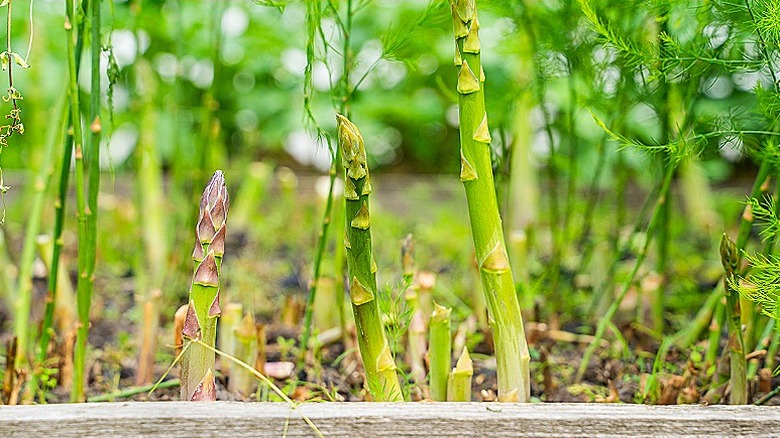
Whether you're hoping to successfully grow asparagus from seed or crowns, avoid putting it in a raised garden bed. For starters, asparagus has huge roots, which can often reach nearly 15 feet deep. Considering asparagus is a perennial vegetable, with the potential to remain productive for over a decade, this shouldn't be surprising. So, unless you're using tall boxes, the roots may become overcrowded and slow down. Moreover, asparagus can take more than two years to become productive. So, if you're trying to maximize limited gardening space, it may not be the best contender.
Rhubarb
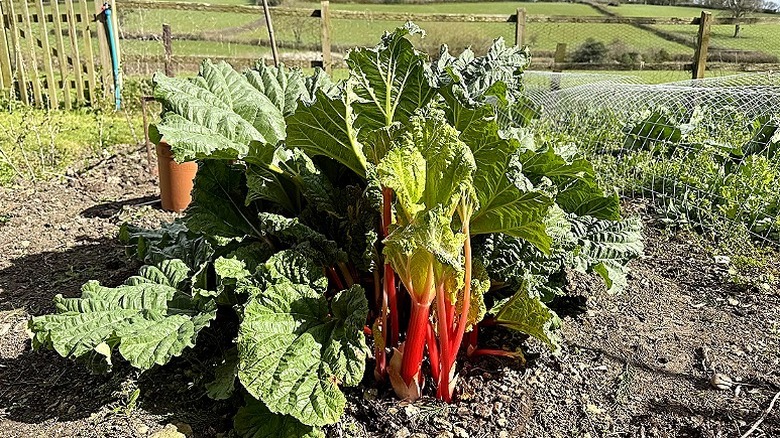
Like asparagus, rhubarb takes a couple of years before it's ready for harvest. And once it reaches maturity, it can continue producing for over five years. This means you must block out a dedicated area in your raised bed for a long time, as it only grows larger over time. Moreover, rhubarb should be spaced about 4 feet away to avoid overcrowding, and this can add up to a lot if you're really fond of it. Not to mention, it requires deep beds — about 18 inches, unlike the 12 inches common to standard raised beds. Without that, it may produce a poor-quality crop.
Sweet potatoes
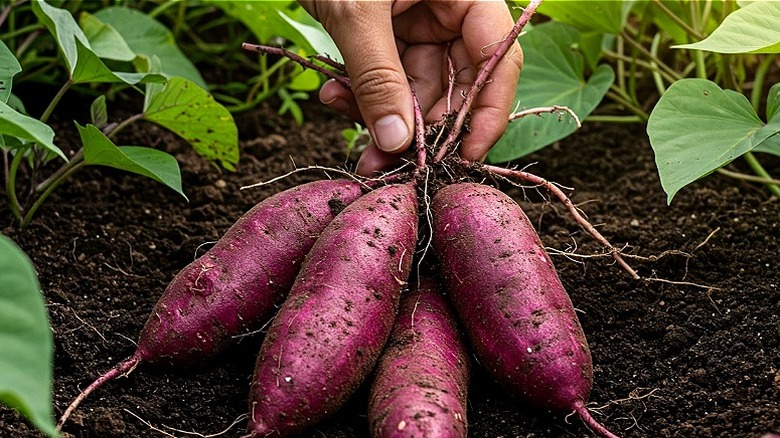
Once you get the hang of vegetable gardening, it's typical to become curious about growing crops from store-bought produce. So, along those lines, if you've imagined regrowing sweet potatoes from the grocery store, think twice before putting them in a raised bed, unless you've got lots of spare space.
Sweet potatoes grow extensively, with each vine spreading nearly 4 feet wide (some even reach 16 feet!). As a result, they easily outgrow their surroundings, unapologetically eating into the space of their companion plants. Still, if you would like to take a chance, you may opt for compact varieties such as 8633 or 'Bush Porto Rico.'
Potatoes
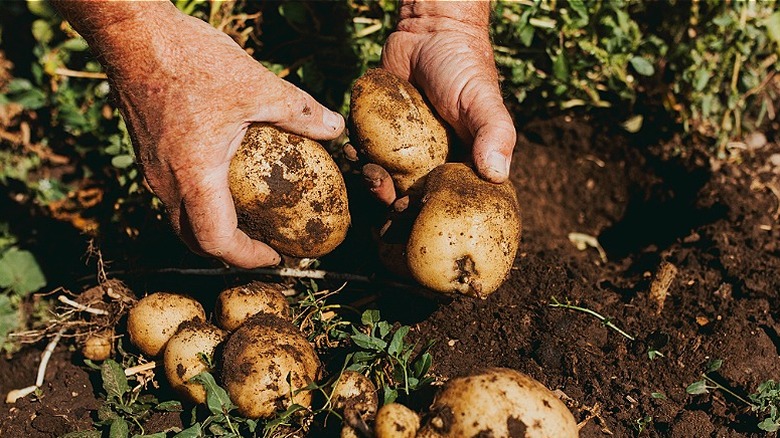
This may raise some eyebrows because many enjoy growing potatoes in raised garden beds for better soil quality and drainage. However, the downsides to this proposition are that potatoes are resource hogs and finding the right companions that can tolerate their greed can be tricky. Worse, to promote the growth of more tubers, you must regularly mound up new soil. Due to this, you end up disturbing the roots of other plants, and again, as you're harvesting the crop. When you're trying to maximize the output, potatoes are more often than not a poor bet, as they take up a lot of space, which can be better used for other veggies.
Horseradish
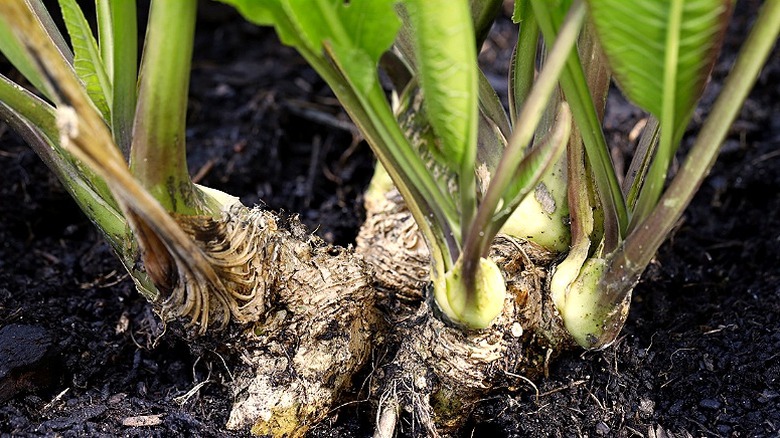
A veggie that develops several fleshy roots that could rival large carrots surely sounds like a dream — not if it's in a raised bed intensively planted with other crops, though. With horseradish, the problem is that it can grow out from tiniest root fragments. While you're harvesting the crop, it's easy to leave a few root pieces in the soil, as they're highly delicate and don't come away in a single pull. Eventually, horseradish can end up taking over the bed or worse, breaking out through the cracks or crevices in the pallets' sides. So, do yourself a favor, and leave it in a deep pot instead.
Jerusalem artichokes
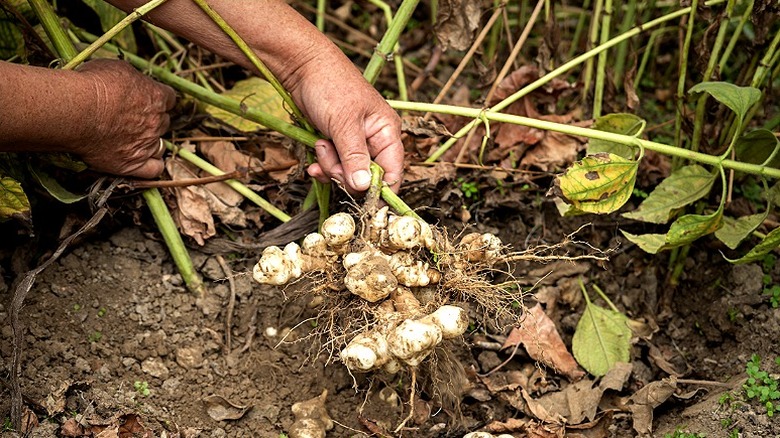
Whether you're trying to cut down on your calories by substituting in Jerusalem artichokes for potatoes or hoping to pretty up your garden with their yellow flowers, take care not to add them to a raised bed. They're highly aggressive and will quickly feel constrained in a typical 4 by 8-square-foot raised bed, producing a suboptimal crop.
Worse, if you've got them growing in a bottomless raised garden bed (i.e., raised simply on soil), they may spread into other areas with their underground stems. To avoid that, you should put the bed 6 inches below surface level (which defeats the purpose of an elevation). In some cases, you may have to redo your beds, as tubers keep returning for years.
Romanesco
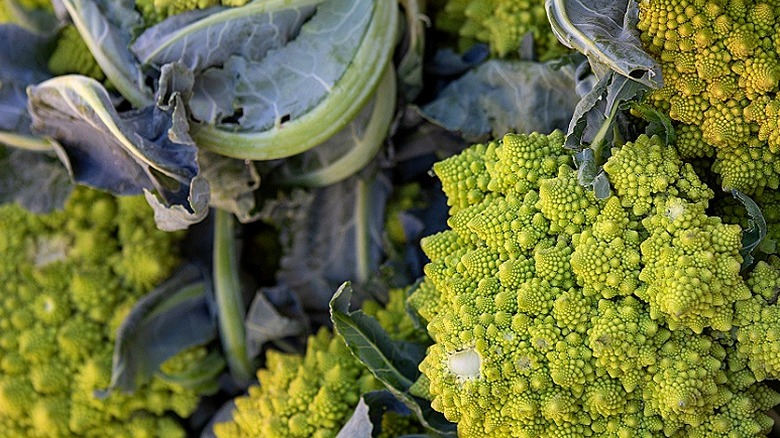
A unique cultivar of wild cabbage, Romanesco is an Italian heirloom vegetable famous for its conical green heads arranged in a logarithmic coil that will have math geeks salivating. Whether you're growing it for its aesthetics or hoping to spruce up your pasta with its nutty flavor, consider not leaving its seeds in a raised bed if you're running short on space. Romanesco can grow quite large, with each head weighing over 5 pounds! Besides, it grows better in planned rows, or a large container if you're only growing a lone plant.
Broccoli
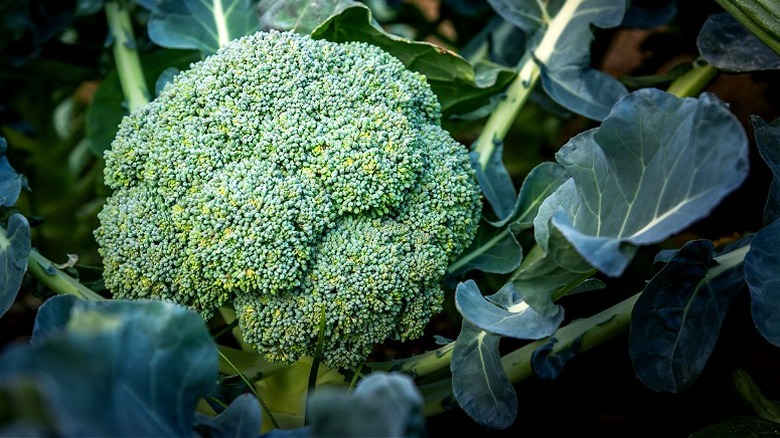
Broccoli, similar to Romanesco, can be a space hoarder. On average, each person needs around five broccoli plants for a sustained harvest. These are spaced about 18 inches apart to allow the heads to reach their full size and leave out enough spare for side shoots (and more crop). This leaves very little space to accommodate other plants in typical raised beds. Worse yet, they must deal with resource competition, as broccoli is a heavy feeder and often grows tall and wide enough to overshadow neighboring plants.
Pumpkins
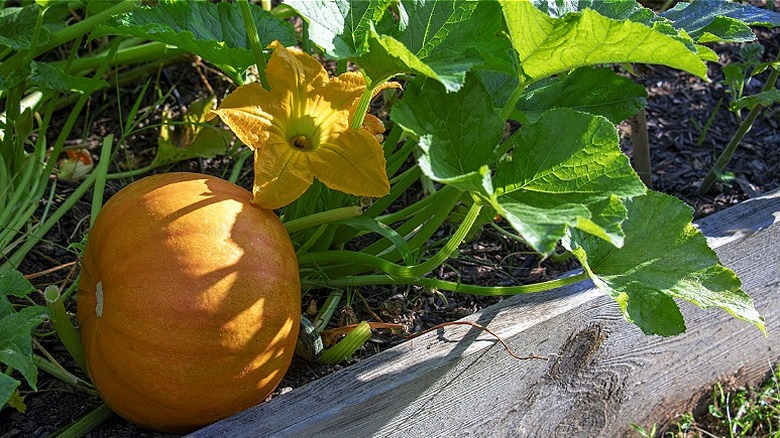
Although pumpkins are fruits scientifically, most people treat them as vegetables that pair well with their stews. Though, if you're growing one of those unique pumpkins to decorate with other than plain old orange, this confusion becomes defunct. Regardless, avoid growing pumpkins in raised beds unless you want to dedicate the whole bed to a single plant and don't mind the vines spilling everywhere that you must then rearrange or train over a trellis. Even in larger raised garden beds, pumpkins can become problematic because they require lots of nutrients, leaving less available for companions.
Sweet corn
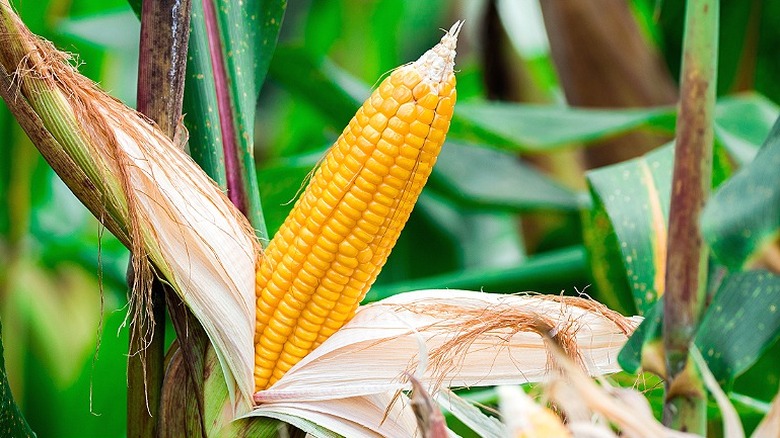
Strictly from the perspective of intensive planting, sweet corn is unsuited to a raised garden bed. For a start, to produce a decent harvest, you need to plant several plants, which means you need to create plenty of room or dedicate the whole bed to this endeavor. Then, you must take care to place the plants in multiple short rows to enable cross-pollination, or be prepared to hand-pollinate them. This can be challenging if your raised bed is elevated too high, as corn plants are tall and sometimes even require staking to hold them in place.