

How Ancient Romans Used To Make Concrete (Plus Why It Was So Durable)
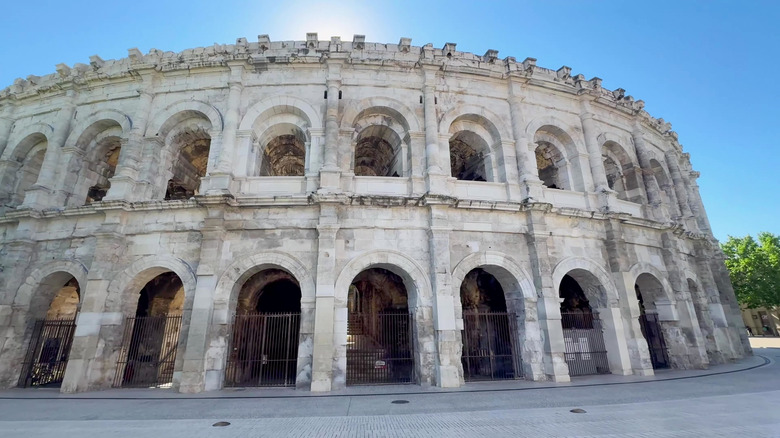
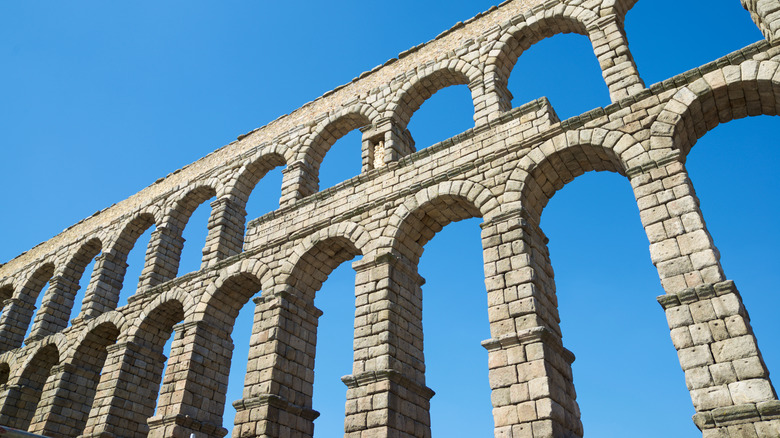
Concrete has been used for construction for thousands of years, with the earliest examples dating back to the ancient Middle East. The Greeks, Egyptians, and Romans all used concrete as well. Roman concrete was particularly tough. The fact that so many Roman structures are still standing, from aqueducts and bridges to amphitheaters (some of which are still in use!), is a testament to its durability. But what exactly did the Romans use to make concrete, and what makes it so strong?
The basic recipe for concrete is pretty straightforward: It's a mixture of cement, water, and a composite aggregate, such as sand or gravel, that adds structure and strength. Roman concrete, or "opus caementicium" as the Romans called it, was made from lime mortar, crushed rocks, volcanic ash, and water. This resulted in a very strong, long-lasting concrete that has been used for centuries, and several iconic examples of structures made from this material still stand today.
The history of Roman concrete
To make their concrete, ancient Romans combined volcanic ash with lime, water, and an aggregate. The composition of the aggregate varied but could include crushed rocks, sand, rubble, or even crushed ceramic tiles. The volcanic ash used in Roman concrete was known as pozzolana, named after Pozzuoli, Italy, an area rich with volcanic deposits. The unique composition of Roman concrete gave this building material excellent qualities for construction. It sparked an architectural revolution that saw Roman architecture and building techniques rapidly spread across the Mediterranean world.
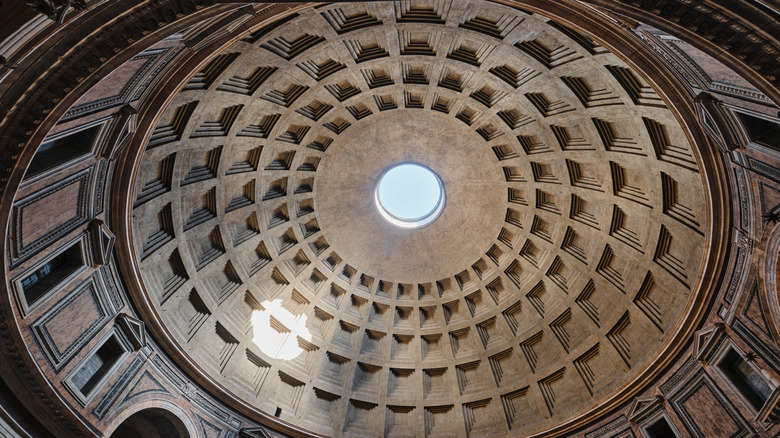
The Romans used this recipe for their concrete until the empire's collapse in the 5th century A.D. A few famous structures made of Roman concrete include the harbor of Caesarea, which is a great example of underwater Roman architecture, and the Pantheon in Rome, whose iconic domed ceiling is made of opus caementicium. However, the quality of Roman construction, as well as their concrete, continues to fascinate historians and architects alike. It wasn't until the 2010s that researchers identified the unique properties of this Roman building material, sparking renewed interest in adapting this ancient recipe for modern concrete.
The secret to Roman concrete's long-lasting durability
Roman concrete wasn't just tough. It also has the unique property of becoming stronger over time when exposed to water. This is perhaps the main reason so many ancient structures still stand as a testament to Roman ingenuity. The unusual durability of their concrete is owed to its composition – more specifically, the interaction between quicklime and volcanic ash. What's notable is that the Romans used quicklime (calcium oxide), which is the more reactive form of lime.
During concrete mixing, calcium reacts with water to form calcium hydroxide. This chemical process creates a lot of heat. A 2023 study published in the Science Advances Journal found that the result of this "hot mixing" process was stronger concrete. Another benefit of using quicklime is that the heat reaction also made the concrete set faster. But the chemical reactions that helped make Roman concrete so strong didn't end there. As strong as it was, opus caementicium wasn't immune to cracks, but its unique blend of materials helped it to "heal" itself. And unlike regular concrete, water wasn't Roman concrete's biggest enemy.
Unlike regular concrete, Roman concrete does not need to be sealed and can actually become stronger over time (even when exposed to water) due to the underlying chemical processes. As water seeped into Roman concrete, it reacted with the lime to form a crystalline structure that filled any cracks. Additionally, the pozzolana that the Romans added to the concrete contained silica and alumina, which were also reactive. When Roman concrete came into contact with saltwater, a similar crystallization reaction would occur, filling in any cracks and strengthening the concrete.