

Crushed Stone Vs Gravel Driveways: Which One Is Cheaper?
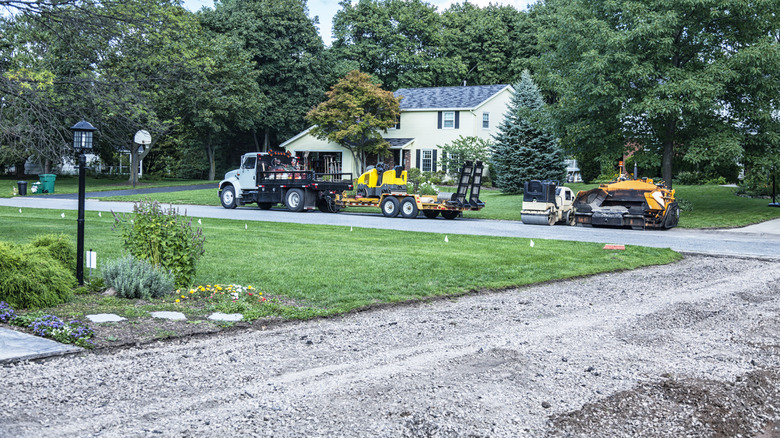
Installing a driveway on your property gives you and your guests a place to park, looks nice, and can increase the value of your home. Unfortunately, some kinds of driveways require a professional or a lot of research and a strong DIY mentality to get right. However, by using loose rocks, you can do it yourself. Gravel and crushed stones are both good choices. If you're looking to DIY this, you may be wondering which one is cheaper. The short answer is that gravel can be more affordable initially. When comparing these two materials, though, you may want to look beyond the initial cost.
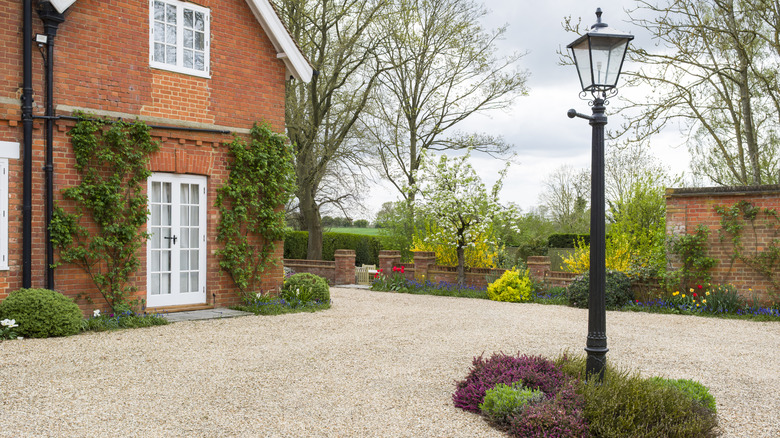
Overall, crushed stone and gravel have similar benefits when it comes to driveways. The main difference is the appearance, where crushed stones tend to be a little sharper with harsher edges, while gravel is often smoother and more pebblelike. Because they are pretty similar, they can be used interchangeably for all the ways you can use gravel in your yard.
Surprisingly, the price difference isn't that much. According to Angi, crushed stone can range in cost anywhere between $20 and $115 per cubic yard, while gravel is $15 to $250. Depending on where you are and your local stores, crushed stone may be cheaper than gravel or vice versa. Because of that, it's a good idea to delve deeper into the differences instead of just picking the cheapest.
Gravel isn't always cheaper than crushed stone for driveways
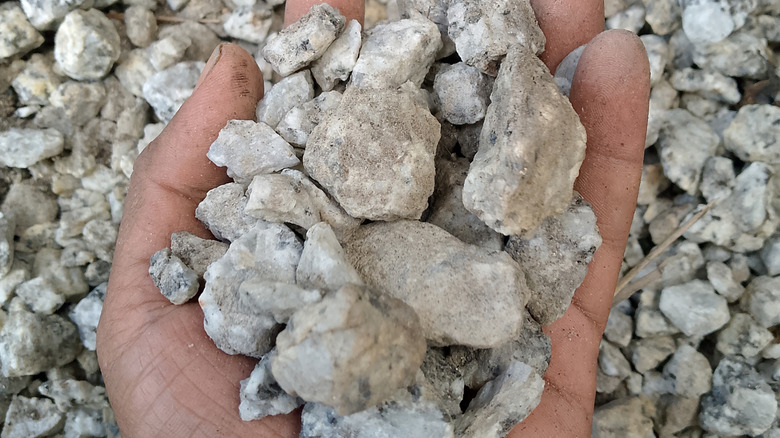
Since the prices are pretty comparable, you can pick between them based on other factors. Crushed stone may be the right choice when it comes to long-term cost. It starts off more expensive or about the same price initially, but because of the variety of rock shapes and sizes, it locks into place and can handle car weights without breaking down as much, meaning it tends to last longer. Additionally, it doesn't require maintenance as often. And, since they won't get lost or wash away as easily, you don't need to replace the stones as frequently to keep the layers thick enough.
However, that doesn't mean gravel is out of the competition entirely. While it's not the winner in the long run, you can sacrifice a bit of stability and durability to get something that looks a little nicer in your yard. Additionally, gravel tends to have a wider range of choices when it comes to color. Consider your stone size with care. Larger stones may help drainage, though they don't look the most attractive, and smaller pieces are much more likely to wash away or get flung by car tires. Gravel can also be a little more comfortable to walk and drive on because of the smoother texture.
Save money when using crushed stone or gravel for driveways
While the costs of these two materials can be pretty similar, it really depends on what you want. So, if you're looking to choose a more affordable option, then there are other factors to consider. Though they start off similar in price, the prices for individual kinds of each create quite a wide range. That's why you should take your time to actually consider the price per unit and how much you will need before you make your purchase. Knowing something is $50 per cubic yard may sound reasonable, for example, until you realize you have to buy nearly 10 cubic yards for a 20-foot by 20-foot gravel driveway at the recommended 8 inches of depth.
Thankfully, if you really want a more expensive stone, you can save money by breaking your driveway up into three layers. Though it takes more time than just dumping a ton of rocks and leveling it out, you can place the expensive and prettier stones on the top and the more affordable stuff underneath.
If your driveway also doubles as a play area for kids or pets, it may be better to go with gravel. Walkability is something that determines the different uses of pea gravel and crushed stone for your yard. You should also consider the size you want. The best gravel to choose for your driveway is one that's strong enough to hold up to constant vehicle traffic and large enough to stay in place.