

The Simple Trick To Keep Hose Connections From Seizing (It's Not WD-40)
We may receive a commission on purchases made from links.
Developed in the 1950s as a rust-prevention solvent for the aerospace sector, WD-40 has been on shelves for almost three-quarters of a century. That's because it works so well, and it's also why the product has become something of a cure-all for many of homeowners. It's used for jobs like keeping your garden hose ends from corroding, but it isn't the answer for everything — and it won't keep those same garden hose connections from seizing up. For that, you need silicone grease, another aerospace industry product. Silicone grease actually preceded the invention of WD-40, and plumbers have relied on it for decades to lubricate faucet stems, valve cartridges, and rubber O-rings.
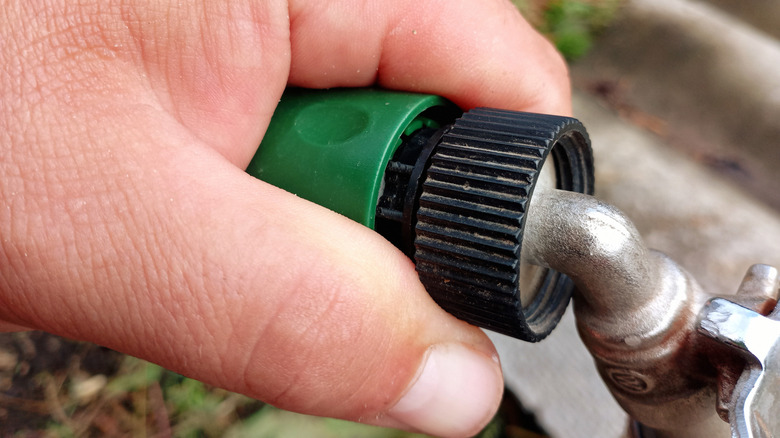
It's something people often notice when they're putting hoses away for the winter. After staying connected all summer long, garden hoses can become galvanically fused together — or to your spigot. Galvanic corrosion occurs when two different metals, usually brass and aluminum, touch each other and are bridged by water. This creates an electrochemical reaction similar to what you get from a small battery. That's why, when you're getting your yard ready for winter, you may find your garden hoses have seized together, essentially becoming a single part.
As for prevention, you only need a small amount of KEZE Silicone Grease, available in a one-ounce tube for $7.99 on Amazon at the time of writing. Applied to the threads and rubber washer inside the connection, it creates a thin film between the metals and stops the electrical contact from forming.
What to do about seized hose connections
As a preventative tool, silicone grease works great. Just remember to wipe off any excess once you've applied it to the threads and the rubber washer, since dirt will just stick to it if it's on the outside. Once the hoses are connected, this is when wiping or spraying some WD-40 on the ends protects them from corrosion. Something else to consider (that's also vital to following some genius hose hacks) is to check that the rubber washer isn't cracked or missing altogether.
None of this helpful advice is useful if your hoses are already fused together or to your spigot. But you may be able to save the day with a few tricks, starting with using another product from WD-40. Spray a penetrating oil like WD-40 Specialist Penetrant, leaving it there for 30 minutes up to several hours before trying to loosen it again. You can also try using a vinegar solution to loosen the heavy mineral crust.
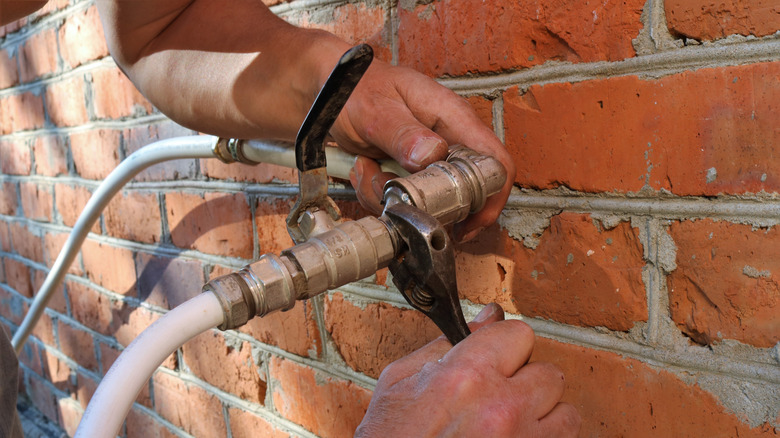
Some other tricks of the trade include one counterintuitive measure, which actually involves tightening the connection before backing it off. To avoid breaking the spigot, which turns this problem into an even bigger repair, use a two wrenches and have one holding the spigot steady. It also makes it easier to decouple the connection if you're using pipe wrenches or channel locks. Old hoses may not be worth saving, but sometimes you can repair them with a new connector after you cut off the old one.