

They Were Big In The Victorian Era — Now It's A Secondhand Planter We Want In Our Garden
Interior design in the Victorian era was heavily focused on detail. Everything from art to wallpaper, furniture, and textiles featured ornate, busy designs intended to get across a feeling of intentionality and refinement. This extended outside the house, as well. Garden design was built with the goal of wow-ing the observer, and even the non-living decorative flourishes played a role. One great example of this is the garden urn. These large, decorated pots often featured a sturdy, classically inspired base and wide patterned rims. Some even came with large handles made up of intricate flourishes that reflected natural occurrences such as vines, petals, and leaves.
Now, while not every element of Victorian design would work in today's homes and gardens, one of these detailed urns — often made of cast iron, which is as practical as it is eye-catching — could actually be a great piece of unique vintage decor for your garden. Cast iron is incredibly hard-wearing, so it is likely to still look good and work well even after many years. In addition, rather than buying a brand-new planter which adds to your consumption and which may look like a lot of other planters available right now, opting for a secondhand one allows you to instantly add a sense of history and elegance. Some original Victorian urns can set you back thousands of dollars, but if you find one in your budget that you want to use as an adorable planter in your own garden, there are some key tips that can help you ensure they remain visually appealing and good for the plants inside for many years to come.
Using an antique urn as a garden planter
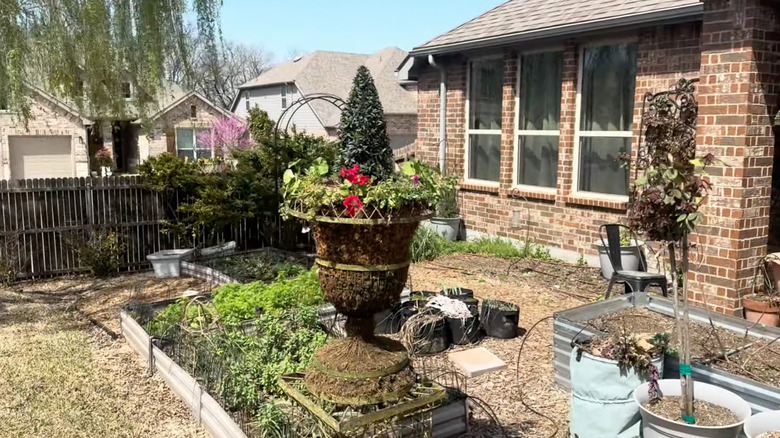
The first step in using an old urn in your garden as a planter is choosing the right one. Urns not designed for outdoor use are less likely to have the practical elements that functioning planters need, such as drainage holes, so you may want to opt for one that was originally made to be placed in a garden. If you can't find one, you can improve the drainage of an indoor one by carefully drilling holes or by adding extra gravel to encourage water away from the roots. Another element to consider is color. Antique cast iron urns come in a variety of colors such as black, white, cream, and even blue or green. So, consider the colors already featured in your garden and your home's exterior in order to pick an urn that fits right in.
If you're worried about using an old cast iron urn as a planter because of the rust, you can rest easy because rust does not generally transfer very much into the moisture of the soil. But if you want to be extra safe, you could always add an extra lining. These old urns often come with a palpable sense of elegance and drama. As such, it may be good to reflect that with what you plant inside. Try choosing plants that have bright colors, spill over the sides, or stand up tall to give the urn dimension while emphasizing its inherent grandeur. And don't be afraid to mix lots of different colored plants inside the urn, particularly if you want to put a maximalist spin on your garden.