

Not Plain Murano Glass: The Rare Vintage Decor That Collectors Dream Of Finding Secondhand
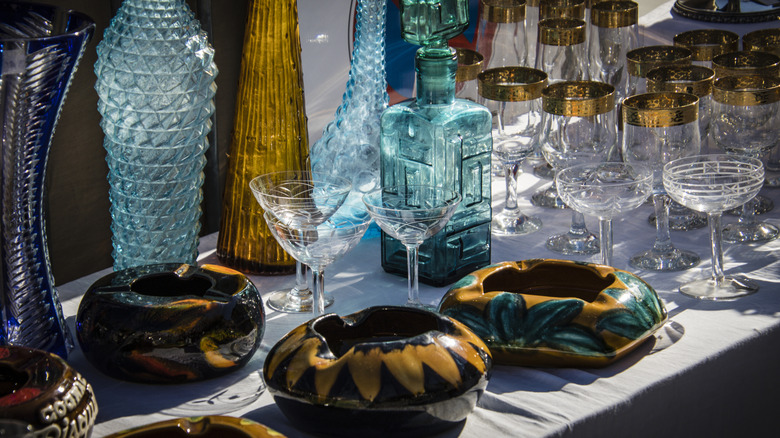
Whether it's a statuesque vase or a set of delicate goblets, spotting beautiful handblown glassware is one of the highlights of thrifting. Vintage shoppers know Murano glass kitchen items are one of thrifting's best-kept secrets, thanks to the glittering array of colorful products ranging from drinking tumblers to chandeliers. But collectors dream of finding works of art demonstrating a particular glassblowing technique that radiates mid-century style: sommerso glass.
You may not recognize the name, but you'll probably recognize the style. While Murano glass is typically more famous for its intricate patterns and detailed textures, the sommerso technique embraces boldness and simplicity. To make sommerso glass, two or more layers of richly colored glass are shaped without letting the colors mix. Often a layer of clear glass encompasses the entire piece, which gives the technique its name: the colors appear "submerged" ("sommerso") under the clear glass. The sommerso technique is typically seen in chunky, organic shapes ranging from sculptural vases and bowls to small animals and paperweights.
The history of Murano sommerso glassware
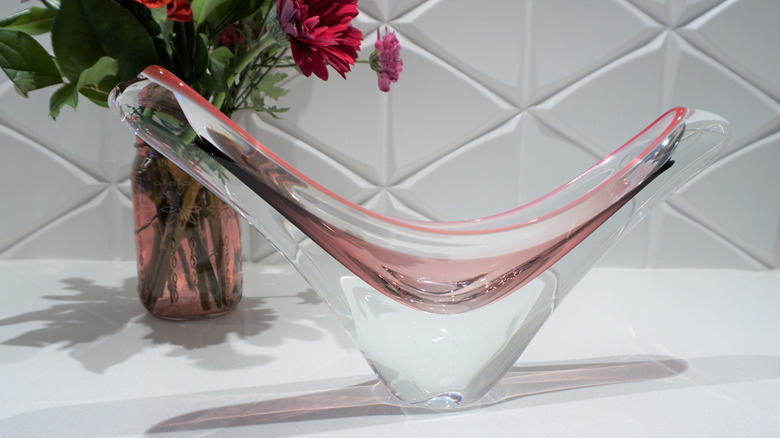
While glass making on the Italian island of Murano dates back to the 13th century, sommerso glass was only invented in the 1930s . Designer Carlo Scarpa created the style, but it was another artist, Flavio Poli, who popularized sommerso glass in the 1950s to such an extent that his name became associated with all sommerso glass. The creative shapes and bold colors of sommerso glass make it a sought-after vintage purchase, and authentic artist-signed pieces can fetch thousands of dollars. Fortunately, because Murano glass became so popular in the 1950s and '60s, smaller, more affordable sommerso pieces are some of the most-wanted trinkets to look for at thrift stores today.
Sommerso glass objects can be found in every color of the rainbow, and Murano artists even used uranium glass in the sommerso technique. These pieces have a subtle yellow layer in ordinary lighting, but under a black light, they glow with a distinctive bright green hue. As with all uranium glass, you'll want to be careful of the health hazards associated with this coveted thrift shopping find.
How to identify vintage Murano sommerso glass
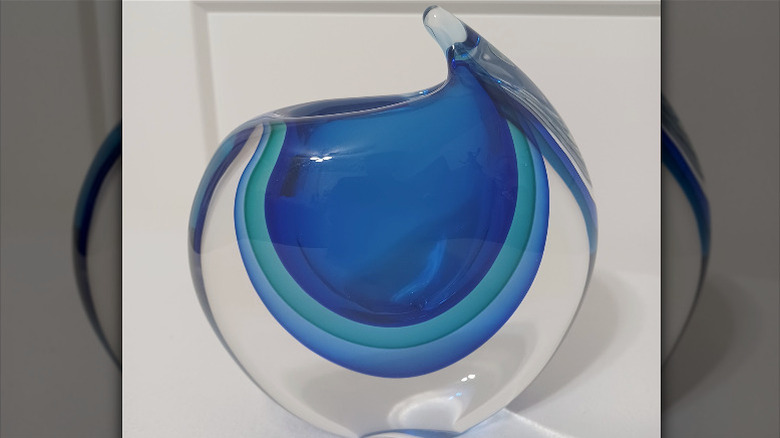
Sommerso glass is frequently distinguishable by its thick-walled construction, which can make it tricky to shop for given Murano glass' reputation for being lighter than it looks. Authentic Murano glass is valuable enough to be kept in display cases, so don't overlook those while you're shopping. The glass piece itself should have visible signs of being handmade, including air bubbles or other small imperfections. You may also be able to feel the spot on the base of the piece where the glass-blowing rod separated from the finished piece. This is called the pontil mark, and it won't be present on mass-produced glass.
Pieces may have etched factory names or other identifiers, like certificates of authenticity, indicating their origins in Venice or Murano. A genuine label may feature the artist's name or even the specific factory furnace where it was produced. A label that says something along the lines of "Murano style" in English or Italian isn't a genuine Murano piece. Factories and workshops all over Murano have produced sommerso glass, but some of the artist or workshop names that may appear in your search include Mandruzzato, Oball, and Arte Nuova.