

How To Test If Your Vintage Pyrex Bowl Set Contains Lead
We may receive a commission on purchases made from links.
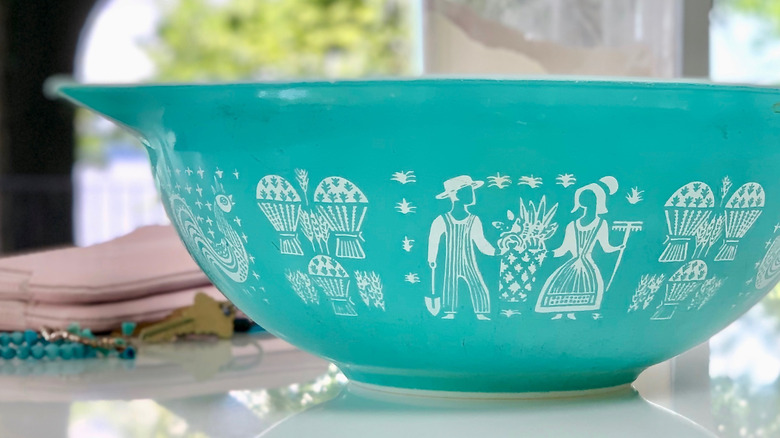
Vintage Pyrex bowl sets are hot in a trending sort of way — some of these secondhand dishes sell for hundreds or even thousands of dollars. There's even a rare, "Holy Grail" print that's worth hunting for at thrift stores because its resell value is so high, it could help you pay for a down payment on a home. But some would say they are also hot in a "not-sure-if-I-should-touch-it" sense. In fact, your plans to use these dishes to cook casseroles, whip up batters, or store leftover meals could be compromised if the set you have contains lead. There are ways to check these dishes yourself to help you identify the problematic ones, such as using swab tests.
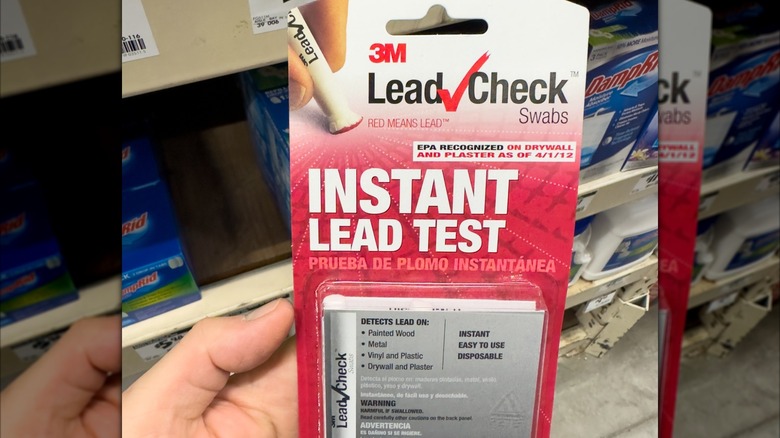
Since the paint on the outside of the bowl, or other type of dish, can test very high for lead, that's a good place to begin your investigation. You can use LeadCheck Swabs from Luxfer to test your Pyrex dishes to find out if they might have lead in them. Follow the directions on the product package to prepare the swab, then rub it over the suspicious Pyrex dish. Hopefully the swab doesn't turn pink or red after about two minutes — if it does, that means the dish is positive for lead. Another option is an Instant Lead Detection kit from Lumetallix, which uses a spray that turns bright green when exposed to UV light if lead is present. These swab and spray tests are a great way to start checking your dishes to know if they're unsafe. However, these kits are for testing the paint on the surface of the Pyrex and not the inside the glass itself, which can also contain lead.
Lead swab or spray tests aren't the only ways to test your Pyrex dishes
Since swab or spray tests can indeed alert you to the presence of lead, but can't tell you for sure whether or not a dish is completely safe and free from this type of heavy metal, there are other ways to test as well. One blogger named Tamara Rubin, whose site is called Lead Safe Mama, tested a rare Pyrex bowl that was popular in the '60s with a more sophisticated type of test called an X-Ray Fluorescence (XRF) instrument. Sadly for vintage fans, both the painted and unpainted, white parts of the dish contained lead at unsafe levels. Even vintage Pyrex that is clear sometimes tests positive.
Yes, it is a huge bummer to find out that your adorable vintage Pyrex bowl set may be unhealthy to use. You should take the risk of lead seriously though, because even small exposures can cause kidney, heart, infertility, and cognitive problems. Plus, the risks are even higher for children. Lead poisoning can even cause death, so this really isn't a problem to take lightly. If you're now opening the doors of your kitchen cabinets with horror, know that there may not be any telltale signs that your favorite dishes have lead in them. But now you know how to do some testing to dig deeper, and you won't necessarily have to make a desperate call to an environmental health specialist to find out about possible heavy metals in your dishes.