

Ditch Traditional Landscape Fabric For A Versatile And Affordable Alternative
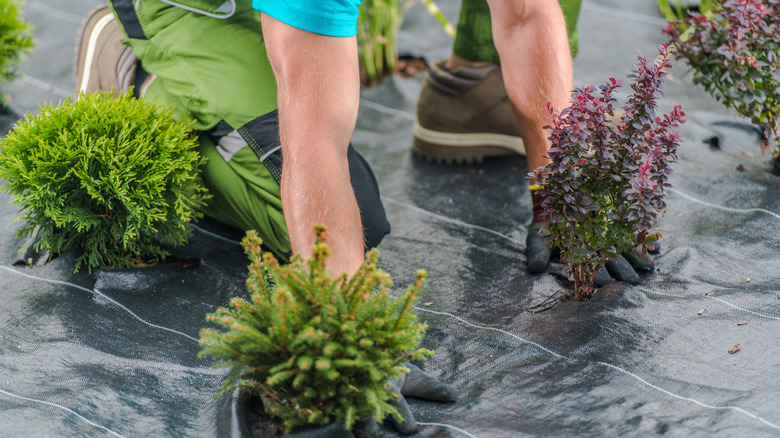
Landscape fabric is a popular way to suppress weeds in flower and vegetable beds. It's relatively straightforward to cut and lay, and once it's in place, you can pretty much forget about it. However, there are several downsides to using landscape fabric. Chief among them for many people will be that it's made from polyester or polypropylene. Both are products of the petrochemical industry, so their production is far from eco-friendly. There's a versatile and affordable alternative that can be equally effective and is good for the garden: Wood chips.
You might actually have seen wood chips added on top of landscape fabric to hide that ugly black surface, but when properly applied, you don't actually need the fabric at all. Experts say that a layer two to four inches thick will do the job of weed suppression without adding plastic to your yard. Wood chips retain moisture while allowing rainwater to naturally percolate through to the ground underneath. Some types of wood chips (cedar, for example) even contain natural oils that act as an insect repellent, helping keep the bugs off your plants.
You can also add a few inches of wood chips to the bottom of raised beds. They are usually cheaper than compost or topsoil, so they make an economical space filler. They will decompose naturally. It may cause the level to sink a little, but raised beds usually settle anyway. Just add a little more soil and wood chip mulch on top.
It's important to choose the right source of wood chips for your garden
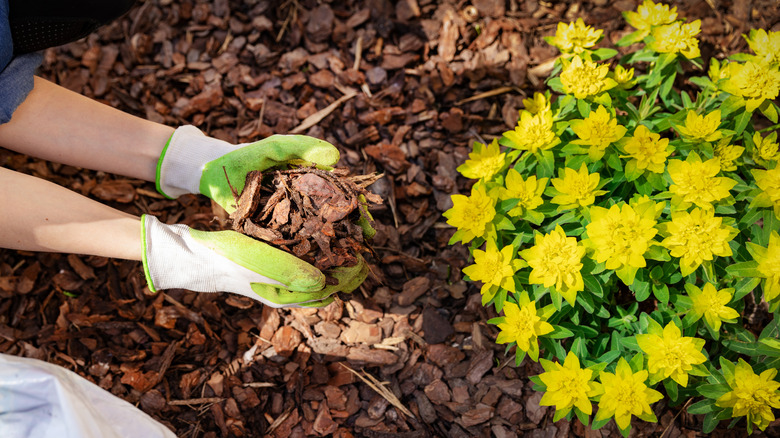
Whenever possible, the best source of wood chips is your own yard. If you have trees you have pruned or storm damage, you can buy or rent a wood chipper, and that way you're clearing up the yard and using the waste productively. Alternatively, you can buy wood chips at most large hardware stores and garden centers. Be sure to choose the affordable bags for landscaping or mulch, not the expensive ones for smoking and barbecuing!
You may find wood chips offered in bulk at attractively low prices, but it's very important to know where they came from. If it's a local arborist, it ought to be fine, but it's always worth asking anyway. Some wood chips may have been produced using waste construction lumber, and there's no way of telling what chemicals might have been absorbed. The last thing you want to do is introduce toxins to your vegetable beds and flower borders.
There are natural materials, like burlap, that you could use as an alternative to traditional landscape fabric. If you're looking for ways to garden more sustainably, it's certainly an option. Unfortunately, it may only last a couple of years. Wood chips tend to be a bit more durable, are easier to work with than wrestling large sheets around (especially in an established garden), and are equally beneficial for soil health and the environment, in general.