

Stop Buying Twine: The Common Household Waste You Can Use For Tying Plants
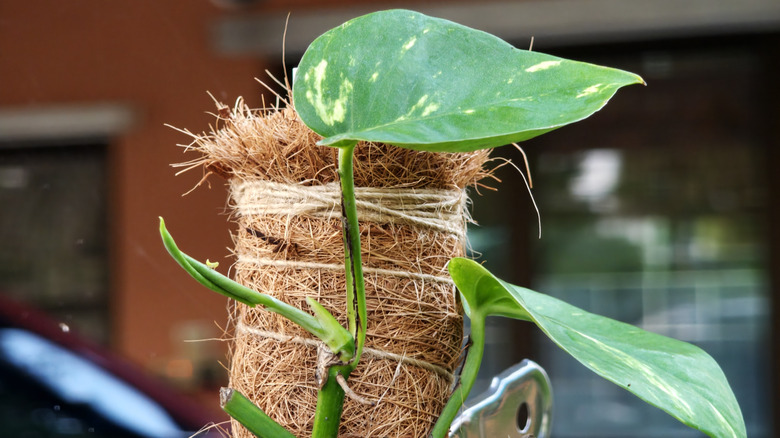
You may not think it, but those shopping boxes you get things delivered in have a surprisingly useful bit of DIY garden equipment hiding inside them. Specifically, all those long strips of plastic air-pocket packaging that keep your purchases cushioned? They can be turned into free plant ties with a little ingenuity, so there's no need to reach for the twine every time a tomato plant or pothos starts flopping to the side and needs to be tied to a trellis or support.
Because this type of packaging is usually perforated, it is so easy to separate into shorter lengths — all you need to do is puncture the air pockets with a knife or scissors to release the trapped air then once the plastic is flat, tear or cut it into strips around half an inch wide. Truthfully, the exact size is not of massive importance as long as the strip is the right size to wrap around the plant and its support with a little room to spare. It's important to give the plant a little space — especially for young trees, tomatoes, or fast-growing houseplants — which can quickly outgrow a tie. And, because the plastic is flexible, it can be tied without putting the same tight pressure on a stem that a thin piece of string tied too tightly can.
How to use plastic packaging without your hurting plants
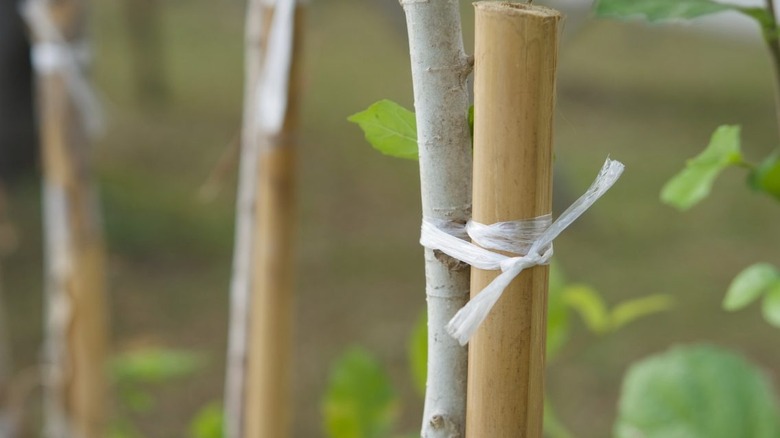
A plant tie is only meant to hold a stem near its support, not cinch it tightly. Outdoor plants in particular should still be able to move a little in the wind, as this strengthens their stems. Leave enough space to slide a finger between the tie and the stem and then check it every few weeks.
This leftover packaging can be just as useful for indoor plants that need support. A short, narrow strip can gently secure a monstera or pothos to a bamboo stake or a moss pole to keep these houseplants healthy and growing in the right direction. It is also recommended to use a figure-eight tie when staking plants. This involves crossing the strip between the stem and its support before tying it, which creates a loose figure-eight shape and leaves a small buffer between the two.
The only limitations to this trick are to avoid using dirty or greasy packaging and to check the plastic for any sharp edges so as not to cut or damage the stem of your plants. Keep an eye on the ties too, as plastic used outdoors can become brittle or start breaking down in the sun. Think of this hack like a temporary, single-use tie rather than something that will last forever. But, because the material came from packaging that was otherwise destined for the trash can, it can give the plastic some new life that that keeps it out of a landfill, for a little longer anyway.