

Ditch Landscape Fabric On Your Sloped Yard: It's Only Making Runoff Worse
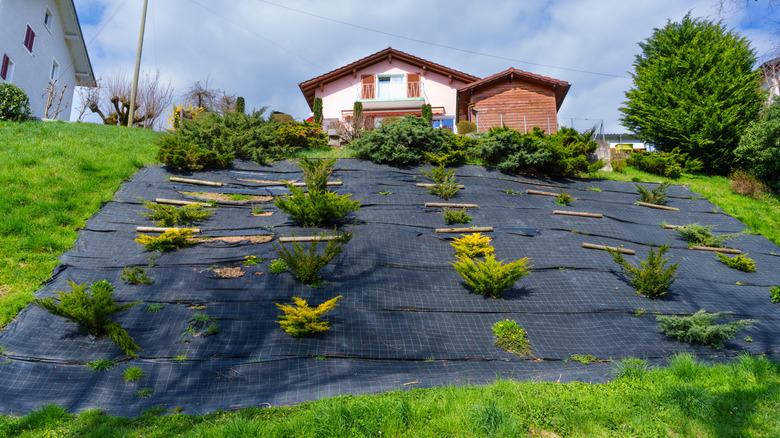
In the gardening world, landscape fabric is touted as a solution for a wide range of issues: weeds, erosion control, stabilizing soil, and more. However, despite its popularity, it's not the most ideal product for controlling runoff on sloped yards. Instead of working with you, it ends up being more work than you might expect. And while it can help reduce runoff in the right situations, sometimes you end up not seeing much of a difference — or the situation gets worse.
Though landscape fabric can be used as an erosion control product, it isn't all that ideal at stopping runoff on slopes because the tightly woven material can actually prevent water from sinking into the soil at an adequate pace. This allows more water to flow downhill instead. Non-woven landscape fabric is said to have better drainage. However, it still requires careful preparation and installation to avoid making runoff worse instead of better.
Even outside of sloped yards, landscape fabric has downsides that will have you second-guessing your investment. For example, it limits the diffusion of gas, which can harm larger plants. Some landscapers might tell you that using this fabric tends to be more trouble than it's worth. If you're looking to keep runoff under control, it's worth considering an alternative that's more widely recommended by gardening experts: erosion control wattles.
What to use instead of landscape fabric on your sloped yard
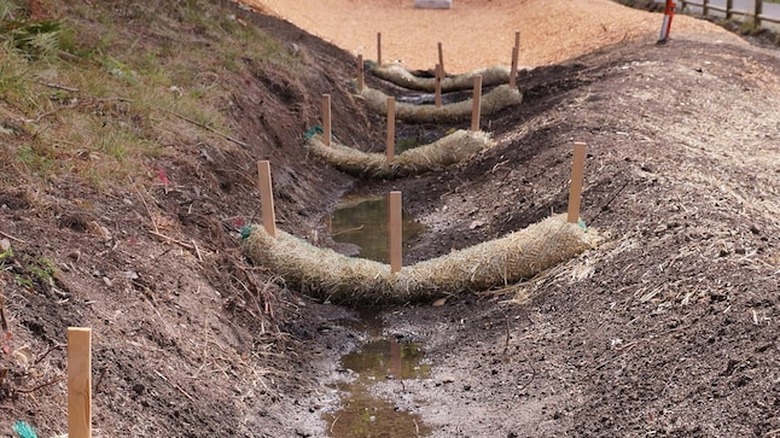
Erosion control wattles are long rolls of densely packed material, such as coir, straw, or other natural fibers. When installed on a slope, these rolls help reduce the amount of both water and sediment that rolls down the hill. Sediment is trapped in the wattles, and although water can still flow through, its speed is greatly reduced. This allows water to flow into the soil at a more manageable rate. Eventually, the natural material inside the wattle will biodegrade, helping to improve the health of the soil in the process. It's a temporary solution, so before the material breaks down, you should begin to establish turf or other plants to help prevent runoff instead.
Erosion control wattles are typically around 25 feet long and 9 inches in diameter, but they're very flexible, making them easy to install. It's important to entrench them into the ground so water can't pass beneath. Install them perpendicular to the flow of the water, either along the contours of the slope or at the base or top of the slope.
If you don't mind digging, you can instead put in a bit of work to create terraces, an ancient technique that'll make gardening in your sloped backyard a breeze. Instead of a big hill where everything tends to roll to the bottom with a good rain, this method turns it into tiers you can fill with fruits, veggies, or your favorite flowers. It's a tedious process, to be sure, but the reward can be worth it. Clever gardening can also help; look at planting some of the most ideal plants for your sloped yard, including things like ornamental grasses, trees, and shrubs.