

No More Boring Curtains: Use This Overlooked Kitchen Scrap For An Update

It's happened to all of us. You walk into a room and realize your curtains are in a desperate need of an update. But even though you're ready to say goodbye to boring curtains, your wallet's telling you that replacing window treatments isn't in the budget this month. But we've got good news. There's an overlooked scrap you probably tossed in your compost pile after last night's dinner that's got major revamp power: onion skins.
Most of us only think about onion skins while we're peeling them off during nightly dinner prep, but this common leftover ingredient can be used to fertilize your garden, stain wood, keep pests at bay, and even dye your curtains and other home textiles. Their dyeing power lies in the vast amount of phytochemicals in the skin, including flavonoids and tannins, both known to help dye and retain color in fabric. It's a well-tested method: Research shows that the practice dates back to 2600 B.C., and it was commonly used to dye fibers in rugs and other decor in Turkey.
Using onion skins to create dye might have a rich tradition, but in today's times, it's wildly practical. Using these overlooked scraps fully before putting them in your compost bin helps cut down on food waste. Plus, while you do need multiple onion skins to make a dye (some recipes call for at least 10 to 15), onions are a typically budget-friendly vegetable (costing in the ballpark of $1.50 per pound, depending on your location). They're even cheaper (okay, basically free) if you grow onions from seed. In other words, using onion skins to dye your bland, boring curtains is a weekend DIY project that your wallet can wholeheartedly approve of.
How to pick the perfect materials to create onion skin dye
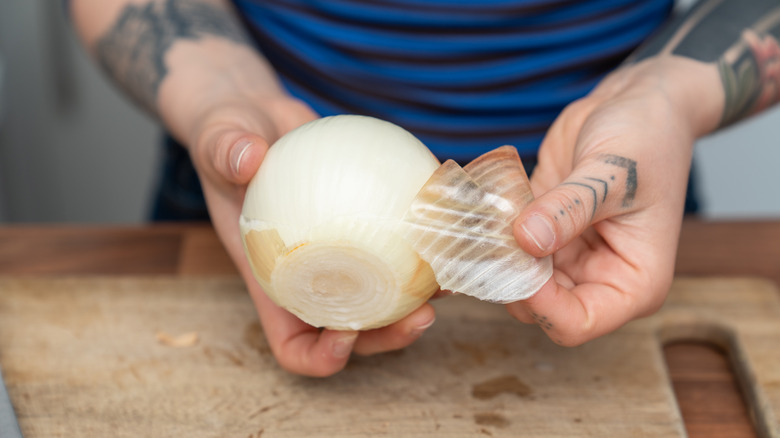
The most important material in onion skin dye is (perhaps unsurprisingly) the onion skins themselves. While the color options seem fairly straightforward at first — red onion skins for red dye, yellow for yellow dye — it's not quite as cut-and-dried. While there is a consensus among natural dyers that yellow onion skins create anywhere from a deep gold to buttery yellow color, their red counterparts are a bit more varied. DIYers have reported developing colors including gold, brown, orange, and even green from red onion skins. Colors may shift further if you add a mordant (a compound that helps the natural dye stick to the fabric).
Your final color may also depend on the material of your curtain. Because synthetic fibers are plastic-based, they don't take to the dye well (or possibly, at all). But curtains made out of natural fibers – think cotton, silk, wool — tend to take on the dye well. One note: One DIYer noted that cotton needs a mordant for brighter color. If you want a more muted hue, try skipping it.
Because the color varies so wildly, we recommend doing a test batch first. Pick up a bit of fabric similar to your curtains at your local craft or fabric store and make a small test batch of dye. While it may not produce the exact same color when you make the dye bath for your curtains, it'll give you an idea of how the fabric will handle the color, how long to soak, and if you need to make any adjustments beforehand.
Mix a simple dye with onion skins and water for refreshed curtains
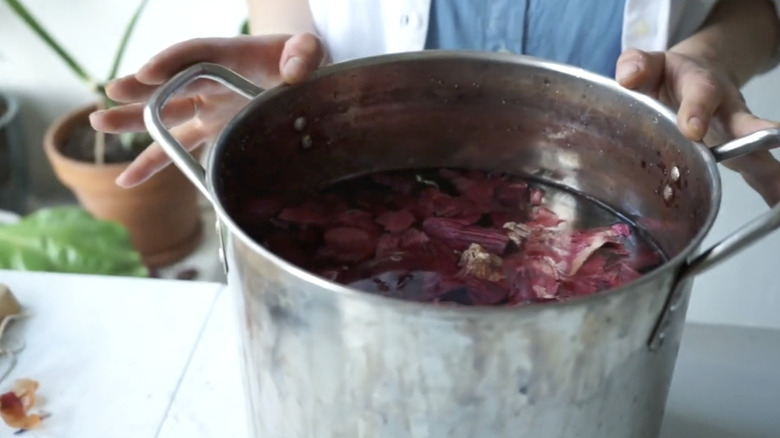
Before anything else, stock up on onion skins. Keep a jar or paper bag on your counter, and add the dry skins when meal prepping. Avoid airtight jars or food storage since they trap moisture inside, encouraging mold. Once you have the skins from around 10 to 15 or more onions, clean them in cold water, then tear up big chunks.
Next, deep clean your curtains. Run them through the washing machine on cold, tossing in a tablespoon of washing soda to help remove dirt and gunk. If you're using mordant, fill up a bucket with hot water, mix in your chosen compound, and let it soak for a few hours, then rinse. Mix up your onion skin dye while this is soaking. If you're not using a mordant, start the dye while the curtains are in the wash.
Choose a deep pot to be your dyeing pot (aluminum is rumored to help the color adhere, but we couldn't find any scientific evidence to back that up). Add your onion skins (more for more fabric or a darker color), then fill the pot with water so the fabric has room to move. You can remove the skins by pouring the dye through a cheesecloth if you like. Add the fabric, turn the heat on low, and let simmer for a half hour to an hour, stirring occasionally to help the color deposit evenly. Turn off the heat. For a deeper color, let the fabric sit in the dye overnight. Then, rinse the fabric with cool water, and hang dry it out of direct sunlight. Once dry, rehang your freshly updated curtains!