

The Reason Your Grass Looks Damaged Could Be A Sign Of Dull Lawn Mower Blades

If your lawn is looking a little worse for wear, it may not be related to how much water it's getting. Your lawn mower blades could be the cause. If your lawn mower blades are dull, they can damage grass, tearing or ripping it instead of cutting it cleanly. Not only does this create an unattractive dull, grayish appearance, it's bad for your lawn's health: Torn grass is more susceptible to diseases and fungus.
Dull-looking grass won't be the only warning sign that your lawn mower blades need sharpening. If your lawn mower's engine is seizing or if you're expending more effort than usual to push the mower, give the blades a look. A dull blade doesn't cut cleanly, which puts more stress on the engine, causing mechanical issues and reducing your fuel efficiency. According to Lowe's, you should sharpen your lawn mower blade after every 20 to 25 hours of use. With sharper blades, you'll mow faster and more efficiently, and your lawn can return to being green and flourishing.
Signs your lawn mower blades are dull

Sharp blades help a lawn mower cut cleanly and evenly. If you notice you have to pass over areas of your lawn multiple times while mowing, even after double-checking your mowing height, that's a sign to check your blade's edge. Having to mow areas multiple times and pushing the mower harder to do so are both early warning signs that your blades are becoming dull. Patchy areas of lawn, uneven grass height, ragged grass tops, and torn-up chunks of dirt are also indicators that the lawn mower blade needs to be sharpened.
Grass that's been damaged by tearing or ripping is more disease-prone and has a harder time retaining moisture. A lawn mowed with a dull blade will look dry and brown, gray, or yellow. Grass cut with a sharp blade will have visible definition at a distance, while the muted colors and frayed tops of damaged grass will look hazy and dull. The issue could be that the blade needs to be realigned or tightened, but if that doesn't fix the cut, try sharpening.
How to sharpen your lawn mower blade
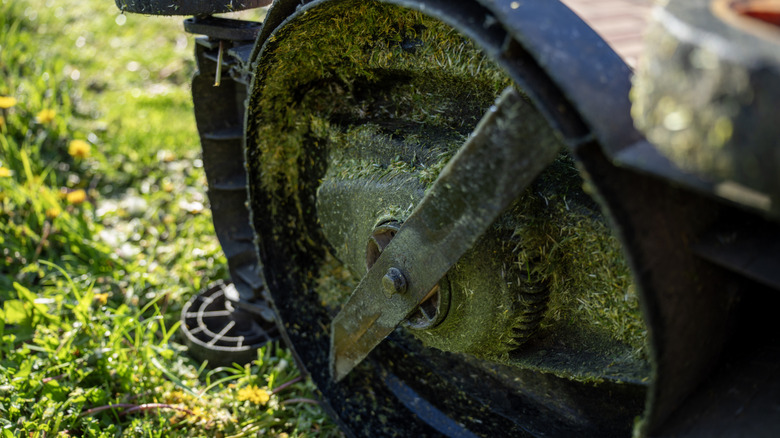
When it's time to sharpen your lawn mower blade, inspect the blade first. Evidence of bending, denting, or cracking are telltale signs that the blade should be replaced. Damaged blades won't sharpen correctly, and continuing to use them risks damaging your mower — or worse, injuring someone with a flying piece of broken metal.
To sharpen your lawn mower blade, start with safety precautions. Wear gloves and eye protection and remove the spark plug. This critical step ensures the engine won't accidentally start up while you're changing the blade. After you've detached the blade, hold it securely in a vise or clamp and use a hand file or angle grinder to restore the edge. Be sure to match the blade's existing bevel, usually a between a 30-degree and 45-degree angle.
After sharpening, check the blade's balance. An imbalanced blade will cause excessive vibrations that make the mower uncomfortable to use, and those vibrations will strain, and eventually damage, the motor. Fortunately, it's easy to check the balance. Specially-designed blade balancers are widely available, and they can help you see quickly and accurately if your blade is balanced. If your blade tilts on the balancer, use a file or grinder to take off a small amount of metal from the heavier side. Once you're sharpened and balanced, you're ready to reinstall the blade and get back to mowing.