

The Beautiful, Medicinal Tree That Gardeners Have All But Forgotten
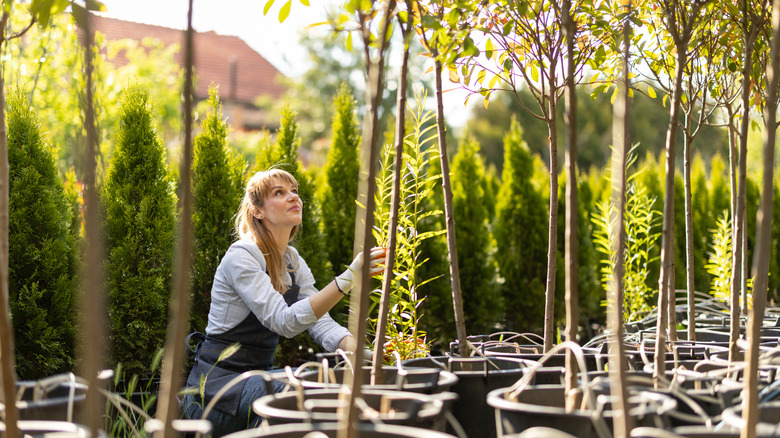
If you've ever visited your local garden center or nursery, you know just how many different varieties there are of trees, shrubs, and flowers. Of the most overlooked garden plants and trees, there is one that many gardeners may have forgotten about: the lignum vitae tree (Guaiacum officinale).
This is a gorgeous tree that's great for landscaping. It's a broadleaf evergreen that can grow as tall as 30 feet high, offering an incredible umbrella of shade for your yard. Amidst the dark green leaves, you'll find groupings of cute little purple flowers, which tend to bloom in spring but can be seen throughout the year as well. Plus, the lignum vitae has little orange berries that birds love for the seeds they leave behind. They thrive in USDA hardiness zones 10B to 11 and prefer full sun to some shade. They're one of the great drought-resistant trees you should grow in your yard and love well-drained soil composed of sand, silt, and clay.
You might be wondering why exactly gardeners may have forgotten about this treasured tree. Turns out, the lignum vitae has been labeled as endangered. Though you might not see them around very frequently, if you happen to live in their preferred hardiness zones, you can help out by planting one or two and enjoying them in your yard.
How did lignum vitae become endangered?
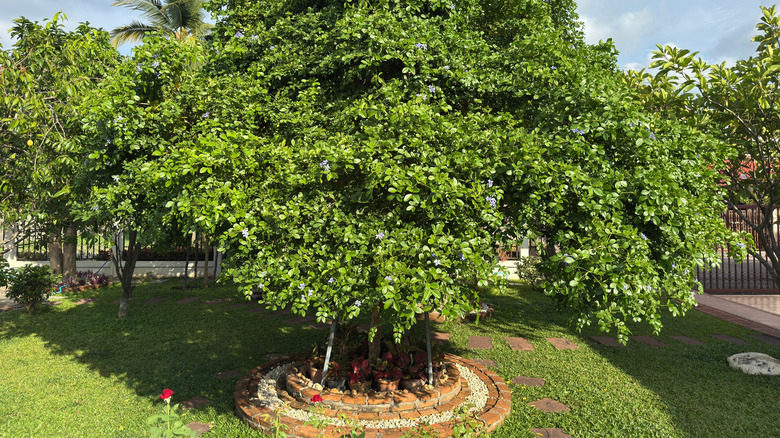
If the lignum vitae tree is so amazing, how did it end up being labeled as endangered? Well, maybe we loved it a little too much. Long story short, the lignum vitae has so many great uses that it simply became too popular. One too many trees were harvested until there were so few left that it got put on the endangered list. On top of that, a large portion of them have been subjected to deforestation and removed from the land in order to build in that space.
There were many things people loved to use these trees for. For one, lignum vitae is one of many trees with medicinal properties that you can grow in your yard, which is how it came to be known as the tree of life. Though the wood is not used in contemporary medical practices, the resin is still sometimes used in at-home remedies.
The wood from the trunk is incredibly dense, so much so that it actually sinks in water instead of floating. The wood being so solid and heavy made it great for constructing all sorts of things. In fact, the earliest bowling balls were made from the wood of lignum vitae trees. It was also a popular material to source for ship propellers and shafts, including the shaft bearings of the first-ever nuclear submarine. It was also common to find it in the construction of tools, like mallets.