

Ditch Pesticides: Use A Common Household Waste Item To Protect Seedlings
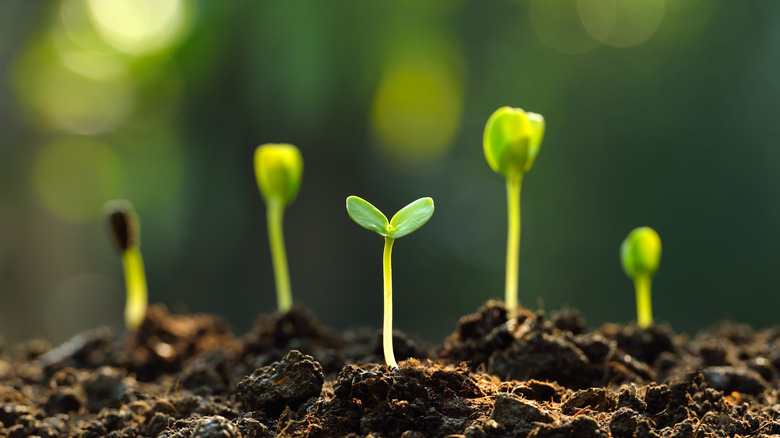
Tender seedlings are arguably the most vulnerable plants in your garden. They're susceptible to damage from damping off and harsh weather, and they're sensitive to grower mistakes with soil, water, and fertilizer. But perhaps no seedling affliction feels as disappointing as finding a sprout on the ground after it has been chomped off at its base by a cutworm. Fortunately, you don't have to look far for a solution. Most households have a waste item lying around that can be fashioned into an effective collar that keeps cutworms from accessing those tender stems: newspaper. It's easy to make collars from newspaper to protect your seedlings, and it lets you avoid using pesticides, which frequently fail to work on cutworms anyway.
First, let's meet this annoying critter, which nonchalantly topples seedlings by eating a bit of the victim plant, then moving on to chow down on the next one. Cutworms are caterpillars from several different moth species, and they're among the hidden dangers that are ruining your garden. The timing of their emergence from winter sleep coincides with the period when you're planting your seedlings, so they awake ravenous and feast on your garden under the cover of nighttime darkness. Luckily, a simple barrier like a newspaper cutworm collar can stop them.
How to make cutworm collars from newspaper to save your seedlings
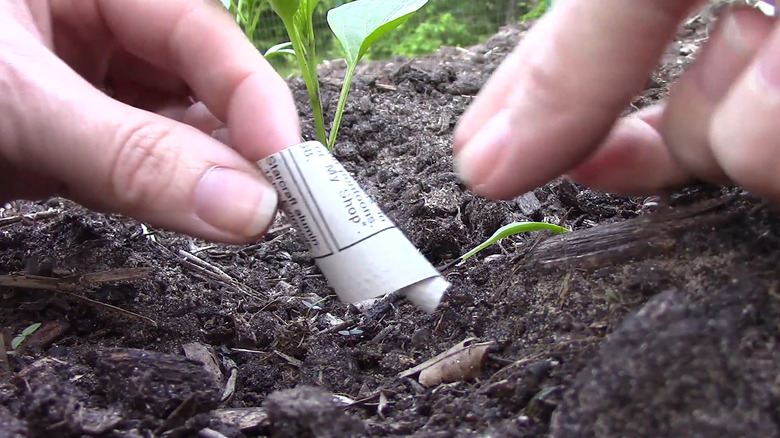
Some gardeners use toilet paper rolls to keep cutworms off of plants, or other materials like aluminum foil or disposable cups. But newspaper is one especially good choice for cutworm collars since it's biodegradable and should decompose by the time most seedlings are big enough to no longer need protection (cutworms are less likely to damage tougher, more mature stems). A newspaper collar can also provide a modicum of wind protection and help funnel water right to the seedling's roots.
To make cutworm collars that will deter this garden-destroying pest, rip or cut strips of newspaper 2 to 3 inches wide, and cut the long pieces down into 6-inch strips that can wrap the stem of each seedling. Wet the newspaper, and tightly wrap it around seedling stems, ensuring the collars extend an inch into the soil to prevent feeding from below and leaving the rest above ground. This technique thwarts the cutworm's usual mode of eating — wrapping its body around the stem, which it can't do with a newspaper collar in the way. The cutworms will move onto another food source, and your seedlings will grow up protected and healthy.