

Leave Traditional Toolboxes Behind: The Japanese Alternative That Makes Storage Easy
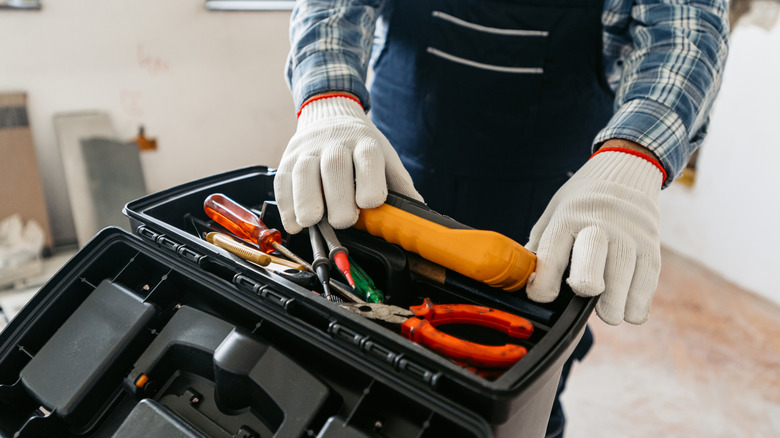
Traditional toolboxes serve a purpose and often do a great job of organizing your garage clutter and building materials. However, alternatives for tool storage could offer unique benefits that a traditional storage system can't. One such example is the Japanese wooden toolbox, a lightweight wooden box with a slim profile and a clever locking system. Rather than being secured with bolts and latches, the Japanese toolbox utilizes a sliding lid and a wedge piece for secure locking. You can identify a Japanese toolbox by its lower profile in comparison to Western toolboxes, which may appear bulkier. Further, their construction also features insets on the sides that can function like handles, making these small toolboxes easy to carry and maneuver. These toolboxes were often used by craftsmen and carpenters for transporting their work tools to and from job sites. They were often made of Kiri wood, the lightest-weight hardwood in Japan, known for its warp-resistance in high humidity.
Those interested in skipping a traditional toolbox for a space-saving, lightweight alternative may enjoy the Japanese toolbox as an option. Despite its small stature, some folks who have recreated this toolbox design have blended both western and eastern concepts, utilizing the same sliding mechanism but building a larger box for bigger tool storage as well. While it's possible to source a wooden Japanese toolbox online, you may be more likely to find ready-to-assemble kits, construction plans, or tutorials so you can make one for yourself.
Should you consider a Japanese wooden toolbox for your storage needs?
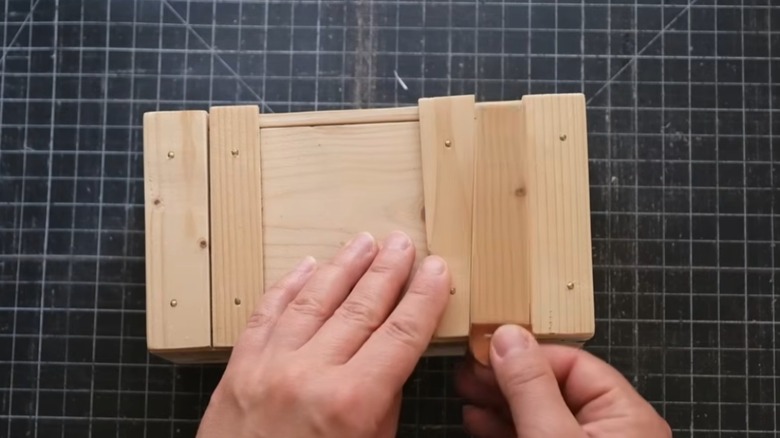
The Japanese wooden toolbox is a simple box with a more complex lid that features a sliding top. When it's closed, a wedge can be placed between two raised wooden pieces to secure items inside. The ingenuity behind the lid construction is why people favor this humble toolbox, but it's not always ideal for today's projects. The box lacks interior organization, making it less ideal for storing varying types of nails and screws. And, due to the slim profile, it also isn't ideal for storing large tools like drills. Folks may find that these wooden toolboxes are best for medium-sized, straight tools like brushes, chisels, screwdrivers, or wrenches, for example. Additionally, the smaller design might make it a more ideal mini toolbox to take on the road rather than for long-term garage organization. If you're looking for clever tips to help declutter and organize your garage tool kit like a pro, this box may not be your first go-to.
Of course, there are plenty of popular toolboxes that aren't worth buying. It all depends on your needs, and for some, the Japanese toolbox could be a great alternative to bulky plastic or metal boxes. Many people enjoy being able to construct the toolbox themselves. Additionally, with techniques like dovetail joining, you could potentially pull off the project with few to no nails or screws. Thankfully, when it comes to building your own, there are plenty of tutorials online, though some people have noted that despite the simple appearance, these toolboxes can be a welcome challenge to construct.