

Say Goodbye To Landscape Fabric: Here's A Natural, Fragrant Groundcover

As tempting as it might be to throw down some landscape fabric and call it a day, there are better options that won't compact the soil and leach microplastics. In fact, there's a natural, fragrant groundcover that's capable of suppressing weeds while infusing garden beds with a fruity smell. When used to cover vegetable beds, its apple-scented blooms encourage pollinators to visit and cross-pollinate nearby vegetables. Unlike landscape fabric that does nothing for soil health, you can plant this soothing herb to naturally improve your garden's soil by adding micronutrients when mulched. Intrigued? Let's just say that chamomile isn't only good for making a relaxing herbal tea.
Roman chamomile (Chamaemelum nobile) is used to make chamomile lawns because each individual plant spreads 4 inches to 12 inches and stays low to the ground. It's important not to confuse it with the similar-looking German chamomile, which can grow 24 inches tall and is less suitable than the Roman variety for ground coverage. Roman chamomile has denser, sunlight-blocking foliage, which may make it better at suppressing weeds than its German counterpart. Make sure to verify the variety when choosing the healthiest plants from a nursery — or when buying seed packets. Once established, this herb will grow for multiple years (dying back in winter) before needing to be replaced.
Plant Roman chamomile to suppress weeds in your yard
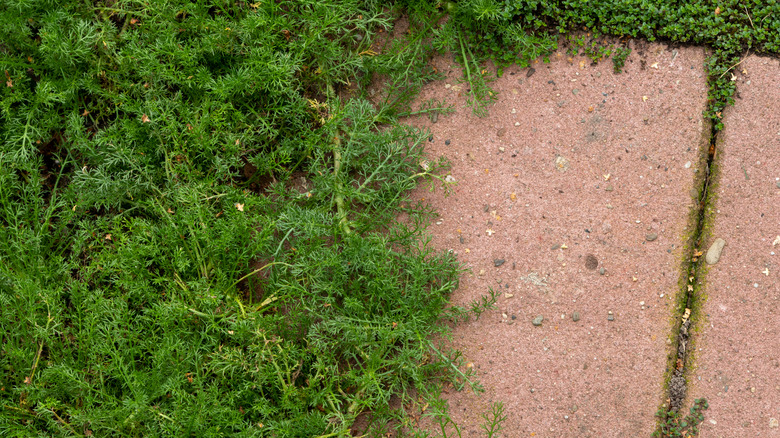
A chamomile lawn is a low-maintenance grass alternative you may want to consider, but before you plant one, you need to make sure you have the right growing conditions for it to thrive. Stunted plants could lead to bare patches of soil where weeds can sprout with ease. First, you need to determine whether your growing zone is compatible with Roman chamomile. The herb is perennial only in zones 4 through 9; if you live outside these zones, you'll likely need to grow it as an annual. Roman chamomile thrives best in sandy loam soil with good drainage and full sun. If you have heavy clay soil, you'll have to amend it with perlite before planting.
Each plant is capable of spreading up to 12 inches wide, but when using Roman chamomile as a groundcover plant, space the plants densely to ensure full soil coverage. You can use nursery transplants or start the herb from seed — the latter option may be the most cost-effective. You'll also need to maintain consistently damp, though not waterlogged, soil to help your new plants develop sturdy root systems and maximize their spread. Pluck any weeds by hand until your Roman chamomile has achieved full coverage. They typically take around nine weeks to reach maturity when started from seed. Deadhead the spent flowers to encourage the plants to grow bushier and fill out even more space.