

This Fuzzy Weed Earned A Colorful Nickname From Cowboys
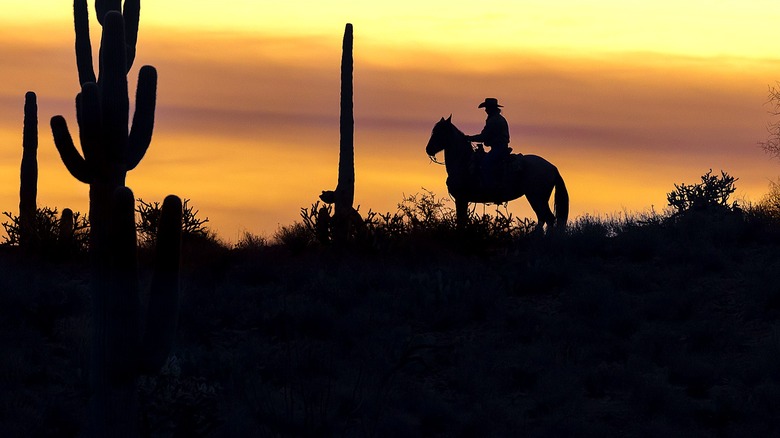
Nothing is ever all good or all bad, and that includes invasive and noxious weeds. Although you might find it hard to see the good in any weeds, there's at least one that has a surprising number of uses. Mullein, or Verbascum thapsus, is a biennial plant that's fuzzy in its first year, a feature that's earned it some colorful nicknames. In particular, in the Old West, it was known as "cowboy's toilet paper" thanks to the plant's soft and wide leaves.
Mullein was brought to North America from Europe and Asia in the 1700s, and at the time, was used for medicinal and folk practices. Today, the invasive mullein plant grows in every U.S. state. Hardy in zones 3 to 9, you'll find mullein growing in poor soils in fields, roadsides, pastures, and disturbed areas. Back in the day, it wasn't uncommon for cowboys to use soft mullein leaves in a pinch, but while it may be good in an emergency, it's not really recommended as a long-term alternative to using toilet paper, especially if you're prone to contact dermatitis. (That said, mullein isn't the only plant you can grow as a natural alternative to toilet paper.)
Pollinators love mullein's flowers in Year 2 of its life cycle, and the plant is striking, but it produces 100,000 to 180,000 tiny seeds in its second year. This is the main reason people might advise you to avoid planting mullein in your garden. Still, others have their reasons to ignore that advice and say you can grow the plant for a few different purposes.
Discover what's good about mullein
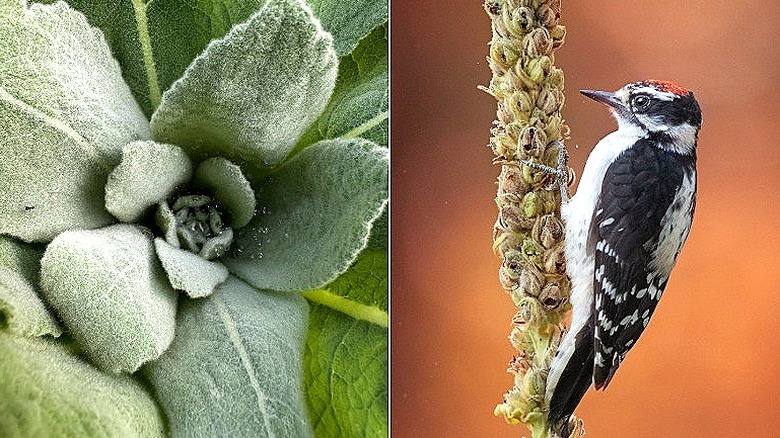
As mentioned, mullein is a biennial plant. In its first year, it forms a fuzzy rosette, followed by a tall stalk the next year. This plant will add a vertical element to any garden, and can rise up to 10 feet. Mullein is considered invasive in certain areas, but not everywhere in the U.S. It's listed as a noxious weed in Colorado and Hawaii, and in the following six Montana counties: Beaverhead, Deer Lodge, Lewis and Clark, Mineral, Stillwater, and Yellowstone. Mullein shouldn't be planted in those regions, without exception.
However, if you live elsewhere in the United States, you can grow this herbaceous plant in your garden. As for its uses, along with using mullein's fuzzy leaves as toilet paper like the cowboys did, its tall stalks can be used to make torches, and birds like to eat the seeds in the winter if you leave them standing. One other historical note, but fresh mullein leaves were also once used as insoles by Native Americans. The fuzzy-covered leaves provided warm, cushiony support for tired feet.
The plant is good for soil stabilization, meanwhile, since it has a deep taproot and grows in soils that many other plants won't. When growing mullein on purpose, it's smart to be cautious about what happens to those multitude of tiny seeds before they fall unless you're letting them grow for wildlife. But just in case, you might want to invest in an action hoe (or the garden tool that makes weeding easier).