

Not Just For Retaining Walls — Concrete Blocks Can Also Attract Bees To Your Yard
We may receive a commission on purchases made from links.
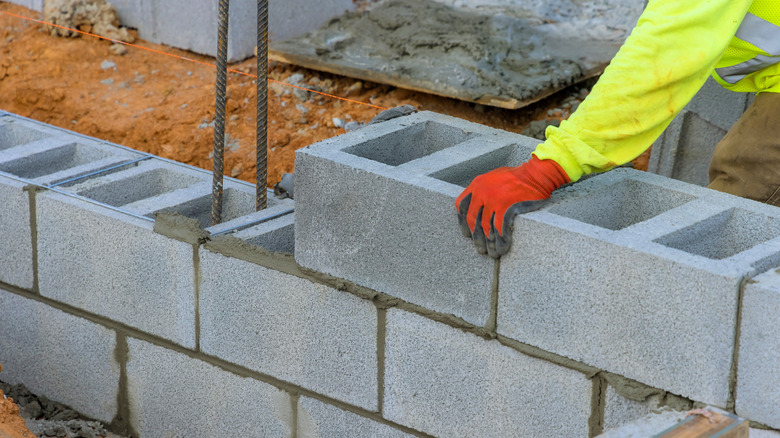
Concrete blocks certainly aren't known as an eco-friendly material. It's resource-intensive to manufacture them, and the process pumps more carbon into the atmosphere, so they might be the last thing you associate with an ecological goal like conserving pollinators. But surprisingly, it's possible to repurpose concrete blocks as more than just a retaining wall material. You can use concrete blocks (or make your own) to shelter solitary bees, an innovative use that helps attract the beneficial bees you want in your garden. The concrete provides a warm shelter for solitary bees, since it's a firm material that retains heat. Whether you're pouring your own concrete or making use of a block around the yard, you will need to add appropriately sized holes and tunnels for the insects to use it safely.
A properly-made concrete bee hotel can shelter important native species like leafcutter bees and mason bees, which are essential pollinators for many plants. But if you're not intentional about the design, you may wind up inviting birds or insects that actually prey on the native bees you're trying to protect. However, a few measures can help. As you place the tunnels for the bees to nest in, making sure they are at least ¾ inch from the outer edge of the block can keep some parasitic wasps out. You can also keep chicken wire handy and block the entrance with it if you see birds getting into the habitat. Many of the problematic wasps are extremely small, so altering the size of the tubes may not do much good, but some bee enthusiasts have success covering the openings with gauze during the fall to keep them out.
How to make a bee hotel from cement blocks
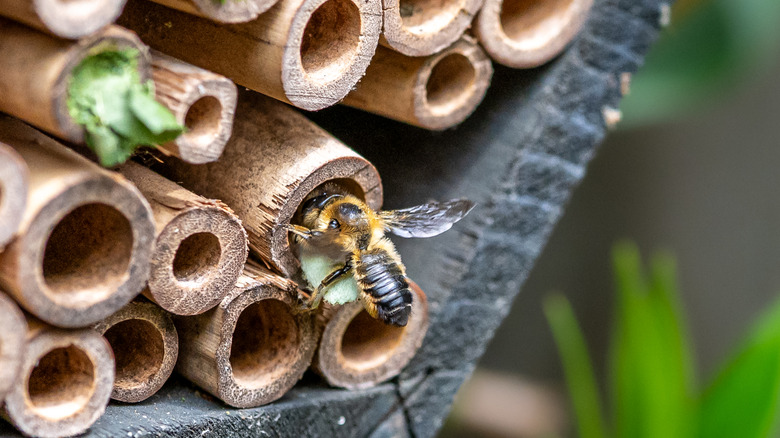
Hollow blocks of concrete make for easy DIY bee hotels. To repurpose one as a native bee haven, stuff the opening of the brick with hollow tubes that they'll fly into. Use natural materials like empty plant stems to form up to 100 tubes. Some species, such as blue orchard bees, will stay away from structures with more openings than that. The tubes must be sealed at one end, so bamboo or reeds are popular options, since cutting at a node creates one closed end. An alternative is to drill holes into a block of wood that fits into the concrete block. Remember to drill the holes ¾ of an inch from the edge, or further in, to protect against bee predators.
No hollow concrete blocks on hand? If you're the type that does home projects that involve pouring concrete, and you have some left over, you can make your own empty concrete block to shelter bees in the yard or garden. You'll need a mold made out of plywood or plastic that you can pour around, and a straight edge to shape the block.
Whatever your preference is, it's important to have a variety of sizes for the tubes; several sizes ranging between ¹⁄₁₆ to ½ inch wide will shelter a range of species of bees. Length matters, too: As a rule of thumb, for holes that are ¼ inch wide or bigger, you'll them to be 5- to 6-inch deep, but if the holes are smaller than ¼ inch, stick to 3- or 4-inch deep passages. Tunnels should never be longer than 8 inches deep, and female bees are more likely to place female eggs tunnels on the deeper side. Having enough female bees is crucial if you're trying to increase the numbers of these important pollinators.
Benefits of concrete blocks for native bees (and how they use them)
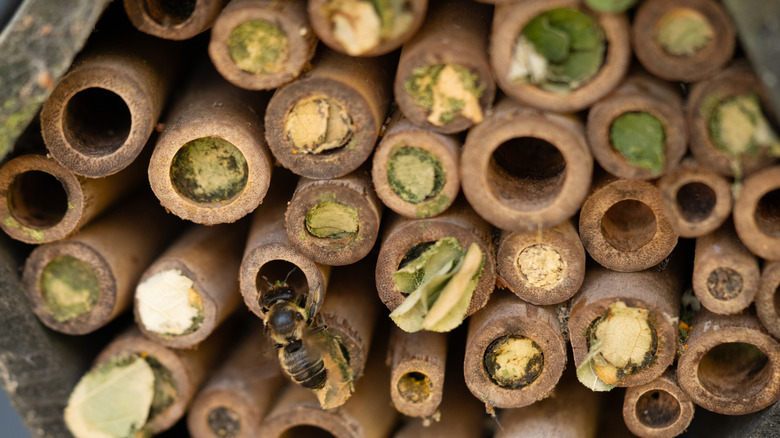
A properly designed concrete bee hotel can help native bees find something that's become more scarce in the modern age: a place to nest. The kinds of bees that are most likely to make use of the block are solitary species that nest in cavities, such as mason bees, which emerge in springtime, and leafcutter bees, which emerge during the summer. These types of bees look for holes in the environment rather than creating their own. One way you'll know whether you have the right visitors is by the plugs they make using dirt or plant material from the garden to cover up the holes. These indicate that a female bee has laid eggs in the tunnels, then sealed them up safely to hatch, with stored pollen and nectar inside for nourishment. The babies develop into adults over the fall, overwinter in the nest, and come out when spring rolls around.
It's in the best interest of your buzzing visitors to locate the bee hotel in a place with overhead shelter and exposure to morning sun so it stays dry during damp weather. A south- or southeast-facing spot should work well. You can also make multiple small bee habitats rather than one large one to maximize the number of helpful visitors. They should be placed off the ground and near flowering plants that will provide nectar for the bees. Naturally, starting a pollinator garden near the concrete bee shelter is an ideal arrangement.