

Don't Toss Scrap Wood: The Resourceful Way To Make Budget-Friendly Pavers
We may receive a commission on purchases made from links.
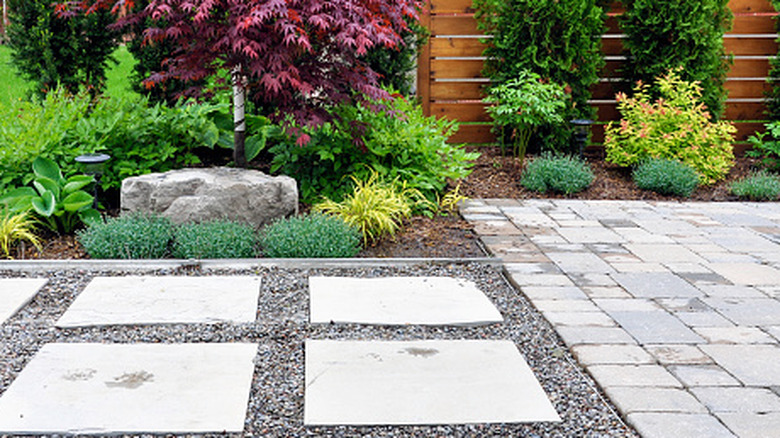
There are lots of different ways to use scrap wood for useful DIY garden projects. Often, the scrap wood itself is turned into the finished item, but for this article, we want to use what might otherwise be wasted and turn it into molds for concrete. It's a simple idea anyone can use to create unique, budget-friendly pavers. They can be whatever size or color you want; they can even be textured.
You need four pieces of wood to make a square or rectangular frame. An inch or so thick and around 3 to 4 inches tall is ideal. Plywood is a good choice for the bottom. MDF or hardboard will work but won't be as durable when subjected to wet concrete. If it's scrap that was going to get tossed anyway, it's not important, unless you plan to make lots of pavers.
There are plenty of saws to cut your wood to size if the scraps are too big. A handsaw will do, but a circular saw will make life easier. To assemble the frame, all you need are some screws and a cordless drill driver. Work on a flat surface so the sides are level. Insert two screws through each piece to make the frame, then screw on the bottom with screws spaced 2 to 3 inches apart. You'll also want some concrete release agent to coat the mold. There are lots to choose from. Sprays are quick and convenient, but liquids are cheaper.
Some important choices when making DIY pavers
Before you start, consider the size you need. Small pavers might seem easier to produce, but you'll need a lot of them to cover a large area. If you're going to make one 12x12 or larger, it's worth adding a layer of wire mesh in the middle for reinforcement. The standard industry thickness is 2-3/8 inches, so somewhere between two and three is good. Keeping them all roughly the same will make it easier to lay them level.
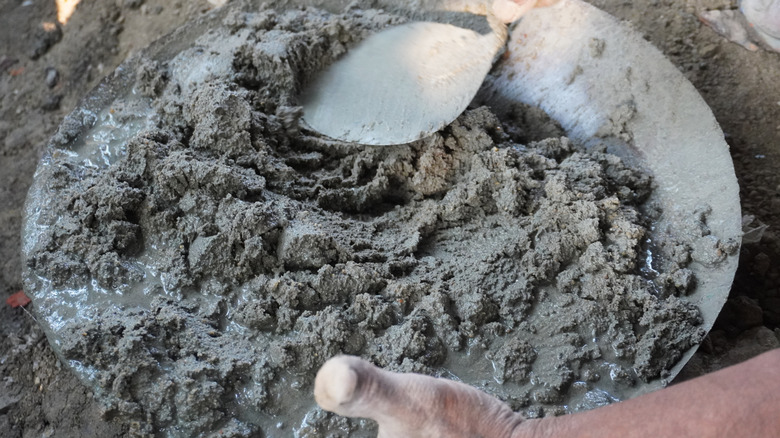
Pre-mixed concrete is easy to use, but always wear a mask and waterproof gloves when handling it. There's an important difference between concrete and cement, so don't buy the latter. The more you buy, the more economical it gets, but if you just want to experiment, a 10-pound bag of Quikrete from Amazon costs around $15. Add water, mix, pour into the mold, and allow to set. Quikrete is ready to demold and walk on in a couple of hours. Follow the instructions carefully for different products. To release the paver, simply undo the screws and pull the mold apart.
You can texture pavers by putting bubble wrap in the mold, by cutting up a trash bag to line the mold (keep the wrinkles small so the plastic doesn't get trapped), or by adding a single layer of gravel or pebbles in the bottom that will become the top. You might also want to investigate the various ways to color concrete either while making the pavers or afterwards.