

The Old-Fashioned Flower Gardeners Have Forgotten But Butterflies Love

Are you looking for unique ways to bring more pollinators to your garden? Although toadflax (Linaria spp.) may have fallen out of popular use, it's an old-fashioned European classic — and there's even a native North American species to choose from.
Also known as blue toadflax, Canadian toadflax (Linaria canadensis) is an eye-catching wildflower that blooms during the spring and summer with blue or violet flowers. On their own, these flowers can create a statement in your garden thanks to their showy appearance. However, they are also beneficial beyond adding a splash of color, thanks to their ability to attract butterflies to your garden. Common buckeye larvae use Canadian toadflax as a host plant, adult butterflies enjoy the nectar, and it can draw in other key pollinators such as moths and bees as well. Because of this, if you're looking to start your own pollinator garden, Canadian toadflax is a great choice.
When you go seed shopping, make sure not to mix Canadian toadflax up with other species of toadflax, as some are invasive. Yellow toadflax (Linaria vulgaris), for example, was introduced to North America in the 17th century, and is now listed as an invasive species in many states in the western and midwestern United States. In addition, while Canadian toadflax is native, it can be weedy, which is something to keep in mind prior to planting. It's ideal for use in a meadow or wildflower garden.
How to grow Canadian toadflax to attract more butterflies
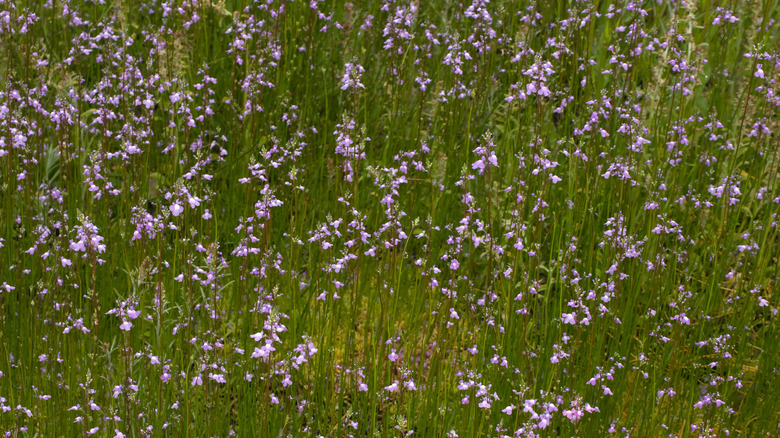
Canadian toadflax is a hardy, easy-to-care-for plant that's commonly found growing wild in fields and near roads. Although it does have its preferred growing environment, it's adaptable enough to adjust to variations. This makes it a great plant for beginner gardeners who want to attract more butterflies to their garden but haven't yet mastered their green thumb. As an annual plant, it typically only lives for a single season, but it prolifically self-seeds.
Sunlight is one of the most important factors for healthy growth. Canadian toadflax grows best when it is offered full sun, which means at least six hours of direct light each day. However, it can tolerate some light shade.
When it comes to soil conditions, Canadian toadflax isn't too picky. It can handle a variety of soil types, including shallow, sandy, and rocky spots where other plants might struggle, and while it does prefer consistent moisture, it can tolerate a dry spell once it becomes established. It needs soil that is acidic and well-draining, however, so you'll want to consider that when choosing the perfect place in your yard to grow this eye-catching butterfly magnet.