

Brown Recluse Vs Cellar Spider: How To Easily Tell The Difference
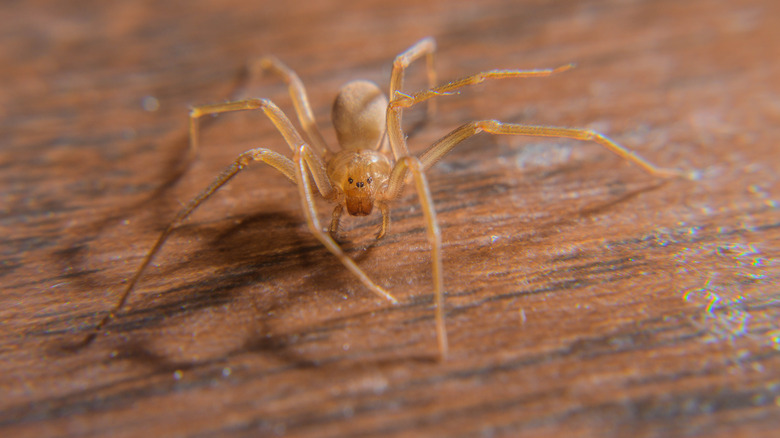
All it takes is one bad spider to ruin it for everyone. Whether you have arachnophobia or not, discovering a brown spider scurrying around your basement would probably have you praying, "Please let it not be a brown recluse." Your prayers might grow more fervent if a closer look reveals a violin-like mark on its body. Surely, that's the fiddleback or brown recluse spider, notorious for its potent venom that leaves the bitten skin inflamed and necrotic.
Fortunately, brown recluse isn't the only spider with a claim to violin-shaped markings on its top head, also called cephalothorax. Cellar spiders, too, sometimes sport these markings, for which it often lands on the list of spiders in your house that might be mistaken for the big bad brown recluse. However, some argue that their markings are too diffuse to form a distinct form and are merely a panicked deduction. Regardless, their tan color and similar shape also creates confusion.
To differentiate the two, make use of cues, like the size of their legs, eye arrangement, and overall form. Geographic distribution may also be helpful in ruling out brown recluse since it occupies limited territory. For additional hints, examine their behavior through their webs or retreats.
Brown recluse vs cellar spider: Legs, form, and eye differences
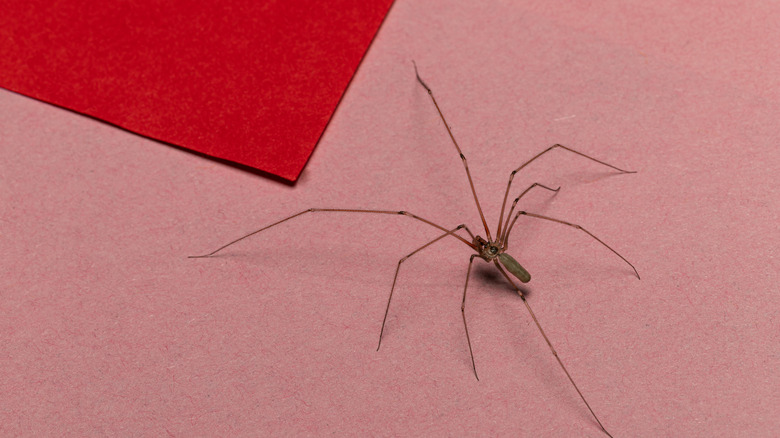
To properly identify and distinguish between the most common spiders you may see in your home, you must use all the cues available. For a start, a cellar spider have extremely long legs, which usually appear delicate and spindly, stretching over 2 inches in length if it's mature and covering a greater span than their main body. It's because of this that a cellar also gets called daddy long-legs in some places, though confusingly, that name is also used for harvestmen, which aren't spiders. Sometimes, the leg joints may appear darker than the surrounding area, as if the spider is knobby-kneed or has stubby knees.
A brown recluse, in contrast, has an inch-long leg span, and sports color uniformity throughout, without any banding or mottling. Its body and legs also appear considerably sturdier than the extremely slender form of a cellar spider. Since you won't have both spiders for a side-by-side comparison, looking for pictures online can help in pointing out the differences in silhouette.
In addition, a brown recluse also has six eyes arranged in three pairs, rather than the eight eyes typical of many other spiders. Many cellar spiders have eight eyes, with two small eyes dotted in the center flanked by the remaining ones on either side. However, depending on the species, some of their eyes may not be as obvious or appear nearly black, necessitating a hand lens for clarification.
Brown recluse vs cellar spider: Their home and habits differ, too
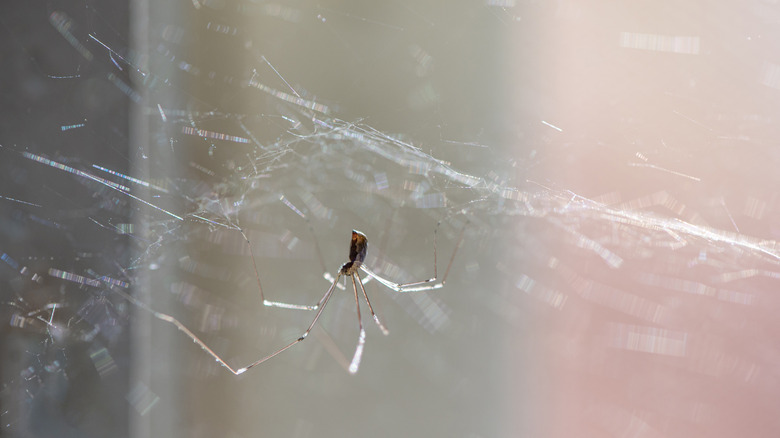
One curious thing about cellar spiders is that they suspend themselves upside down, with their belly up in their webs. Their hangout looks like a tangled mass of gossamer silk taking up space along the ceiling joints or corners. The point, of course, is to trap insects that get lost in these jumbled threads and make easy meals of them. But if you blow upon the web, the cellar spider may rapidly vibrate in its web, becoming a blur and providing another clue to its identity.
In comparison, brown recluse spider webs look very different because they're hardly known for creating artful webbing. Recluses just leave out flat threads in inconspicuous places where they rest during the day and later plait them up as egg sacs. Their homes don't work as entrapments either since they take joy in being solitary hunters, quietly stalking their prey.
Before jumping to any conclusions, also account for geographic distribution. Brown recluse spiders are primarily established in parts of the Southwest and Midwest United States. So, outside of those areas, you're likely dealing with other lookalikes, like cellars, since they seem to occupy most states. That being said, know that a cellar spider poses little concern and isn't considered harmful to humans. Even though it has venom and has short fangs like a brown recluse, it's believed its muscles aren't strong enough to land a strong bite. Cellar spiders primarily use their webs to capture prey, while brown recluses are active hunters that leave their retreats to forage.