

The Old-Fashioned Flower Beloved By Thomas Jefferson Still Looks Good Today
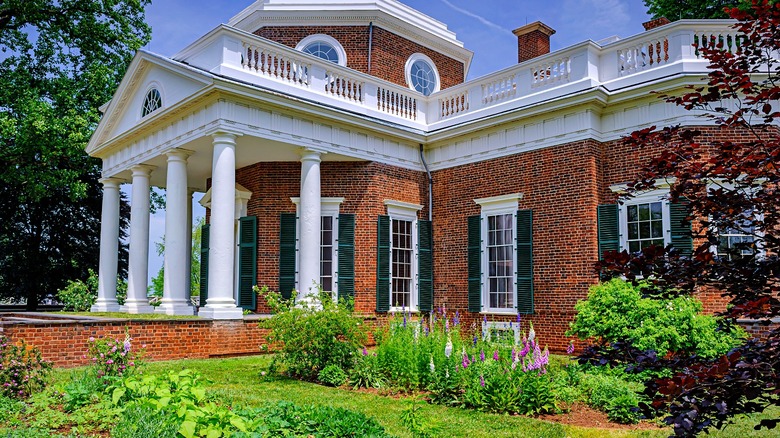
Today, it's hard to imagine a young man of 23 or 24 planting flowers at his mother's home and then starting a gardening book about his efforts. But that's exactly what Thomas Jefferson did in 1766 when he was that age. Years later at his Monticello estate, Jefferson would continue to keep a record of his gardening, writing about everything from planting dates to the weather. In his time, rare and exotic flowers were prized in high society, and Jefferson grew many popular types in his gardens. One of those plants was balsam (Impatiens balsamina), a flower we might consider old-fashioned in 2026. However, planted along shady walkways or in containers, balsam looks just as good today as it did in Jefferson's oval gardens two centuries ago.
As the story goes, in April 1767, Thomas Jefferson recorded in his gardening books the planting of "Double balsam" (i.e., double flowers) at his birthplace of Shadwell. In 1812, three years after his presidency ended, Jefferson ordered some balsam seeds for Monticello. Those flowers still grow there today, and the estate harvests the seeds to sell in its online shop.
Balsam is also known as garden balsam, rose balsam, and touch-me-not. There are a few different plants called touch-me-nots, and in this case, it just refers to the way the seeds pop out of the pods. The flowers come in colors from white to fuchsia, and there are several balsam varieties that will attract hummingbirds to your yard, too.
Tips for growing Impatiens balsamina in your yard
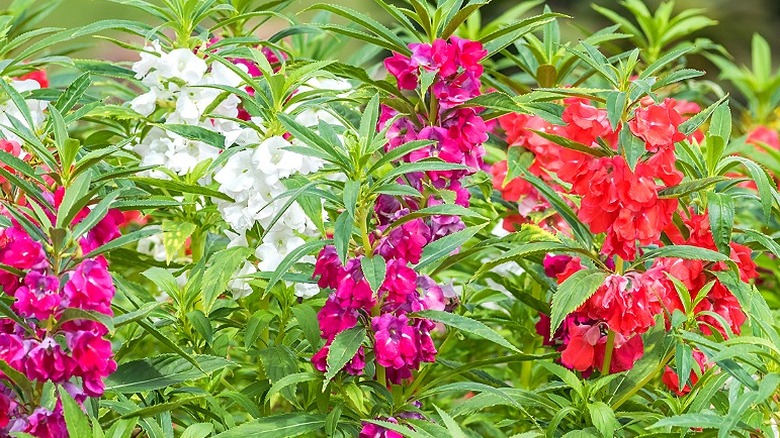
Thomas Jefferson is known for his intellect, and people who already know this plant will recognize how smart he was to grow balsam at his estate. Impatiens balsamina is a low-maintenance flower that can be sown directly in the garden after the last frost. The trick is to not cover the seeds, since they need light to germinate. If you want to fuss over them, you can start them indoors about six to eight weeks before that. Balsam seeds also need warmth (65 to 70 degrees Fahrenheit) and take one to two weeks to show.
For balsam, a location with partial shade is the safest recommendation; this is an annual that will flourish in a shady yard. The plants will tolerate full shade and full sun, too, however. Balsam likes rich and moist soil, so it's not the ideal plant for a drought-tolerant landscape. Further, early on in its growth, it won't be immune to deer grazing. Meanwhile, as a self-seeder, this plant can become a bit weedy in some gardens. Also, the way the seeds pop out of the pods can send them flying and make them notoriously hard to collect.
Although it's a frost-tender annual, balsam is a fast-growing colorful flower that gets up to 30 inches tall by the end of the summer. The camellia-flowered doubles are the most popular in the species and come in a mix of colors, while a dwarf variety called 'Tom Thumb' has double flowers on a 12- to 16-inch stalk.