

Plant This Fall-Blooming, Fragrant Flower In Late Summer To Give Bees A Cold-Weather Habitat
If you're a gardener hoping to attract more beneficial bees to your garden, you're probably already familiar with asters. These fall-blooming perennials have abundant daisy-like flowers that add much-needed splashes of color — and, more importantly, late-season pollinator support – to gardens after many other flowering plants have gone dormant. This group of flowers isn't known for their scent; however, one species is actually named for it: aromatic aster (Symphyotrichum oblongifolium).
It's not aromatic aster's blooms that are fragrant, however (as they are scentless), it's its stems and leaves, which contain a balsam-like scent that releases when the stems and leaves are crushed. And it's also those very stems that can provide a nesting habitat for certain bees in the winter.
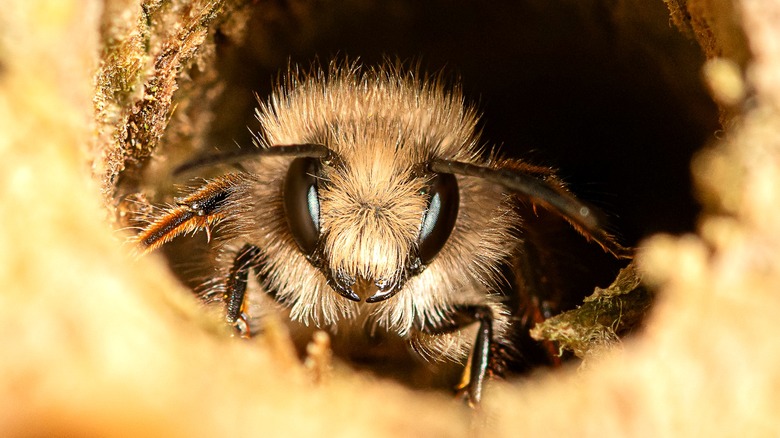
Aromatic aster stems are hollow, so if they're cut back after the growing season, they can provide bees with a place to stay during winter and to build their nests in. While certain bees will look for dead stems, others will create tunnels inside of damaged stems. You can make things easier for all these bees by simply cutting back your aster plants after fall, for the bees to find. By adding aromatic aster to your garden in late summer or early autumn, you'll provide valuable habitat for wild bees, such as leafcutting bees and mason bees.
How to grow aromatic aster (for bees)
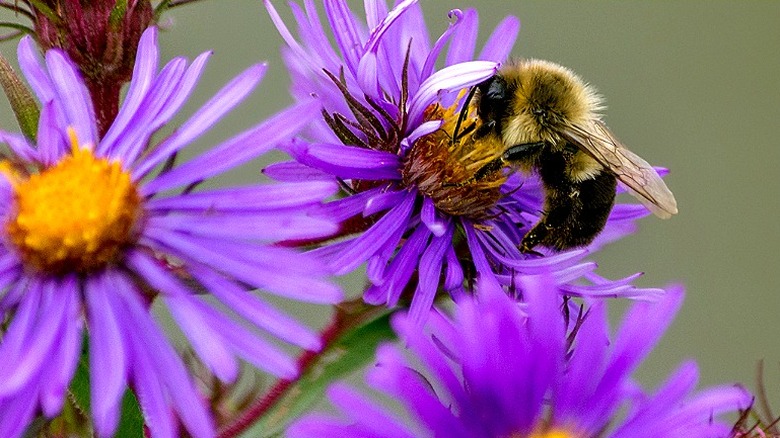
Aromatic aster's native range covers the northeastern and central United States, and it is hardy to zones 3 to 8. To grow these beautiful fall asters in your garden, plant them in a location that gets full sun (or at least six hours of direct sunlight each day). The plant prefers well-drained soil, but can tolerate poor soil, too, as well as drought conditions. For soil texture, aster can grow in sandy, loam, or clay soil. Also, as this is a pollinator plant, do not use any pesticides near your aromatic aster.
Mature aromatic aster forms into clumps 1 to 3 feet tall and wide, and its daisy-shaped purple flowers arrive in September and last until November or first frost. Once this season is over, it's time to cut back the stems for overwintering bees. Cut the dead stems back to 12 to 24 inches and leave them until spring.
On that note, for bees and spring, consider planting native trees and shrubs that flower early, in March and April. The U.S. Forest Service published a study in 2025 that found that while these early-blooming shrubs comprise less than 7% of flowers available in early spring (April), they account for 57% of all bee visits. (Learn how to turn an old nursery pot into a safe sanctuary for ground-nesting bees.)