

Forget Mums: These Native, Fragrant White Flowers Bloom From Late Summer To First Frost
We may receive a commission on purchases made from links.
If you're looking for flowers to grow in your garden or backyard during the summer and fall, mums (Chrysanthemum × morifolium) have probably already caught your attention. After all, they're easy to grow and come in a range of colors and sizes. However, mums aren't the only stunning flowers to plant in late summer for a spectacular fall garden. For example, there's also the easy-to-grow orchid known as nodding ladies' tresses (Spiranthes cernua), or fragrant ladies' tresses. Its bloom time stretches from late summer all the way until November (or first frost).
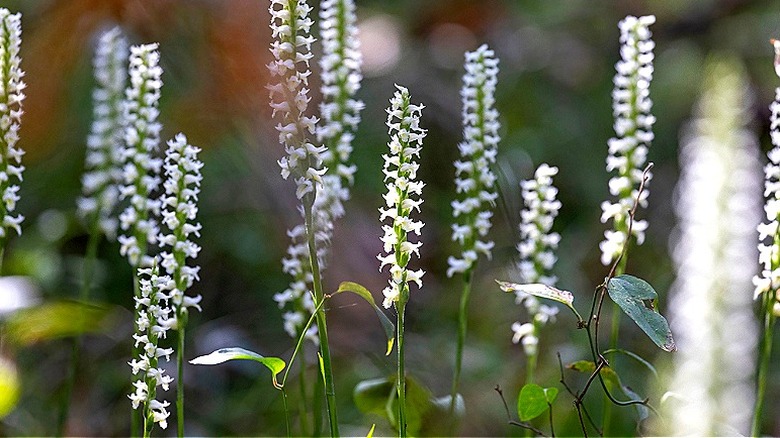
Native to the eastern United States, this white-flowering perennial grows in the wild in swamps, bogs, and wet roadsides, which are the sort of consistently moist conditions you'll need to provide it in your garden. Though its flowers are small, they still produce a showy display, as the delicate blooms twist in vertical rows along the plant's stalks, creating a signature spiral appearance.
Nodding ladies' tresses is also one of the few fragrant orchid species, with a scent that's likened to lily of the valley. As for its size, the plant can grow from 9 to 24 inches tall and roughly 9 to 12 inches wide. It's hardy, meanwhile, to USDA zones 5 to 9. So, if you live outside these zones, you might have to look for some other perennials that bloom in summer and fall, or grow the fragrant ladies' tresses in a pot and then take it inside during the winter.
Growing and caring for nodding ladies' tresses
If you're planning to grow nodding ladies' tresses in your home, it would be simpler to do so from a nursery-grown transplant than from seeds, which aren't readily available. You can even try growing it from division if you have access to a mature orchid plant. Once planted, provide your plant with part shade, or between two and six hours of direct sunlight a day.
For soil, nodding ladies' tresses will grow in various types, including sandy, loamy, or clay. It does require, however, for its soil to be acidic, with a pH of less than 6. There are many home-based soil testing kits, like the Rapitest Soil Test Kit for Gardens, that you can use to check the pH of your soil right at home. If your soil is alkaline, or with a pH level above 7, add some sulfur to bring it down.
Lastly, be sure to provide your orchid plant with consistent moisture; again, to duplicate the sort of wet conditions it's used to. Water it on a regular schedule yourself, or automate your plant watering by installing an individual drip irrigation system. With this said, though nodding ladies' tresses prefers moist soil, it doesn't welcome overly wet or soggy soil. Remember, waterlogging stops air from reaching plants.