

The Herbal Ground Cover Gardeners Rarely Grow Anymore
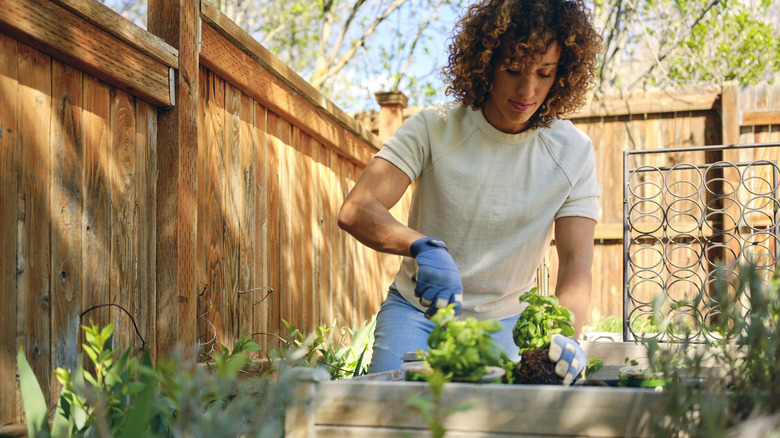
Some of the most useful plants never make it on to the average garden center shopping list. One such creeping perennial has long been used in traditional and Ayurvedic medicine for its ability to slow aging, control diabetes, and improve memory and intelligence. It can also be used as a ground cover in landscaping, though unfortunately, it rarely is. Given the right conditions — that is, wet spots where other plants struggle — this beneficial species will quickly form a thick, lush mat of foliage. If you haven't guessed already, we're talking about brahmi (Bacopa monnieri), also known as water hyssop or herb of grace.
Whether you're looking for a new ground cover option or aquatic plants to add to your natural water features, brahmi is a great pick. It even flowers! The pale blue to white, bell-shaped blooms are small — about ⅔ inch across — and appear on the plant from April until frost. The plant's oblong to obovate leaves are just as attractive; they're thick and fleshy and about ⅛ inch wide and ⅝ inch long. Brahmi stays low to the soil surface, maxing out at 12 inches tall when mature. If you're planning to grow this verdant species as a ground cover, you need to space each plant correctly — ideally about 6 to 12 inches apart. This allows the plants to merge, adequately covering the soil of your garden bed without competing for resources.
Growing and taking care of brahmi as a ground cover
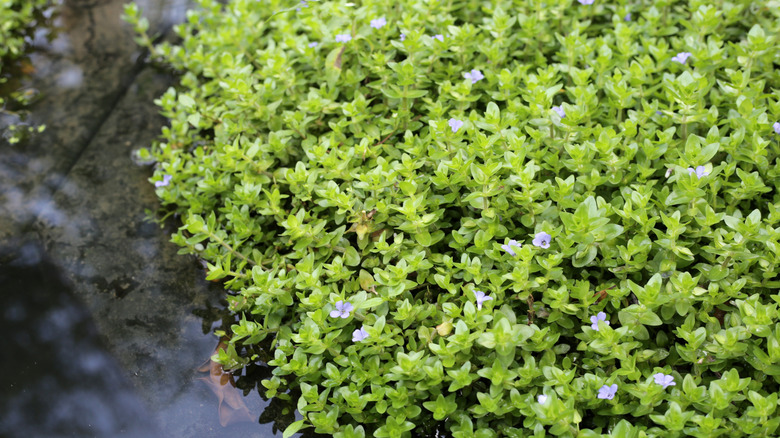
You can technically grow brahmi from seeds or cuttings. However, finding seeds might be challenging, and germination can be unreliable. Using stem cuttings is the easier — and cheaper — option for most home gardeners. No matter which propagation method you choose, make sure the soil you grow brahmi in is consistently moist to wet. This water-loving plant simply won't survive in dry soil. If you live in a desert climate or face regular water shortages, skip growing it and instead look for drought-tolerant ground covers you can easily grow in your garden.
Brahmi is pretty flexible when it comes to sun exposure, tolerating partial shade and full sun. Avoid sites with deep shade; the plant can grow leggy and won't provide ideal ground cover. Apply fertilizer minimally if at all, since brahmi isn't a heavy feeder. If you choose to feed your plant, use a balanced fertilizer diluted to half strength about once a month. As always, perform a soil test before applying the amendment and follow the manufacturer's preparation and application instructions.
Note that this dainty ground cover thrives in USDA Plant Hardiness Zones 8 to 11. If you live outside these zones, you'll need to consider other species that prefer a cooler climate. A good alternative is creeping savory (Satureja spicigera), a hardy, underrated herb that will cover your tricky landscape problems quickly and grows in zones 6 to 9.