

The Overlooked Curtain Detail To Get Right For Looks And Function, And It's Not Size Or Material
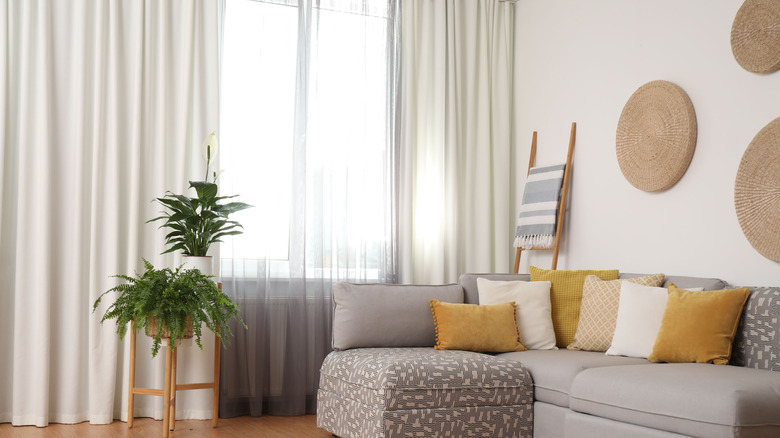
Modern or classic. Opaque or sheer. Timeless or trendy. When it comes to window coverings, curtains are an easy way to totally change up the look and feel of a room, allowing you to introduce a punch of color or some extra texture to an otherwise ho-hum space. Curtains can suit any budget, whether you opt for something more affordable or spend big on luxurious material, and you can add your own flourishes like DIY curtain ties.
However, whether or not you made a major purchase or grabbed some wallet-friendly curtains online, one key often-overlooked detail can make the difference between coverings adding the perfect touch or a decor disaster: You don't want to forget about the hem. Considering the bottom edge of the fabric can transform the look of your curtains.
Beyond crafting the perfect hem length that will catch the eye to add to the room's design, a hem has practical benefits: It ensures that the curtain falls properly, stays put when closed to block out light, and ideally provides a blend of form and function. Hemmed fabric will fall to the same consistent length, last longer, and look better.
Choosing the right hem type for your curtains

When folded and sewn, a curtain's hem adds weight and enables the fabric to fall neatly and evenly. It can even make it look like you spent a fortune, even if you didn't! If you're buying online, there's a clever trick to spotting cheap curtains. Hemmed poorly (or not at all) and the curtain can have give the window covering an unfinished appearance.
Depending on the textile you pick, you'll want to consider which type of hem works best. For example, do you want to cover the window with a casual cotton or linen curtain, or get velvet drapes that "puddle" on the floor? A deeper weighted hem (with small weights sewn into the bottom of the fabric) is better for thicker, full-length, or blackout curtains, so the fabric has less movement and stays in place to keep out light. A blind stitch makes seams invisible, which may be preferable for curtains with a lighter-weight fabric such as a budget-friendly polyester. When in doubt, the standard doubled-folded curtain hem works for most materials. You can also get creative and add stylish hem finishes to your curtains.
You can have your drapes professionally hemmed, or even hem curtains yourself without any sewing. Taking accurate window measurements and ordering the correctly sized pre-hemmed curtains for your space can also work as the perfect finishing touch to your windows.