

100 Years Ago, Homeowners Couldn't Get Enough Of This Secondhand Find
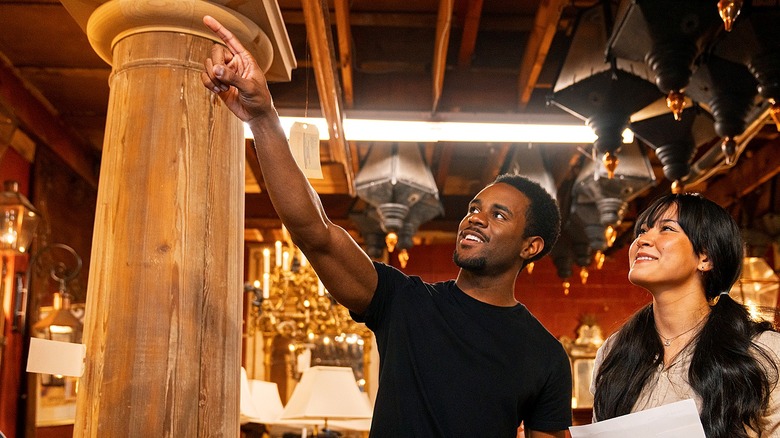
In August 1925, a writer named M.C. Rider shared a decorating coup with the readers of Better Homes & Gardens: furnishing an entire breakfast nook with secondhand finds for $18, including paint. (In today's dollars, this would be just over $339.) Rider's article, "Something Old, Something New," is subtitled "The Joys of Collecting and Preserving Fine Old Furniture." Like most thrifters, Rider started out collecting because new furniture was simply too expensive, only to be thrilled by what could be found secondhand: a table, three wooden chairs, and a "dear old, very old corner cupboard." Rider was especially proud of the cupboard, retrieved from a shop's dark corner and originally packed with shoes and rags. Rider repainted it and made it the centerpiece of the room, refinishing a matching sideboard for just $4 (or about $75 today).
Rider's article may be one of the first to celebrate secondhand finds as a "new hobby." Thrifting was all the rage in the 1920s, partly because nonprofit charities like Goodwill Industries and the Salvation Army opened stores that looked more like department stores than junk shops. During that period, Americans were also becoming interested in the country's history, leading to the birth of the Colonial Revival movement. The Metropolitan Museum of Art opened its American Wing in 1924, further boosting the pedigree of colonial decorating.
Wallace Nutting, a former minister turned photographer, built a business selling hand-colored pictures of colonial rooms alongside reproduction furniture, believing that "those who know the pictures, want the chairs." Rider's article proves this point as well, writing, "The slat back is quite the oldest thing we have, as we can trace it back almost to William Penn's time thru the family of the donor." Of course antique furniture is still popular today.
Searching for secondhand furniture isn't new
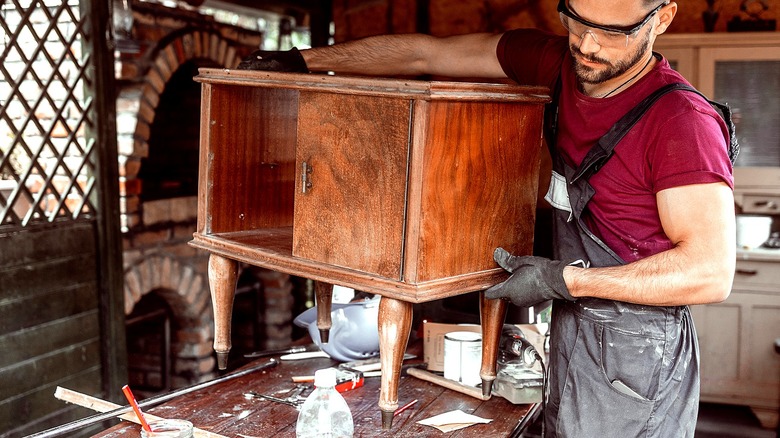
Writing more than 100 years ago, M.C. Rider observed that there was "much dissension among local collectors" about stripping older furniture. Rider's own approach was to restore a piece to its original condition whenever possible, and refinish "only when it is absolutely necessary." Refinishing old pieces was controversial, since some people argued that painting an old piece essentially ruins it. And the argument over whether or not to paint an antique still hasn't been settled. Today, some designers still encourage you to put the paintbrushes away when it comes to antiques.
Rider had strong opinions about staining, too, cautioning readers to avoid one-step combination stain-and-varnish products. In Rider's opinion, these products tend to make scratches stand out even more. Rider's instructions for properly refinishing furniture, meanwhile, have stood the test of time: Follow the directions on the paint remover; carefully scrape off paint using a sharp putty knife; and then sand the piece.
When Rider refinished the slat-back chair, for example, removing the paint revealed the chair's true beauty beneath: "Sandpaper, coarse, medium, and very fine, removed the black, brown, and wagon blue paint (three successive coats, if you please) and brought out the beautiful grain of old hickory, brown with age." Rider finished the chair with raw linseed oil and wax.
Rider's antiquing approach in 1925 was simple: Know what you're looking at, and don't be afraid of something that needs a little work. That's still pretty good advice today. Another similarity between Rider's time and 2026: the growing popularity of buying secondhand and how it's "thoroly enjoyable to all who ride it." Advised Rider, "You are urged to start early tho because these old pieces are being collected rapidly and with increasing interest and value." (See which vintage furniture brands are always worth buying at thrift stores.)