

Say Goodbye To Traditional Mulch: The New Hydrangea Variety That Can Help Suppress Weeds
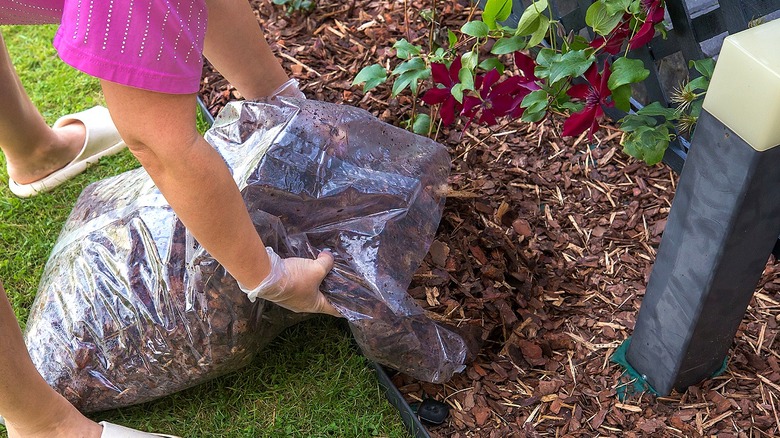
Are you tired of debating which is the best kind of mulch to prevent weeds? Well, you aren't alone! While mulch has its benefits, there's little arguing that bare soil appears nicer carpeted in gorgeous flowers, like hydrangeas, than with brown materials. Wondering how shrubby hydrangeas can help, especially since they take several years to fill out the space and require their own weed management until establishment? Well, know that there's a new kid on the block: Groundbreaker hydrangeas. Available in three varieties — 'Blush,' 'Ruby,' and 'Greeny' — these hydrangeas spread wider than tall, forming a dense ground cover that keeps weeds down.
Our horticultural world, so to speak, is fueled by obsession. While it's unfathomable to outcompete nature in creating new plants, plant breeders attempt to improve them — successfully in some cases. Netherlands-based Living Creations founder Alex Schoemaker found himself obsessing over panicle hydrangeas (H. paniculata) and, together with seasoned breeder Leo Schlingerland, unintentionally cross-bred a ground-cover hydrangea that focuses on growing horizontally, rather than upward. Since it's so well-branched, it seems smothered in flowers throughout summer and fall. Also, as Schoemaker informed the Royal Horticultural Society, "I think it will cope well with climate change, and also covering ground is better for the environment as it provides habitat and retains moisture."
What's striking about the Groundbreaker hydrangea is its size. Dwarf or ground-cover hydrangeas currently on offer in the United States usually maintain a matching height and spread of about 2 to 3 feet. In contrast, Groundbreaker hydrangeas max out at 16 inches but spread twice as wide, if not more, ensuring you've truly low-growing ground cover.
Using Groundbreaker hydrangeas to suppress weeds
In trials since 2017 until they were made publicly available in the UK in 2025, Groundbreaker hydrangeas finally made their way to the U.S. through PlantAddicts in July 2026. Sadly, since the first installment was swooped up real quick, you won't be able to get them in the ground this fall. Instead, you must wait until May or June 2027 to finally have them thriving in your garden.
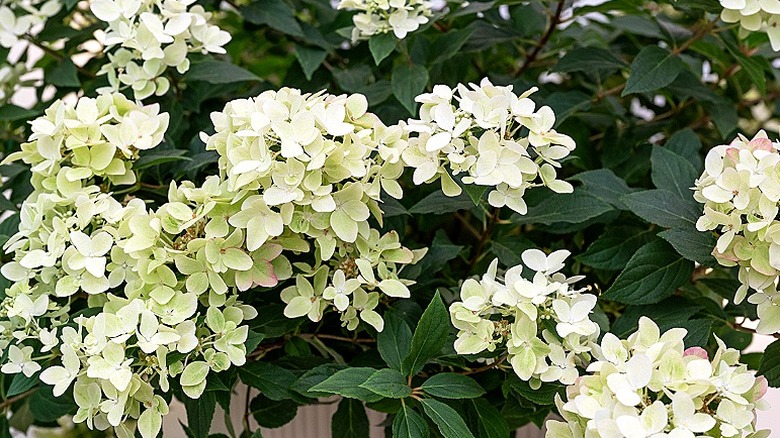
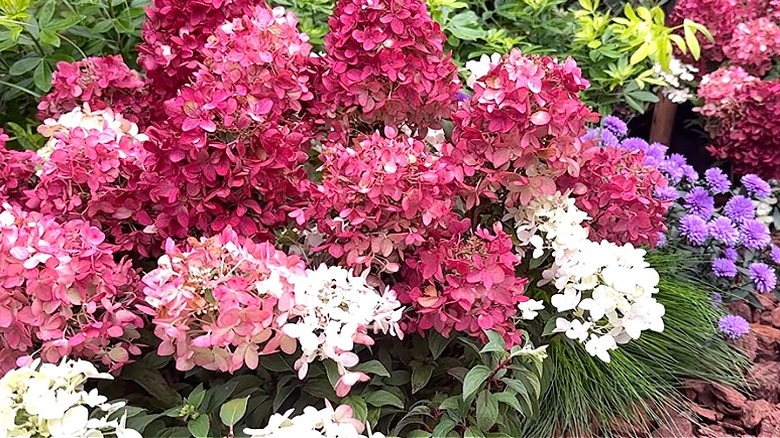
If you're working with a really small area, opt for Groundbreaker 'Blush.' It grows about 12 inches high and 24 inches wide. In July, it'll bloom white conical heads, which over the succeeding months will assume tones that reflect its name, 'Blush,' extending the season into September. If you require more coverage, however, you can choose Groundbreaker 'Ruby' instead. This variety spans over 28 inches across and stays under 16 inches. In a way, it one-ups 'Blush' in color, as after blushing pink, it glows a ruby red by the time fall rolls in.
Differentiating itself from this lot is 'Greeny.' Amongst all Groundbreaker hydrangeas, it offers the thickest coverage and breaks away from the color scheme by producing lime-green flowers. However, over the next 100 days or so, it'll eventually soften into creamier tones. The final spread measures about 32 inches. When growing them as ground covers, leave out about 24 to 30 inches between each plant. Although they can tolerate heat, you must maintain well-watered beds during hot summers for the best flowers.
Growing and maintaining Groundbreaker hydrangeas
Even though panicle hydrangeas are cold hardy in USDA zones 3 to 8, Groundbreaker hydrangeas are known to overwinter only to about -22 degrees Fahrenheit. This puts their hardiness range at zones 5 through 8. Remember, they're deciduous, so they'll lose their foliage during autumn before regreening in spring.
Other than that, they share similar cultural requirements. You may grow them in areas exposed to about six to eight hours of direct sunlight. In particularly hot climates or southern gardens, they will benefit from shade in the afternoon. Although highly adaptable, Groundbreaker hydrangeas perform best in moist, well-draining soils with neutral to slightly acidic pH levels. Amending the soil beforehand with organic matter can improve performance and flowering.
If you have experience growing these flowering shrubs, you'll know timing is everything for pruning hydrangeas. Since Groundbreakers develop buds on new growth, they take the guesswork out of the equation, letting you delay pruning to late winter or early spring when you aren't burdened by other gardening tasks. Plus, it isn't even an annual affair because they keep compact and maintain sideways growth. However, if they slow down, thin out, or require shaping, you may cut back the plant to about 8 inches above ground to promote dense, vigorous growth. More importantly, before you cut your dead hydrangea flowers, consider this: They may offer ornamental and textural interest in the winter, as their brown heads look pleasing.