

11 Glass Stovetop Cleaning Dos And Don'ts You Need To Know Before Your Next Kitchen Cleanup
We may receive a commission on purchases made from links.
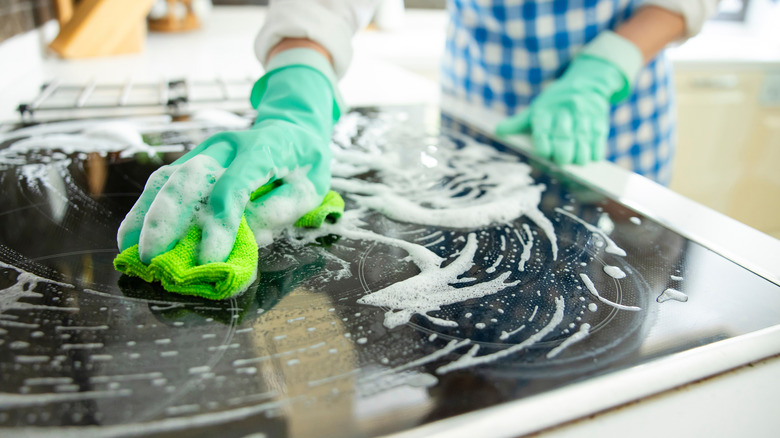
There are various types of stoves that budget-minded homeowners can choose from, and each comes with its own unique cleaning requirements. But in the case of glass stoves, you need to be especially careful. Those shiny new glass surfaces can quickly become clouded and scratched if you're not careful. Not only that, if you let them get too dirty and then apply too much pressure, the grass could actually crack. For these reasons, we've spent some time identifying the most important dos and don'ts to help you keep your stove in shipshape.
In the guide below, you'll learn all about the correct way to clean your glass stove. You'll unearth common mistakes that you should avoid at all costs, and you'll find advice on cleaning solutions and materials. There are tips on cleaning frequency, and to ensure you don't accidentally damage your stove mid-cook, you'll even find some pointers on cleaning your cookware.
Do let the cooktop cool completely before cleaning
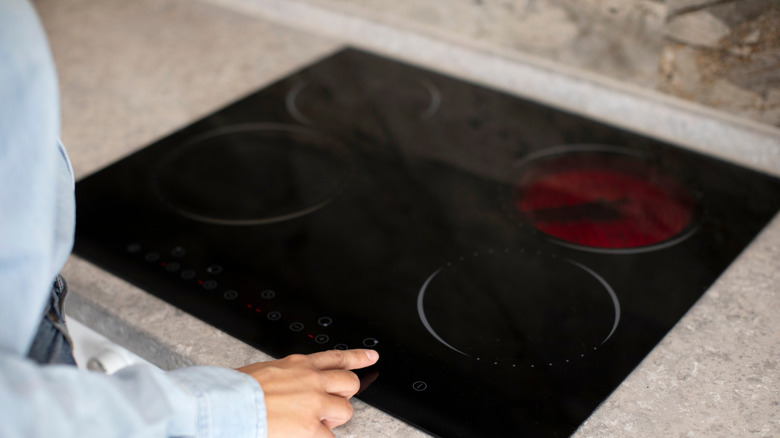
From a safety standpoint, our first glass-stove-cleaning do will probably make a lot of sense. Modern induction stoves don't typically get very hot, since they heat specialized pans by creating an electromagnetic field beneath them. Glass stoves, on the other hand, get hot — like, really hot. That means that when you've finished cooking, it's not usually the best idea to clean the stove straight away. As we'll see later, there is one exception to this rule. But after most cooks, and as far as most stove-top messes are concerned, it's usually best to allow the stove to cool down.
Firstly, if you don't, you risk burning yourself and damaging your washcloths. Secondly, greasy stains tend to spread, rather than lift if you clean them when they're still warm. Not only that, but if you spray a cleaning solution onto the surface while it's still blazing hot, guess what? That fluid will boil, evaporate, and effectively become "baked" onto the surface. If that happens, it can become very difficult — perhaps even impossible — to remove. So, for the sake of your delicate fingers and the longevity of your stove's good looks, if you find yourself craving a good clean, just give your stove time to cool down first.
Do use a dedicated cleaning solution
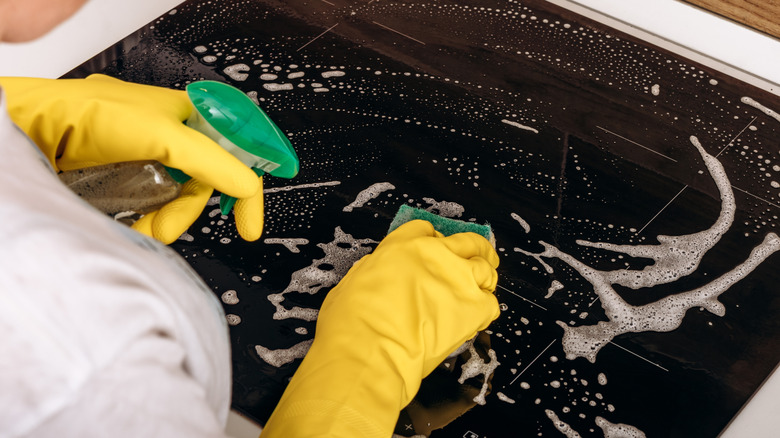
With your stove nice and cool, the next thing to do is to work out what you're going to use to clean the glass stove. In most cases, it's best to employ a dedicated glass stove cleaner, since these are designed to clean with just enough gumption to clean the top without causing damage. Unfortunately, using the wrong cleaning solution is one of various causes for white, filmy build-ups on glass stoves — damage that can be hard to rectify once it's done. As an example, you should avoid using regular glass cleaning liquid. These aren't designed to be food safe, so that's one good reason. They may also contain chemicals that could leave cloudy residues behind.
You should also aim to avoid abrasive home-remedy cleaning solutions like baking soda — at least, without a gentle touch and plenty of fluid. While baking soda is undeniably a handy aid for many household cleaning jobs, it is also mildly abrasive. In other words, it could scratch your stove's glass surface. If you must use baking soda, then don't use it dry and don't scrub the glass stove with the baking soda in situ. Instead, apply baking soda with something like vinegar to the most soiled parts of the stove, allow the solution to soak for a while, and then gently wipe it away.
Do remove crumbs and grease using a gentle microfiber cloth
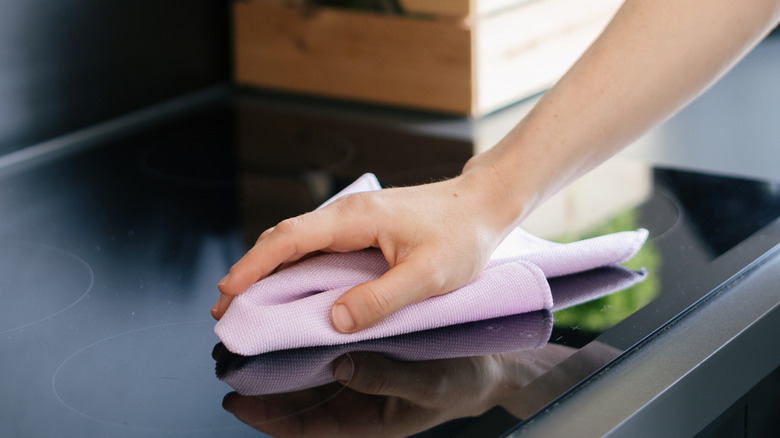
In order to prevent scratches on your glass stove top, you'll want to think carefully about what you use to clean it. As we've seen, abrasive cleaners like baking soda have the potential to damage the surface. So, too, do things like abrasive sponges and metal scouring pads. It makes a lot of sense, although it's probably not what you want to hear if you have a stubborn build-up of burnt food to remove from your stove. If that's the case, then you'll find a handy tip in one of the coming sections to help with precisely that. But if you're just doing general clean-ups after a cook, aim to use as soft a cloth as you can get hold of.
If you have one, or are happy to buy some, microfiber cloths are usually better than regular dish towels and soft sponges, particularly for cleaning grease and crumbs. Those fibers are designed to grab hold of things like grease and tiny particles. They're also super soft, which means they don't risk scratching your glass surface. With that being said, regardless of the cloth that you use to clean your stove, it's important to gently wipe hard bits of food and any other debris away from the surface before cleaning. If you don't, then no matter how soft your cloth is, you could end up wiping those bits around your stove, which in turn could scratch it.
Do clean the bases of your pans, and don't scrape them across your stove top
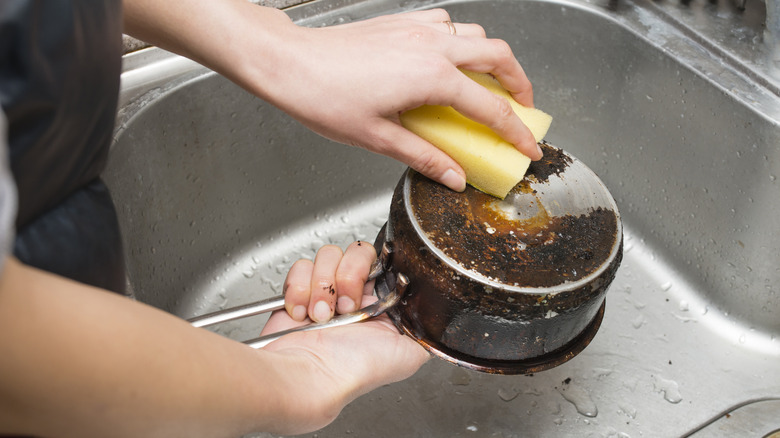
This "do" actually comprises two tips. The first is that, while you're cooking, you should avoid "scraping" your pans across the surface of your glass stove. Pans naturally develop bits of burnt food and residue during cooking, which, if dragged along the glass, can scratch it. With that in mind, it's best to make a habit of "lifting and placing" your pans while you prepare meals. It's also a good idea to remove pans from the stove and rest them elsewhere in your kitchen once the contents are cooked. If you don't, any food that's collected on the base could burn and harden even further, making it harder to clean away later.
The second tip here is that, in order to keep your glass stove clean and scratch-free, you should also clean your cookware properly. It's more of a dishwashing "do," but if you neglect to check and clean the bases of your pans, any hardened bits that are stuck to them could eventually scratch your glass. Use a scraper to remove any burnt food, and check with your hands that the surface is nice and smooth. Finally, if you're really serious about preserving your cooker's good looks, you can avoid damaging your glass stove by using the correct type of pan. Stainless steel cookware usually has a flat, smooth base, and is much more gentle on glass surfaces than, for example, cast iron.
Do use a dedicated scraper to remove stubborn dirt
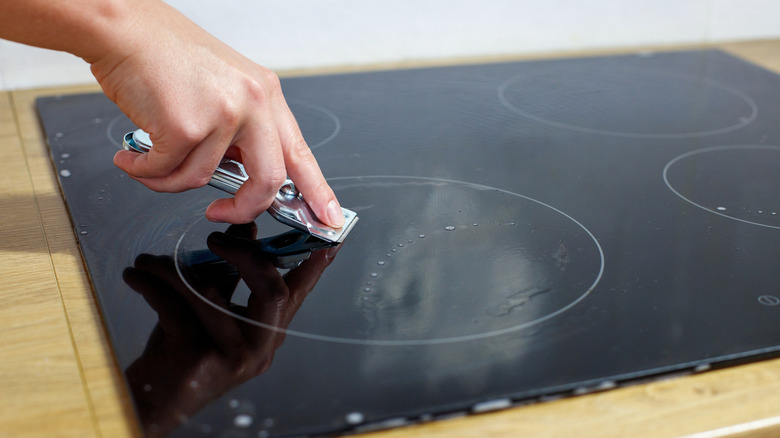
Whether you're cleaning your glass stovetop or the base of your cookware, it's best to avoid metal scouring pads. Yes, these will likely help you remove even the most heinous build-ups of burnt-on food. However, they'll almost certainly scratch the surface in the process. You could even risk scratching your glass with a sponge scourer. Instead, if you have burnt residue to clear off the stove before you clean it, it's best to use a scraper.
To be clear, we don't mean that you should grab a knife from the block and use that. Instead, you need a scraper that you can apply flush to the glass surface — like you would with a shaving razor. You can try using a silicone or plastic spatula first, as these are unlikely to scratch the surface and may be able to gain enough purchase to remove the build-up in question. Failing that, you could invest in a dedicated scraper tool, like this Razor Blade Scraper Tool from REXBETI, which has plastic blades. This will help you to quickly and efficiently deal with burnt-on food whenever it occurs, and since it comes with glass-safe plastic blades, you should be able to avoid scratching your stove.
Don't be tempted by heavy-duty degreasers
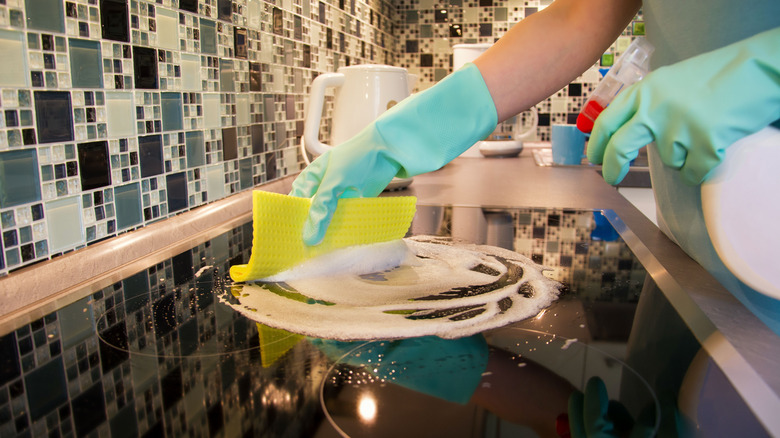
We've touched upon using dedicated cleaners already. However, even within the realm of dedicated oven cleaners, there are some that should be avoided when it comes to cleaning glass cooktops. We're talking about heavy-duty degreasers. Before we explain why, we'll first admit that we understand the temptation, especially if you've left it a tad too long between cleans and there's lots of grease to remove. In that case, using a powerful degreaser does seem like the logical thing to do — but you may want to hold off.
The issue is that harsh chemicals can damage the protective coating that's often applied to the surface of the glass top. If this happens, you could be looking at long-term, worsening damage over time, since your top will no longer have the protection it needs for optimal durability. Instead, it's best to refer to our previous point about using dedicated glass stove cleaners, pairing them with a plastic scraper for more stubborn build-ups. And in case you're unsure about whether the cleaning fluid in your cupboard is glass-stove save, check the label. If it's not specifically formulated for glass cooktops, and is listed as abrasive, solvent-based, or as a degreaser, then it's probably best avoided.
Do give your glass stovetop a polish once it's clean
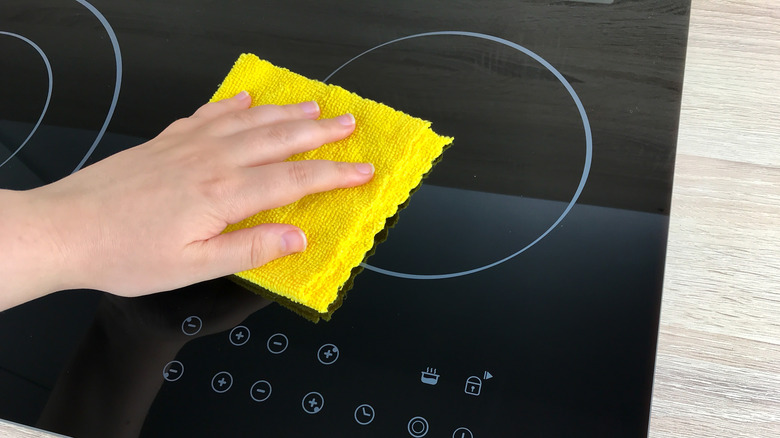
Polishing the glass after cleaning may not seem like an essential step, especially if you have kids' bedtimes to juggle after dinner and you're short on cleaning time. However, it's an important step to take if you can carve out a couple of minutes to do it. As for why, there are actually two reasons. The first is purely aesthetic, which is perhaps why you might feel it's unnecessary. By buffing the surface of your glass top, it'll be left with a shiny, streak-free finish. In other words, it'll be much nicer to look at than if you left it un-buffed. More importantly, by taking the time to polish the glass, you'll remove any traces of your cleaning solution and water that may have been left behind. If these are left in situ, they could become baked into the glass or form water spots, clouding it up the next time you switch the stove on.
To do it, the first thing you'll want to do is wipe over your stove with a cloth and clean water. This won't actually polish the stove, per se, but it'll help remove any traces of your cleaner. You don't need a soaking wet cloth for this – just a clean cloth that's dampened with warm water. With that done, grab a clean and dry microfiber cloth, then work it over the surface of your cooktop until all traces of moisture have been removed.
Do clean your stove after every use
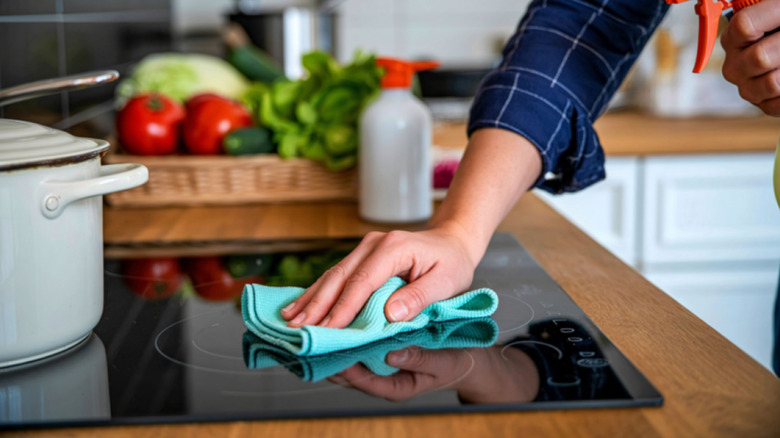
The first thing to say here is that you don't have to give your oven or stovetop a deep clean after every cook. In busy households, that would simply be impractical! With that being said, not cleaning it regularly enough is one of the biggest mistakes you can make when cleaning your glass stovetop. So, what to do? Generally speaking, it's best to give your stove a quick wipe down after every cook. This will go a long way towards protecting your stove in the long-term. If you don't do it, and you allow grease and burnt food to collect on the surface, then they'll be that much harder to clean when you finally come to do it. And the harder they are to clean, the more likely you are to accidentally damage your stovetop by applying too much pressure or using the wrong tools and cleaners.
With that in mind, once you've eaten and bundled the plates into the dishwasher, grab a cloth. Damp it with some soapy water (wringing it out to ensure it's not dripping wet), and give your stove a wipe. This will remove the worst of any boil-overs that occurred during your cook, and it'll take care of any greasy spatters, too. Once that's done, follow the previous advice about drying your stovetop with a clean microfiber cloth, ensuring all traces of moisture and soap are buffed away.
Don't ignore your manufacturer's instructions
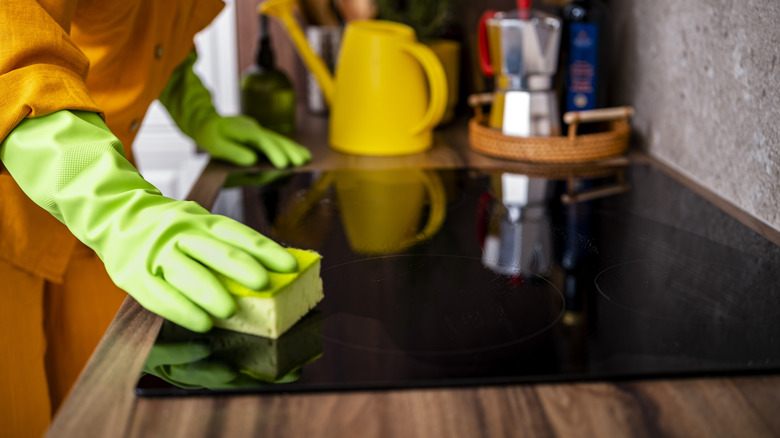
If you have them, then one of the easiest ways to clean your glass stovetop is to follow your manufacturer's instructions. It's always worth referring to these, regardless of the maintenance you're doing. After all, they are provided for a reason. They're there to help users prevent causing undue damage to their appliance. As for what they might include, they should advise on the proper cleaning steps, along with the types of cleaning solutions and tools you can use.
As an example of why this is so important, let's say that your stovetop manual suggests using a particular type of scraping tool to clear your surface of burnt food. If you don't have one (or you lose the one that came supplied with the stove), and you damage the surface using a make-shift scraper, you could easily void the warranty. Similarly, if you use the wrong type of cleaner — perhaps something highly abrasive — that, too, could void it. Not only that, but even if your stove remains functional after damage, you may well end up shortening its lifespan, which, in the case of appliances like stoves, is an expensive mistake to make.
Don't be tempted to scrub too hard
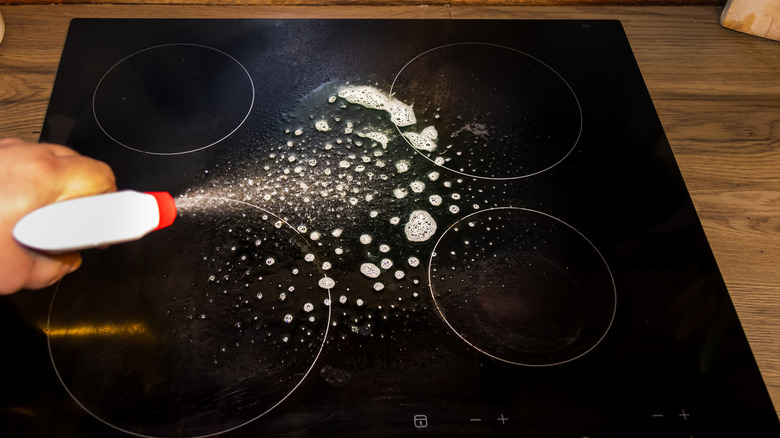
Patience is so often touted as a virtue, and it's a sentiment that's especially true when it comes to cleaning your glass stove. The alternative, if you're rushing, is to scrub too hard at whatever has soiled the surface. The problem is, if you do that, you risk causing irreversible damage. Don't forget, if there's burnt food debris littering the surface, scrubbing that across the glass can scratch it. And if you're really going ham at it and applying lots of downward force, you could even end up cracking the glass.
Instead, a few extra minutes soaking with your recommended cleaning agent is better than trying to force the issue with extra elbow grease. Provided that the stove has cooled down, you could spray it and then leave it to soak while you go and get into your pajamas. If you give the solution time to work its magic, you'll find that most of the grime wipes away pretty easily. After that, any that's still burnt on can be removed with a plastic scraper. As Lisa Macqueen, Commercial Cleaning Expert and CEO of Cleancorp tells Real Simple, "The goal is never to 'scrub harder.' It's to soften residue first and clean gently. Most scratches happen when people rush the process."
Don't allow sugary spills to cool down
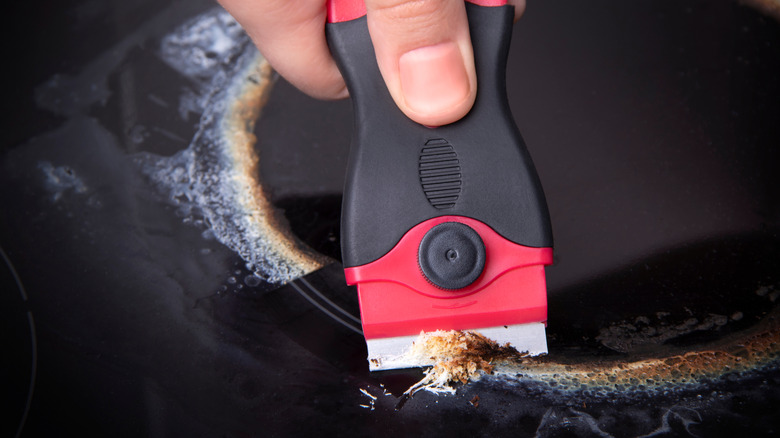
We know, this flies in the face of our earlier point about ensuring that your stove is nice and cool before cleaning. And it's true that the last thing you want is to singe your fingers, however, we also mentioned that there is one unique exception to this rule, and that exception is melted sugar. Liquid sugar burns very quickly, meaning it'll char almost as soon as it comes into contact with a hot stove. Not only that, once it does, it becomes seriously hard to remove if it's allowed to burn onto the surface and cool down.
Instead, while you should still remove the pan and switch the stove off, you should try to remove the sugar while it's still hot. You'll need some protective gloves and a heat-resistant scraper. Get as much of the sugar off as you can while it's warm, and then wait for the stove to cool to give it a more thorough clean. Finally, if you fail to react quickly enough, then don't panic. In that case, once the stove is cool, wet a cloth with hot water, wring it out lightly, and then place it on the sugar stain to soak. This should loosen the stain and, paired with a good scraper, make it easier to remove.