

Does Clover Grow In The Shade?
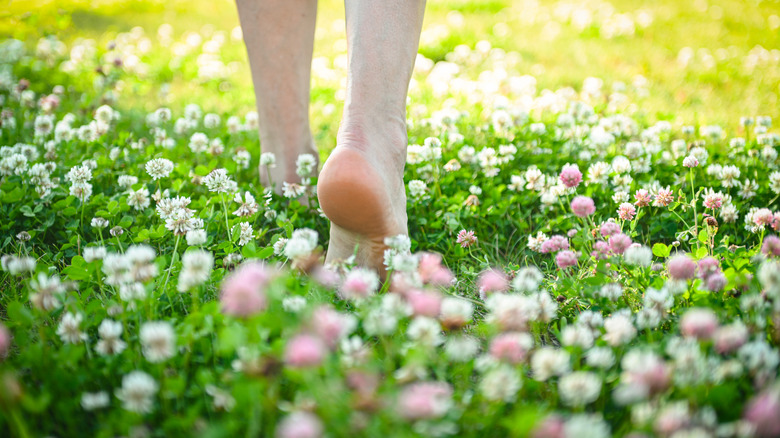
Grass lawns aren't for everyone. Though they can be a soft place to play, traditional grass lawns can often be difficult to care for and require a lot of work. That's why many people have gravitated to creating a low-maintenance lawn with a stunning grass alternative –- clover. It looks nice and is still soft for children and pets to play on. Unfortunately, it's not a choice that works for every lawn. Though these plants can handle a wide range of USDA zones (3-10 depending on the species), it doesn't tolerate much shade. So if much of your yard is shaded by trees, fences, or buildings, clover may not be the best groundcover for those areas.
When it comes to your lawn, there are three species that are most commonly used. These are white Dutch clover (Trifolium repens), red clover (Trifolium pratense), and strawberry clover (Trifolium fragiferum). Unfortunately, all three prefer full sun. And, in particular, the strawberry variety struggles in the shade. The other two can deal with a little break from the light throughout the day, but nothing more than five hours or so. Of course, while those are the three most common species of clover to plant in your yard, they're not the only options. Unfortunately, while you can find a few that work in partial shade, there aren't really any clover species able to handle going without sunlight for most of the day.
What clover to choose if you have partial shade in your yard
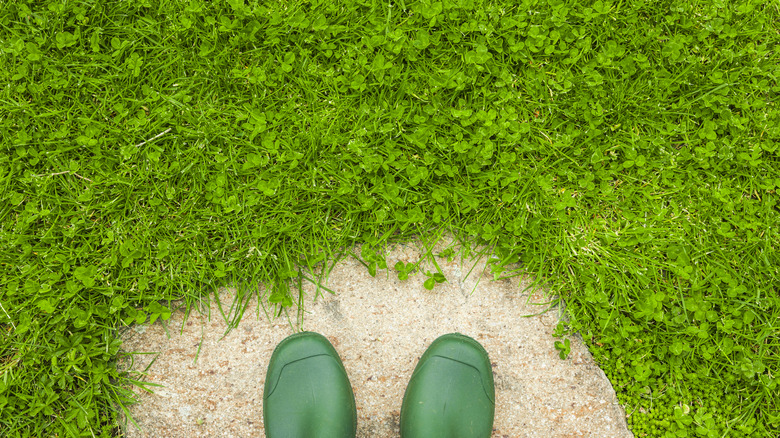
One of the most shade-tolerant species is white clover. This plant doesn't handle heavy traffic and may not be ideal for lawns with pets or people who enjoy being outside a lot. It is a good option to include in the best kind of grass seed mix for a bee-friendly lawn and garden though, since its flowers are enjoyed by pollinators. White clover is hardy in USDA Zone 4 and warmer in many areas, although its exact growing range depends on local conditions. Red clover is also partially shade tolerant. It's hardy to zones 3 to 9. It's a popular option because it can help stabilize soil, suppress weeds, and tolerate some foot traffic.
Microclover (Trifolium repens var. Pirouette) can also handle a little bit of shade, but it has other benefits, including being trample tolerant. It's a variety of Dutch white clover, so it shares in many of the same preferences. It flowers less than other kinds, which can be a benefit if your family spends a lot of time playing around outside, as it reduces the number of bees. This perennial grows in USDA zones 3 to 9. Subterranean clover (Trifolium subterraneum) is another option. It likes well-draining soil and helps to control erosion. It enjoys locations with a bit of heat, USDA Zone 7 and warmer. It needs mowing or grazing to thrive.
What alternatives you can use instead for fully shaded yards
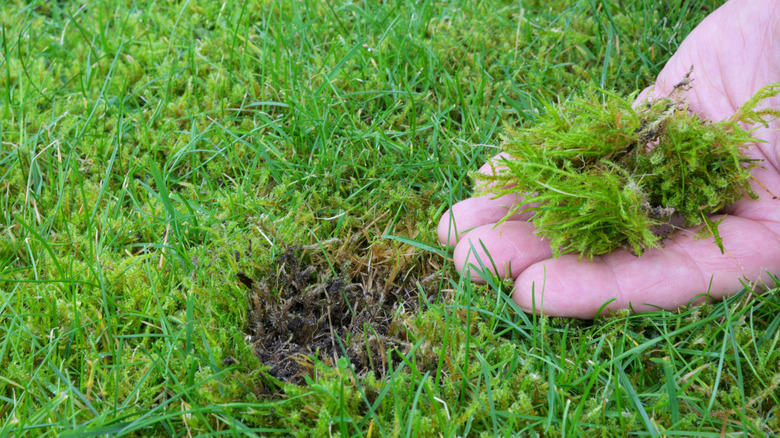
Thankfully, though clover may not be your ideal grass alternative, there are still lots of plants that act as ground covers that thrive in the shade and add beauty to a garden. For example, in shady and moist areas, a moss lawn is a low-maintenance choice. It offers a bright, fresh greenness and a soft place to play.
There is also Pennsylvania sedge (Carex pensylvania). Like clover, it is hardy up to USDA Zone 3. This plant enjoys growing in the shade. If you want flora that can handle every part of your yard, from the sunny patches to the shady ones, consider blue sedge (Carex flacca). It's hardy to zone 5, but tolerates sun, partial shade, and full shade. That's just a couple of examples. There are plenty of others, including dwarf Solomon's seal, goldenstar, and Allegheny spurge. Whether you live somewhere damp, dry, hot, or cold, you can find a plant that works for ground cover outside of the clover or grass yard and tolerates shade.
You aren't required to stick to greenery, either. If you want a mostly clover lawn, but you have a few areas that don't get enough light, play around with your yard's design. Use this groundcover in the sunny spots, and then transform the shady parts into something different. For example, consider hardscaping. You could also use heavily shaded areas for hardscaping or structures, such as a shed, rather than trying to establish a living groundcover.