

What Is The Most Durable Material For Furniture?
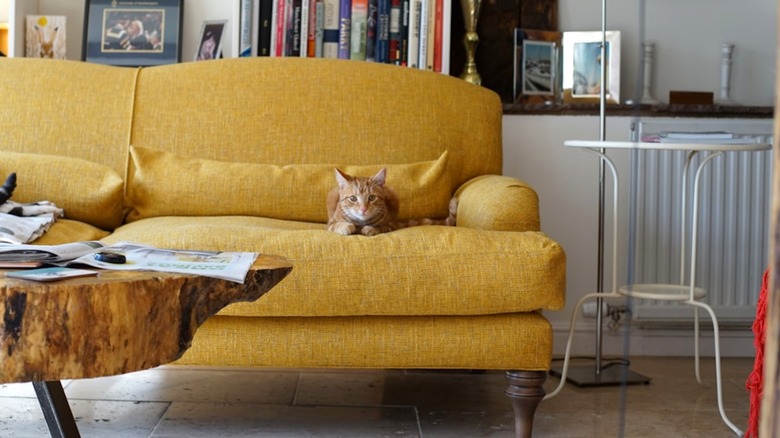
You just spent hundreds of dollars on a new couch, and the cushions are already losing their support. Or maybe you grew up eating at a dining table that once belonged to your grandparents, but you can already tell that the highly-rated dining set you bought 3 years ago isn't going to last nearly as long. What went wrong? Why is modern furniture so short-lived? The unfortunate truth is that durable, quality materials like solid wood, sturdy fabrics, and real leather are no longer commonly used due to factors ranging from manufacturing and shipping costs to social media-driven trends. These factors have created a cycle of cheap furniture and consumers who no longer expect their purchases to last. In fact, the Environmental Protection Agency estimates that nearly 10 million tons of furniture ended up in landfills in 2018, a figure that roughly doubled since 1980.
Today, instead of chasing trendy furniture they'll regret and generating more waste for landfills, some consumers are trying to save their money and purchase furniture that actually lasts. Choosing durable furniture requires knowing how to separate marketing fluff from information that's truly important. Such information may not be easy to find, but a reputable manufacturer should be happy to answer your questions about what a piece of furniture is made from, how it's built, and what's actually under the surface.
The hardness metric that can help you choose furniture that lasts
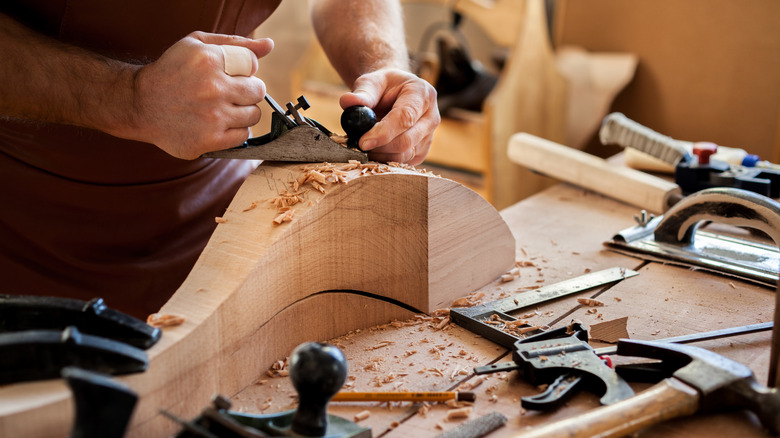
When it comes to shopping for furniture, the underlying structure often determines a piece's lifespan. You can reupholster your couch, but you can't replace its frame. The most durable material to look for in furniture frames is solid hardwood, and one of the ways to evaluate wood's hardness is by its Janka rating. The Janka hardness test measures the force necessary to push a small steel ball halfway into a piece of wood. Higher ratings, measured in pounds-force (lbf), indicate harder wood that requires more force to embed the ball. The best types of wood with the highest Janka ratings include hickory (1,820 lbf), hard maple (1,450 lbf), and white and red oak (1,360 and 1,220 lbf). Avoid lower-rated, softer species like pine and alder. Hardwoods excel at retaining their structural integrity under the stresses of daily use. Wood composites like MDF and plywood do not have Janka ratings, but they can be expected to last only 5 years or so before experiencing superficial wear or stress, as it's weaker than solid wood and easily absorbs water.
Another durable material to look for in a furniture frame is, of course, metal. Steel is common, but aluminum is another popular choice for bare-metal outdoor furniture since it doesn't corrode in humid or rainy environments. Steel needs to be powder-coated, not just painted, if it's going to last more than 2 or 3 years outside. Along with the material, it's important to consider how it's built. Look for high-quality construction techniques like dovetail or mortise-and-tenon joinery and avoid excessive staples, nails, gaps in the joints, or visible glue.
How to identify durable upholstery

To choose a long-lasting upholstery fabric, look for the rub count. This metric tests fabric's durability by measuring how much rubbing produces visible wear. There are two ways manufacturers determine rub count, but in the US, the Wyzenbeek test is more common. This method tests fabric by rubbing it back and forth against a rough canvas, producing double rubs. Residential-use fabric has a double rub count of 9,000 to 15,000 minimum, while heavy commercial-rated fabric measures between 30,000 and 50,000 double rubs. Tightly-woven nylon, acrylic, and polyester fabrics are among the toughest and most stain-resistant upholstery fabrics, with double rub counts reaching 100,000 or more. You'll often see these under the umbrella term "performance fabric."
Leather is another highly durable material that resists tearing, but it's susceptible to marketing-speak that conceals poor quality. Look for "full grain" or "top grain" leather, which are the most durable. Full-grain is thicker and retains the leather's natural texture, while top grain has been treated for a uniform appearance and is thinner as a result. Avoid "genuine leather," which could refer to "bonded leather," a short-lived product made from leftover leather scraps reprocessed with synthetic materials and stamped so it looks like real leather.
For both upholstery and frames, durable materials will only take you so far. Proper maintenance is key to furniture that lasts. Clean and condition wood and leather pieces to maintain their appearance and durability. Properly wash upholstery fabrics to keep your investment clean without damaging it.